Agri Minister Shivraj assures: No one will go hungry in India
Synopsis
Union Agriculture Minister Shivraj Singh Chouhan declared on 28 May 2026 that India's overflowing grain reserves ensure no citizen will go hungry regardless of any global crisis. The statement invokes India's buffer-stock system, the National Food Security Act, and the FCI's procurement architecture as pillars of domestic food resilience.
Key Takeaways
Union Agriculture Minister Shivraj Singh Chouhan posted on 28 May 2026 that no one in India will go hungry no matter how severe a global crisis becomes.
He cited full foodgrain stores as the basis for his assurance, signalling confidence in the country's buffer-stock system.
The Food Corporation of India (FCI) , established in 1965 , maintains central pool stocks that insulate India from import dependence and global price shocks.
The National Food Security Act (2013) entitles approximately two-thirds of India's population — over 81 crore people — to subsidised foodgrains through the PDS .
During the 2020 pandemic, PM-GKAY delivered free foodgrains to 81 crore beneficiaries, demonstrating the state's capacity for rapid buffer-stock deployment.
The next quarterly foodgrain stock-position report and any revision of buffer-stock norms ahead of the 2026-27 rabi season will be key data points to watch.
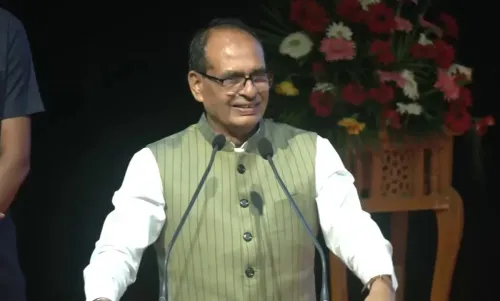
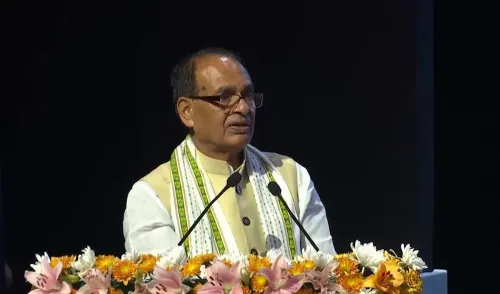
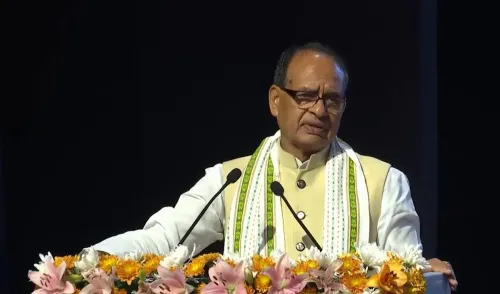
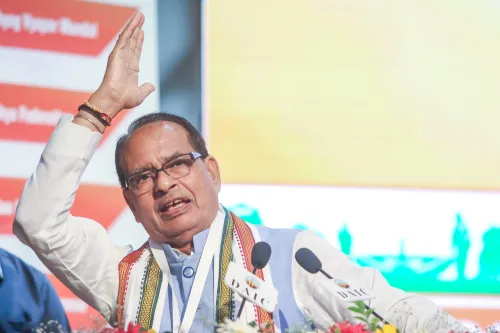
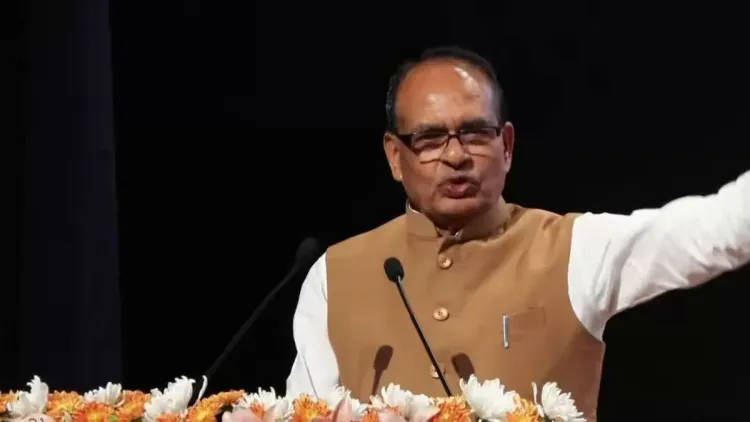
Union Agriculture Minister Shivraj Singh Chouhan on Thursday, 28 May 2026, took to X to issue a firm public assurance that no Indian will face hunger regardless of the scale of any global crisis, pointing to the country's well-stocked foodgrain reserves as the foundation of that guarantee.
Posting in Hindi, the Minister stated: 'दुनिया में कितना भी बड़ा संकट आ जाए, भारत में कोई भूखा नहीं रहेगा।' ['No matter how big a crisis hits the world, no one in India will go hungry.'] He added that the country's grain stores are full and there is no cause for worry.
Context
The statement comes against the backdrop of recurring global food-supply anxieties — from climate disruptions to geopolitical conflicts — that have periodically rattled international commodity markets. Chouhan, who oversees both agriculture policy and rural development, framed India's domestic food security as a structural achievement rather than a contingency measure.
The reassurance is directed at the broad consuming public, particularly the more than 81 crore priority-household beneficiaries covered under the National Food Security Act (NFSA), who depend on the Public Distribution System (PDS) for subsidised wheat and rice.
Policy Backdrop
India's buffer-stock architecture traces back to the mid-1960s food shortages that prompted the establishment of the Food Corporation of India (FCI) in 1965. The FCI procures foodgrains at Minimum Support Prices (MSP) and maintains central pool stocks calibrated to buffer-stock norms, insulating domestic availability from import dependence or global price spikes.
The National Food Security Act, enacted in 2013, converted access to subsidised foodgrains into a legal entitlement for roughly two-thirds of the population. More recently, the Pradhan Mantri Garib Kalyan Anna Yojana (PM-GKAY), launched in 2020 during the pandemic, provided free foodgrains to 81 crore beneficiaries for an extended period — demonstrating the state's capacity to deploy buffer stocks rapidly in a crisis.
Prime Minister Narendra Modi has consistently highlighted India's foodgrain self-sufficiency in policy addresses since 2014, and Chouhan's post aligns with that established government communication line.
Stakeholders and Impact
The primary beneficiaries of this policy posture are PDS recipient households — predominantly low-income, rural and semi-urban families — for whom state-held stocks represent a direct shield against market-price volatility. Small and marginal farmers, who supply the bulk of procured grain, are also stakeholders: sustained procurement at MSP underpins their income even when global prices fall.
For urban consumers and the broader economy, large central pool stocks have historically allowed the government to intervene through open-market sales or export restrictions to cool domestic prices during supply crunches, as was done after the 2008 and 2022 global food-price crises.
What's Next
The Department of Food and Public Distribution releases quarterly foodgrain stock-position data, which will be closely watched to substantiate the minister's confidence. Analysts will also track whether the government revises buffer-stock norms ahead of the 2026-27 rabi marketing season. Any adjustment in procurement targets or export policy in the coming weeks could be read as an operational follow-through to the political assurance Chouhan has now placed on public record.
Point of View
Likely in response to global commodity market nervousness. It reinforces a BJP governance narrative built since 2014 around India's self-reliance in food, anchoring the message in institutional infrastructure (FCI, NFSA, PDS) rather than in a single scheme or personality. The statement also implicitly defends the government's MSP-driven procurement model, which has drawn criticism for creating fiscal strain but is now being presented as the very mechanism that makes such guarantees credible. Whether the assurance is backed by current stock data will determine how the opposition and independent analysts receive it.
NationPress
13 Oct 2026
Frequently Asked Questions
What did Agriculture Minister Shivraj Singh Chouhan say about food security in India?
On 28 May 2026, Minister Chouhan stated that no matter how large a global crisis becomes, no one in India will go hungry, citing the country's full foodgrain reserves as the reason for confidence.
How does India maintain food security during global crises?
India relies on buffer stocks held by the Food Corporation of India (FCI), the Public Distribution System (PDS), and the legal entitlements under the National Food Security Act (2013) to ensure subsidised grain reaches over 81 crore beneficiaries even during global supply disruptions.
What is the Food Corporation of India and what role does it play?
The Food Corporation of India (FCI) is a central public-sector undertaking established in 1965 to procure foodgrains at Minimum Support Prices, maintain buffer stocks, and supply the PDS — forming the backbone of India's food security architecture.
Who benefits from India's Public Distribution System?
Approximately 81 crore people — roughly two-thirds of India's population — are entitled to subsidised wheat and rice under the National Food Security Act through the PDS network.
What is PM-GKAY and how did it support food security?
Pradhan Mantri Garib Kalyan Anna Yojana (PM-GKAY) was launched in 2020 to provide free foodgrains to 81 crore beneficiaries during the pandemic, and was extended multiple times, demonstrating the government's ability to deploy buffer stocks rapidly in emergencies.