Shivraj Singh Chouhan: Govt shields farmers from global fertilizer price surge
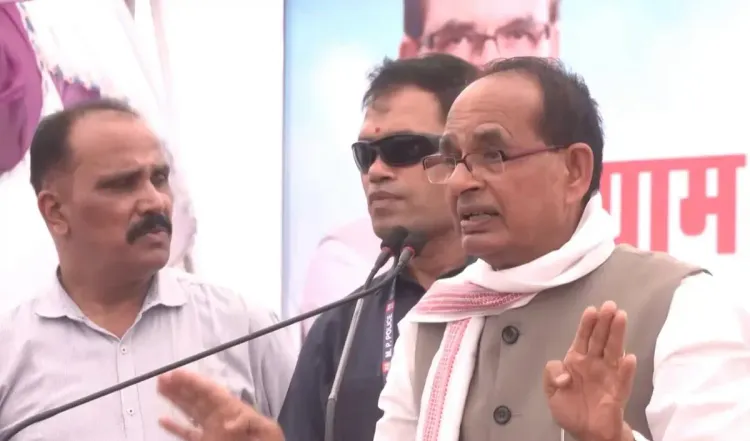
Synopsis
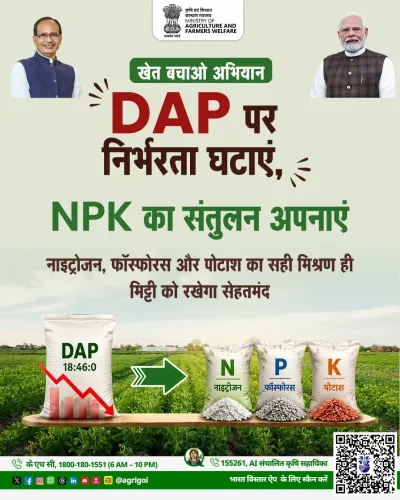
Agriculture Minister Shivraj Singh Chouhan has declared that PM Modi is committed to providing cheap fertilizers to farmers even as global prices have doubled, invoking the #KhetBachaoAbhiyan campaign amid rising Kharif season input cost pressures.
Key Takeaways
Union Agriculture Minister Shivraj Singh Chouhan posted on June 1, 2026 that international fertilizer prices have doubled but the government will keep them affordable for farmers.
The post attributes the commitment directly to Prime Minister Narendra Modi , framing it as a personal decision.
The statement is tagged under #KhetBachaoAbhiyan ('Save the Farm Campaign'), indicating a broader government outreach effort.
India's fertilizer subsidy bill crossed Rs 1 lakh crore in 2022 during the last major global price spike; a similar fiscal commitment appears to be signalled for 2026 .
The Nutrient Based Subsidy (NBS) scheme , operational since 2010 , remains the key policy instrument for non-urea fertilizer support.
Subsidy allocation decisions in the next Union Budget and fertilizer availability during Kharif 2026 will be critical indicators to watch.
Union Agriculture Minister Shivraj Singh Chouhan on Monday, June 1, 2026, declared that the central government is committed to ensuring affordable fertilizers for farmers even as international prices have doubled, invoking Prime Minister Narendra Modi's personal resolve on the matter. The statement, posted on X under the hashtag #KhetBachaoAbhiyan, signals the government's intent to absorb the burden of rising global input costs rather than pass them on to cultivators.
Context
Chouhan posted in Hindi: 'Antarrashtriya bazaar mein khaad ki keemat doguni ho gayi hain, lekin aadaraneeya Pradhan Mantri ji ne tay kiya ki kisaan ko sasta khaad uplabdh karaenge' — meaning, 'Fertilizer prices in the international market have doubled, but the honourable Prime Minister has decided that farmers will be provided cheap fertilizers.' The post frames the subsidy commitment as a direct, personal decision by PM Modi, reinforcing the BJP's farmer-welfare political messaging ahead of the Kharif 2026 season.
The hashtag #KhetBachaoAbhiyan — loosely translated as 'Save the Farm Campaign' — suggests the communication is part of a broader outreach drive, though the specific contours of this campaign have not been officially detailed in public records.
Policy Backdrop
India operates one of the world's largest fertilizer subsidy programmes. Urea retail prices are statutorily fixed by the government, which absorbs the differential between market costs and the price charged to farmers. For other nutrients, the Nutrient Based Subsidy (NBS) scheme, introduced in April 2010, provides per-kilogram subsidies on decontrolled fertilizers based on their nutrient content rather than product type.
When global fertilizer prices spiked sharply in 2022 — driven by supply disruptions linked to the Russia-Ukraine conflict — the central government announced additional fertilizer subsidy outlays exceeding Rs 1 lakh crore to insulate domestic agriculture. Chouhan's post suggests a comparable posture is being maintained or reinforced in 2026 amid renewed international price pressures.
The NBS scheme has been periodically revised; subsidy rates are typically reviewed ahead of each crop season. Any revision to these rates in the next Union Budget or mid-year will be closely watched by both farmers and fertilizer manufacturers.
Stakeholders and Impact
Small and marginal farmers, who constitute the majority of India's agricultural workforce and are most exposed to input cost volatility, stand to benefit most directly from sustained subsidy support. For them, fertilizer costs are a significant share of cultivation expenses, and any pass-through of international price spikes can threaten both crop yields and farm incomes.
Fertilizer manufacturers and importers are the other key stakeholder group: subsidy disbursements from the government determine their working capital cycles and investment decisions. A sustained high-subsidy environment provides revenue certainty but also creates dependency on timely government payouts. Availability concerns — including the risk of local shortages or diversion during peak sowing periods — remain a perennial operational challenge.
What's Next
The government's ability to sustain fertilizer subsidies at elevated levels will hinge on fiscal headroom in the Union Budget and the trajectory of global commodity prices through the second half of 2026. With the Kharif sowing season underway, any disruption in fertilizer supply chains or retail availability will attract immediate political and administrative scrutiny.
Chouhan's post, framed as a reassurance to farmers, is also a signal to the agriculture ministry's field machinery to ensure smooth distribution. Whether the #KhetBachaoAbhiyan translates into a formal programme with budgetary allocations or remains a communication campaign will be a key indicator of the government's next policy move on farm input support.
Point of View
Positioning the BJP government as the protector of farmers against forces beyond India's borders — a framing that has proven electorally effective in agrarian constituencies. By attributing the subsidy commitment to PM Modi personally, the messaging reinforces the centralised, leader-driven brand of governance the party has cultivated. The invocation of #KhetBachaoAbhiyan suggests this is not an isolated statement but part of a coordinated pre-Kharif outreach, likely intended to pre-empt farmer distress narratives. The harder question — whether the fiscal architecture can sustain another Rs 1 lakh crore-plus subsidy cycle — remains unanswered and will define the policy's credibility over the coming months.
NationPress
15 Oct 2026
Frequently Asked Questions
Why are fertilizer prices rising in 2026?
International fertilizer prices have risen sharply due to global supply-chain pressures, according to Agriculture Minister Shivraj Singh Chouhan's June 2026 post. The specific causes have not been officially detailed, but global commodity markets have seen recurring volatility since 2022.
What is the #KhetBachaoAbhiyan campaign?
#KhetBachaoAbhiyan, meaning 'Save the Farm Campaign,' is a hashtag used by Agriculture Minister Shivraj Singh Chouhan in his June 2026 post to signal a government drive for farmer welfare, though its formal programme details have not been publicly announced.
How does India subsidise fertilizers for farmers?
India fixes the retail price of urea by law and absorbs the cost differential through the central budget. For other fertilizers, the Nutrient Based Subsidy (NBS) scheme, introduced in 2010, provides per-kilogram subsidies based on nutrient content.
How much did India spend on fertilizer subsidies during the 2022 price spike?
The central government announced additional fertilizer subsidy outlays exceeding Rs 1 lakh crore in 2022 to protect farmers from the impact of global price surges driven by supply disruptions.
What is the Nutrient Based Subsidy scheme?
The Nutrient Based Subsidy (NBS) scheme, launched in April 2010, replaced a product-specific subsidy regime and provides fixed per-kilogram subsidies on decontrolled fertilizers according to their nutrient content, covering phosphatic and potassic fertilizers among others.