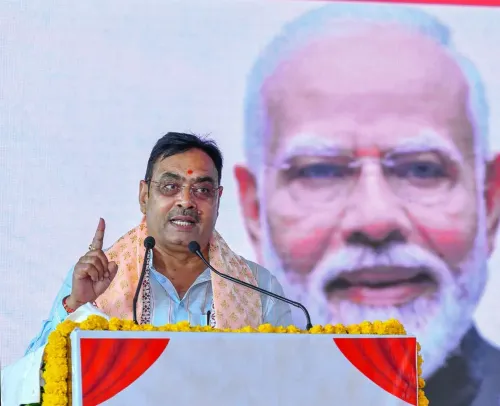
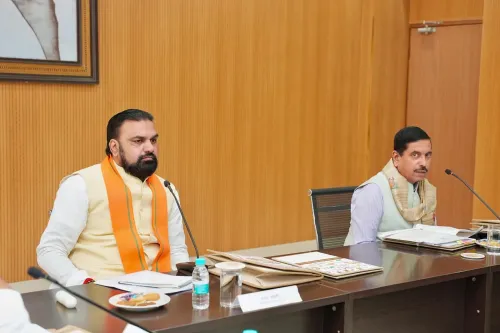
Rajasthan adds 1 crore new beneficiaries to food security scheme
Synopsis
The Rajasthan government, under Chief Minister Bhajan Lal Sharma, announced on Independence Day 2026 the addition of one crore new individuals to the state's Food Security Scheme, significantly expanding subsidised grain access through the Public Distribution System.
Key Takeaways
One crore new individuals have been added to Rajasthan's Food Security Scheme beneficiary list.
The announcement was made on Independence Day, 15 August 2026 , by the Chief Minister's Office.
Chief Minister Bhajan Lal Sharma (BJP) has been in office since December 2023 .
The scheme operates under the National Food Security Act, 2013 , providing subsidised grains via the Public Distribution System .
Details on the verification process, ration card integration, and budget provisions are yet to be officially disclosed.
On Independence Day, 15 August 2026, the Chief Minister's Office of Rajasthan announced a sweeping expansion of the state's food security net — adding one crore new eligible individuals to the Food Security Scheme, a move that reshapes the welfare landscape for millions of households across the state.
The official post, attributed to Chief Minister Bhajan Lal Sharma and carrying the hashtag #आपणो_अग्रणी_राजस्थान ('Our Leading Rajasthan'), announced that the state government has enrolled one crore new names into the scheme's beneficiary rolls. The timing — on the country's independence anniversary — underscores the political weight the ruling Bharatiya Janata Party government has placed on this announcement.
What the Food Security Scheme covers
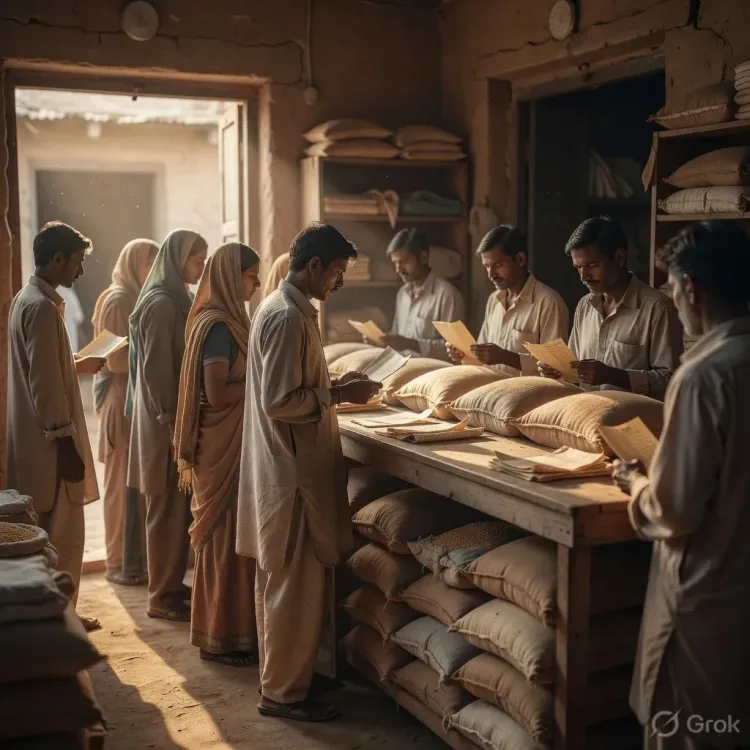
Rajasthan's food security programme operates under the framework of the National Food Security Act, 2013, which mandates subsidised grain access for up to 75 percent of the rural population and 50 percent of the urban population through the Public Distribution System (PDS). Beneficiaries receive food grains — primarily wheat and rice — at heavily subsidised rates through a network of fair-price shops across the state.
Periodic revisions to the beneficiary list are standard practice across Indian states, typically triggered by fresh socio-economic surveys, Aadhaar-linked verification drives, and exclusion-inclusion audits designed to reduce leakages and plug gaps in coverage.
Sharma's welfare push since December 2023
Chief Minister Bhajan Lal Sharma, who took office in December 2023 after the BJP's return to power in Rajasthan, has positioned welfare delivery as a cornerstone of the government's early agenda. An addition of one crore individuals to the food security rolls would represent one of the largest single expansions of the scheme in the state's recent history — though the precise verification process and integration timeline into the PDS are yet to be detailed publicly.
Analysts watching the state will look for specifics: how quickly the new names are mapped onto ration cards, whether supplementary state budget provisions have been earmarked, and the role of Aadhaar linkage in onboarding the new cohort without duplication.
Point of View
Which returned to power in late 2023, this move fits a pattern of using visible welfare delivery to consolidate its base among rural and lower-income households ahead of the next electoral cycle. The broader national context matters too: states that demonstrably close the gap between mandated NFSA coverage targets and actual enrolment earn credibility with the Centre on fund releases and scheme compliance. Whether the expansion holds up to scrutiny — on deduplication, Aadhaar linkage, and actual grain offtake — will determine whether this is transformative policy or a headline number.
NationPress
30 Sept 2026
Frequently Asked Questions
Who announced the addition of one crore beneficiaries to Rajasthan's food security scheme?
The Chief Minister's Office of Rajasthan made the announcement on 15 August 2026, crediting Chief Minister Bhajan Lal Sharma's government with the expansion.
What is the Rajasthan Food Security Scheme?
It is Rajasthan's implementation of the National Food Security Act, 2013, which provides subsidised food grains such as wheat and rice to eligible households through the Public Distribution System.
How many people were added to the Rajasthan food security scheme?
The state government announced the addition of one crore (10 million) new eligible individuals to the scheme's beneficiary rolls.
Who is Bhajan Lal Sharma?
Bhajan Lal Sharma is the Chief Minister of Rajasthan from the Bharatiya Janata Party, in office since December 2023.
What does the National Food Security Act cover?
The National Food Security Act, 2013 mandates subsidised grain access for up to 75 percent of the rural population and 50 percent of the urban population across India, delivered through the Public Distribution System.