Will FM Sitharaman's Infrastructure Push Transform the Union Budget 2026-27?
Synopsis
In a bold move, Finance Minister Nirmala Sitharaman has unveiled a significant infrastructure push in the Union Budget for 2026-27. This initiative aims to stimulate economic growth and ensure balanced regional development, presenting a vision for a more connected and prosperous India.
Key Takeaways
Public capital expenditure increased to Rs 12.2 lakh crore Focus on Tier-2 and Tier-3 cities for infrastructure Introduction of an Infrastructure Risk Guarantee Fund New freight corridor from Dankuni to Surat Operationalization of 20 new national waterways
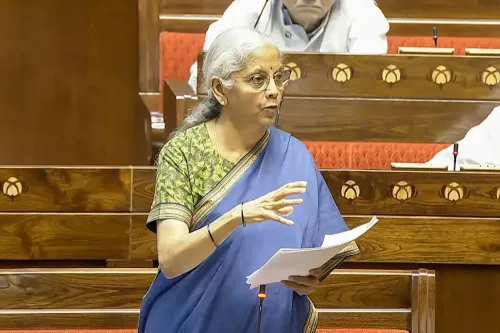
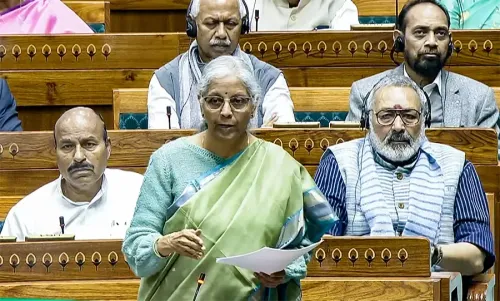
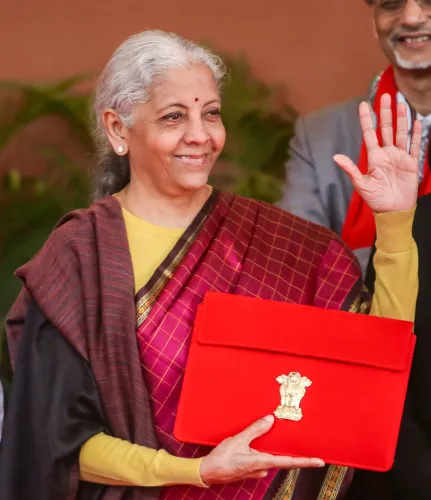
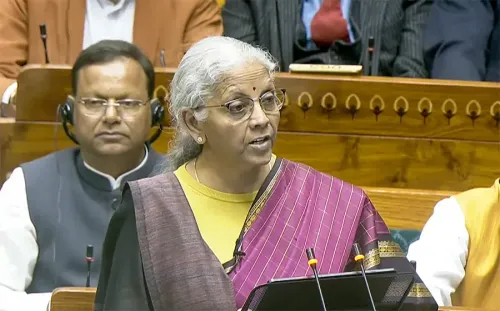
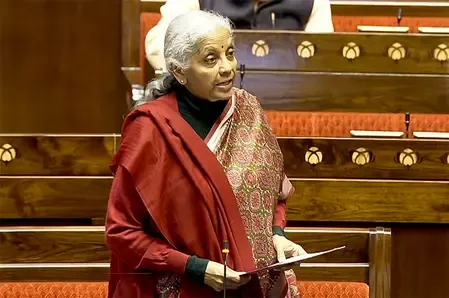
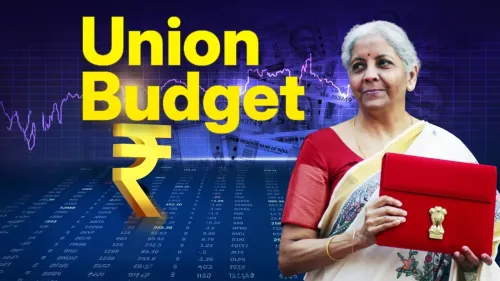
New Delhi, Feb 1 (NationPress) Finance Minister Nirmala Sitharaman unveiled a robust boost for infrastructure advancement during her Union Budget address for the fiscal year 2026-27, highlighting the importance of consistent public investment to foster economic growth and equitable regional development.
The administration remains committed to enhancing infrastructure in urban areas with populations exceeding five lakh, especially in Tier-2 and Tier-3 cities that have become critical growth centers.
This strategy aims to alleviate the burden on major metropolitan areas, encourage balanced development, and unlock the economic capabilities of smaller cities nationwide.
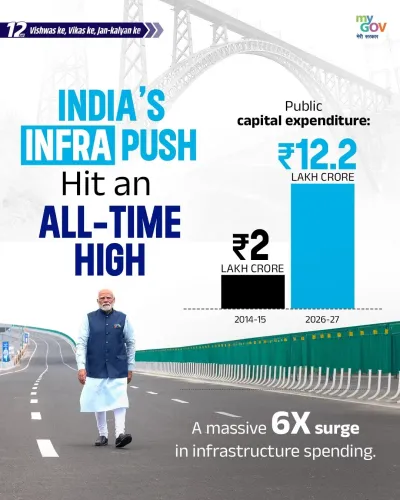
A significant aspect of the budget is the proposal to increase public capital expenditure to Rs 12.2 lakh crore for 2026-27, representing a notable rise from the Rs 11.2 lakh crore allocated in the prior budget, thereby continuing the trend of infrastructure-led growth.
The finance minister pointed out that public capex has surged dramatically since 2014-15, when it was approximately Rs 2 lakh crore, highlighting the government's dedication to creating world-class facilities that stimulate employment, connectivity, and long-term productivity.
To foster increased private sector involvement in substantial projects, the minister introduced the concept of an “Infrastructure Risk Guarantee Fund”.
This initiative will provide partial credit guarantees to lenders, carefully designed to alleviate risks during project development and construction. By reducing investment risks, the fund is anticipated to enhance confidence among developers and financial institutions, facilitating the effective execution of crucial infrastructure initiatives.
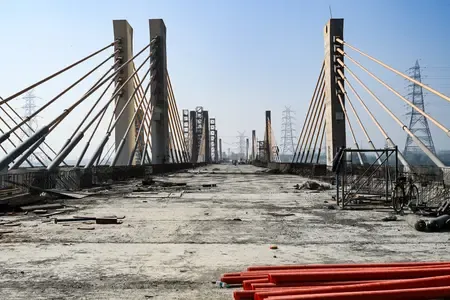
In the domain of logistics and transportation, the finance minister revealed plans for a new dedicated freight corridor linking Dankuni in the east to Surat in the west. This east-west corridor will enable environmentally friendly cargo transport, lower logistics expenses, relieve road congestion, and improve efficiency in freight movement throughout major industrial regions.
The budget also emphasizes inland waterways as a “green alternative” for cargo transport.
The government aims to operationalize 20 new national waterways over the next five years, starting with National Waterway-5 in Odisha. This will connect mineral-rich areas like Talcher and Angul, along with industrial centers such as Kalinganagar, to major ports, including Paradip and Dhamra, strengthening supply chains and supporting export-driven growth.
To further enhance the waterways framework, a specialized ship-repair facility will be established in Varanasi and Patna. These centers will cater specifically to inland vessels, promoting local maintenance skills, generating employment opportunities, and fostering the growth of river-based logistics in the Ganga-Brahmaputra region.
These initiatives resonate with the overarching vision of Viksit Bharat, integrating multimodal connectivity, risk management for investors, and focused urban-rural connections.
Point of View
It's vital to recognize the ambitious infrastructure initiatives outlined in the Union Budget. These strategies not only aim to enhance economic growth but also focus on equitable regional development. With a strong emphasis on multimodal connectivity and private sector involvement, the government is laying a foundation for a more prosperous and integrated nation.
NationPress
30 Sept 2026
Frequently Asked Questions
What is the total public capital expenditure for 2026-27?
The total public capital expenditure for 2026-27 is proposed to be Rs 12.2 lakh crore.
What is the purpose of the Infrastructure Risk Guarantee Fund?
The Infrastructure Risk Guarantee Fund is designed to offer partial credit guarantees to lenders, reducing risks during the development and construction phases of large projects.
How many new national waterways are planned?
The government aims to operationalize 20 new national waterways over the next five years.
Which cities are focused on for infrastructure development?
The focus is on cities with populations exceeding five lakh, particularly in Tier-2 and Tier-3 urban centers.
What are the expected benefits of the new freight corridor?
The new freight corridor is expected to promote environmentally sustainable cargo movement, reduce logistics costs, and enhance efficiency in freight transportation.