Stalin honours Kattabomman, cites DMK tributes to Tamil hero
Synopsis
On Veerapandiya Kattabomman's martyrdom anniversary, Tamil Nadu Chief Minister M. K. Stalin paid homage to the 18th-century anti-colonial Polygar chief, citing a DMK-era statue at Chennai's Gandhi Mandapam and a Madurai flyover named in the hero's honour.
Key Takeaways
Veerapandiya Kattabomman was executed by the British East India Company in 1799 , decades before the 1857 uprising, making him one of Tamil Nadu's earliest anti-colonial martyrs.
Stalin offered tribute on his martyrdom anniversary, 16 October 2026 .
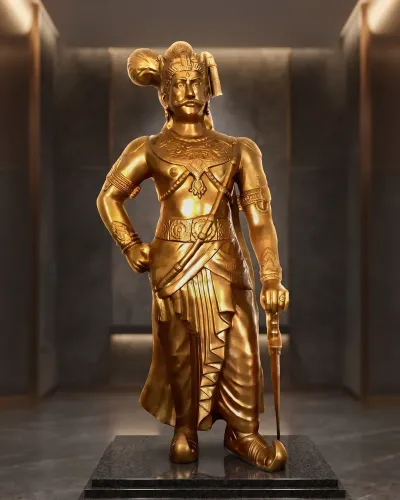
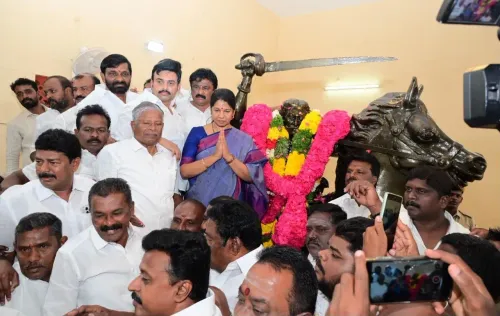
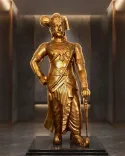
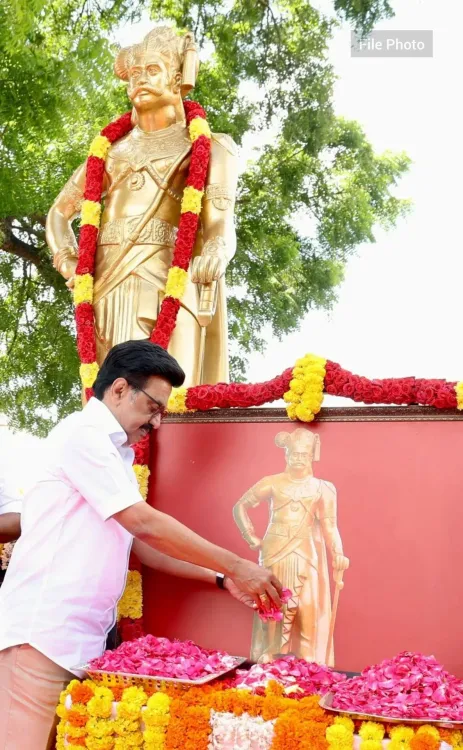
The DMK government installed a statue of Kattabomman at the Gandhi Mandapam complex in Chennai .
A road overbridge between Thirumangalam and Kallukudi railway stations in Madurai was named after Kattabomman by the DMK administration.
Stalin framed both acts under the Dravidian Model governance brand, linking infrastructure and cultural memory.
DMK routinely marks pre-1857 Tamil resistance figures to reinforce a narrative of regional sovereignty distinct from pan-Indian nationalist history.
On the martyrdom anniversary of one of Tamil Nadu's most defiant anti-colonial fighters, DMK president and Chief Minister M. K. Stalin paid tribute on Friday, 16 October 2026 to Veerapandiya Kattabomman — the 18th-century Polygar chieftain who walked to the gallows without flinching and became a symbol of Tamil self-respect.
Stalin's post, written in Tamil, translates: 'Ninaivu naal!' — 'Remembrance day!' — and opens with a vivid image: a warrior who walked to the scaffold with courage and pride. 'He lived by the conviction that honour is paramount, and sowed in the hearts of the people a burning flame against foreign rule. I bow my head to his valour.'
Who was Veerapandiya Kattabomman?
Veerapandiya Kattabomman was the Polygar ruler of Panchalankurichi in present-day Tamil Nadu who mounted one of the earliest and most celebrated armed resistances against the British East India Company. He was captured and executed by the British in 1799 — nearly six decades before the more widely remembered 1857 uprising. His defiance in the face of death turned him into an enduring icon of Tamil sovereignty and anti-imperialism.
What the DMK government has done in his name
Stalin went beyond tribute in his post, cataloguing concrete acts of commemoration by his administration. He stated that under the Dravidian Model government, a statue of Kattabomman was installed at the Gandhi Mandapam complex in Chennai — a landmark memorial site that houses statues of national and regional leaders. He also said a road overbridge built between Thirumangalam and Kallukudi railway stations in Madurai was named in the hero's honour.
'We took pride in naming the flyover after him,' Stalin wrote, closing with the salutation: 'Veerabandiya Kattabomman vazhga!' — 'Long live Veerapandiya Kattabomman!'
Dravidian identity politics and the pre-1857 memory
DMK administrations have long made the commemoration of pre-1857 Tamil resistors a pillar of regional identity politics. By centering figures like Kattabomman — a local chieftain rather than a pan-Indian nationalist symbol — the party reinforces its core narrative: that Tamil resistance to foreign domination predates and runs deeper than any Delhi-centred story of independence. The Dravidian Model, Stalin's signature governance brand, explicitly links social justice and federal autonomy with this deeper cultural memory. Naming public infrastructure after such heroes is, in this political grammar, not ceremonial — it is a statement about who Tamil Nadu's real ancestors of resistance are.
Point of View
Pre-national resistance rather than a Delhi-centric freedom struggle. By listing tangible government acts — a statue, a named flyover — he converts commemoration into an electoral credential, arguing the party does not merely remember Tamil heroes but materially consecrates them into the public landscape. The timing, on the martyrdom anniversary itself, maximises emotional resonance while the #DravidianModel hashtag ensures every tribute doubles as a brand reinforcement. Watch whether opposition parties contest the framing or attempt to co-opt Kattabomman's legacy for their own platforms.
NationPress
16 Oct 2026
Frequently Asked Questions
Who was Veerapandiya Kattabomman?
Veerapandiya Kattabomman was the Polygar ruler of Panchalankurichi in Tamil Nadu who led an early armed resistance against the British East India Company and was executed in 1799, making him one of India's earliest anti-colonial martyrs.
When is Veerapandiya Kattabomman's martyrdom anniversary?
Kattabomman's martyrdom anniversary falls on 16 October, commemorating his execution by British forces in 1799.
What did the DMK government do to honour Kattabomman?
According to CM M. K. Stalin's post, the DMK government installed a statue of Kattabomman at the Gandhi Mandapam complex in Chennai and named a road overbridge between Thirumangalam and Kallukudi railway stations in Madurai after him.
Where is the Gandhi Mandapam located?
Gandhi Mandapam is a memorial complex in Chennai, Tamil Nadu, that houses statues of national and regional leaders.
What is the Dravidian Model that Stalin refers to?
The Dravidian Model is the DMK government's stated governance philosophy emphasising social justice, Tamil cultural assertion, and federal principles, used by CM Stalin as a branding framework for his administration's policies.