Stalin pays tribute to Ondiveeran, Tamil anti-colonial warrior
Synopsis
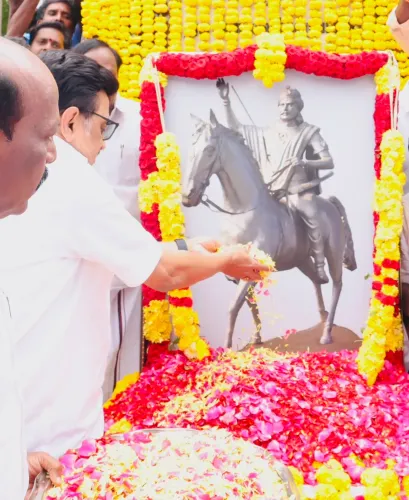
DMK president M. K. Stalin paid tribute to 18th-century Tamil warrior Ondiveeran on his death anniversary, honouring the commander who resisted British forces under Puli Thevar — part of a broader Dravidian tradition of reclaiming southern anti-colonial history.
Key Takeaways
Stalin posted a tribute to Ondiveeran on 20 August 2026 , marking the warrior's death anniversary.
Ondiveeran was a senior military commander under Puli Thevar , the Palaiyakkarar chieftain of Nerkattumseval in Tamil Nadu.
Their campaigns against the East India Company are part of the Polygar wars , predating the 1857 uprising by nearly a century.
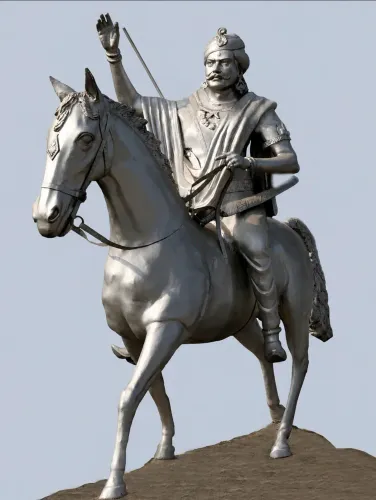
Stalin described Ondiveeran as 'thenmalai por nayagan' — the war hero of the southern hills — and said his glory 'will live forever in the hearts of the people.' The tribute reflects a consistent DMK and Dravidian-party tradition of foregrounding pre-1857 Tamil warriors to assert the south's distinct anti-colonial legacy.
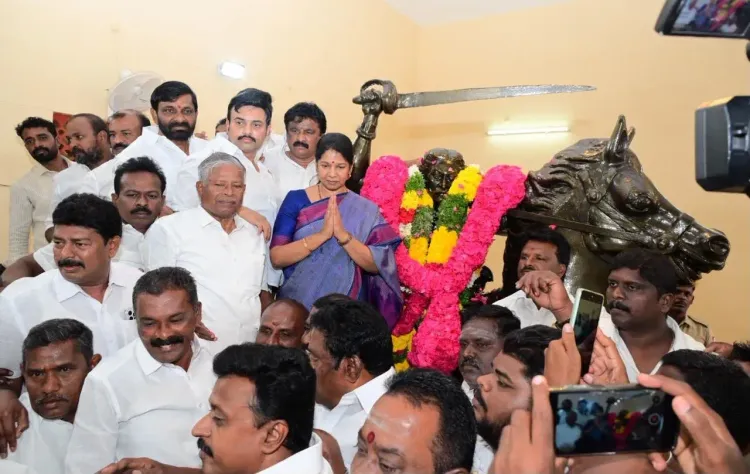
A warrior who refused to bow to British bayonets in the mid-18th century is remembered today — and DMK president M. K. Stalin made sure Tamil Nadu did not let the moment pass quietly.
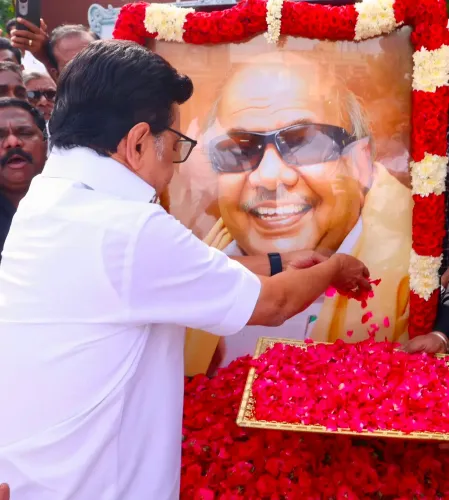
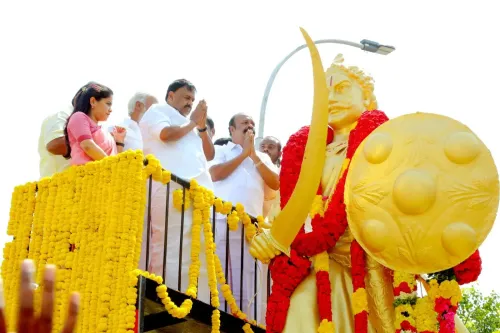
Posting on 20 August 2026, Stalin paid homage to Ondiveeran on his death anniversary, honouring the fighter as a commander of unmatched valour who drove back British forces at a time when organised resistance against the East India Company in the south was still a century ahead of 1857. In Stalin's words, Ondiveeran's glory 'will live forever in the hearts of the people, undimmed.'
Ondiveeran and the southern front against the East India Company
Ondiveeran served as one of the foremost military commanders under Puli Thevar, the Palaiyakkarar chieftain of Nerkattumseval in present-day Tamil Nadu, who mounted some of the earliest armed challenges to East India Company expansion in the region. The campaigns they led — part of what historians classify as the Polygar wars — predate the more widely remembered 1857 uprising by nearly a century, making them a distinct and often under-cited chapter of Indian anti-colonial history. Ondiveeran's role was that of a battlefield commander: a tactician who not only held ground but, by several historical accounts, succeeded in repelling British advances — a rare outcome in an era when colonial military superiority was already consolidating across the subcontinent.Why Dravidian parties keep this memory alive
Stalin's tribute is not an isolated gesture. DMK and the broader Dravidian political tradition have consistently foregrounded pre-1857 Tamil warriors — figures like Puli Thevar, Veerapandiya Kattabomman, and Ondiveeran — as proof that the south had its own robust, home-grown resistance to colonial rule, independent of northern-centric nationalist narratives. The invocation carries a dual weight: it is at once an act of historical reclamation and a marker of regional identity. By naming Ondiveeran specifically as 'thenmalai por nayagan' (the war hero of the southern hills) and 'thenmagan' (the great warrior of the south), Stalin frames him not merely as a local chieftain but as an emblem of a distinctly Tamil, distinctly southern spirit of freedom. For Tamil Nadu's public memory, these commemorations also carry a quiet political argument — that the south's contribution to India's anti-colonial struggle deserves equal standing in the national historical imagination. The anniversary falls as Tamil Nadu continues to mark Polygar-era milestones, with periodic calls for stronger state-level educational recognition of these figures in school curricula and public spaces.Point of View
Not mere ceremony. By invoking a pre-1857 southern commander, the DMK reinforces its long-running argument that Tamil Nadu's anti-colonial story is older, broader, and more regionally rooted than the national mainstream acknowledges. The framing of Ondiveeran as a specifically southern hero — thenmalai por nayagan — signals a continued effort to build a parallel canon of Tamil martyrs alongside, and distinct from, the pan-Indian freedom-movement narrative. In an era of intensifying debates over history curricula and cultural representation, such commemorations are as much about the present as the past.
NationPress
5 Oct 2026
Frequently Asked Questions
Who was Puli Thevar?
Puli Thevar was an 18th-century Palaiyakkarar chieftain based in Nerkattumseval in present-day Tamil Nadu. He is recognised as one of the earliest leaders to mount organised armed resistance against the East India Company in southern India.
What are the Polygar wars?
The Polygar wars were a series of armed conflicts between the East India Company and local Palaiyakkarar chieftains — known as Polygars — in southern India during the late 18th and early 19th centuries. They represent some of the earliest organised resistance to British colonial expansion on the subcontinent.
Why does the DMK pay tribute to pre-1857 Tamil warriors?
The DMK and the broader Dravidian political tradition regularly honour pre-1857 Tamil warriors to assert that southern India had its own robust, home-grown anti-colonial resistance independent of northern-centric nationalist narratives. These tributes serve as acts of historical reclamation and markers of distinct regional identity.
What did M. K. Stalin say about Ondiveeran?
Stalin described Ondiveeran as an incomparable warrior who refused to submit to British forces and drove them back, calling him a great military commander under Puli Thevar and the war hero of the southern hills. He said Ondiveeran's glory 'will live forever in the hearts of the people, undimmed.'