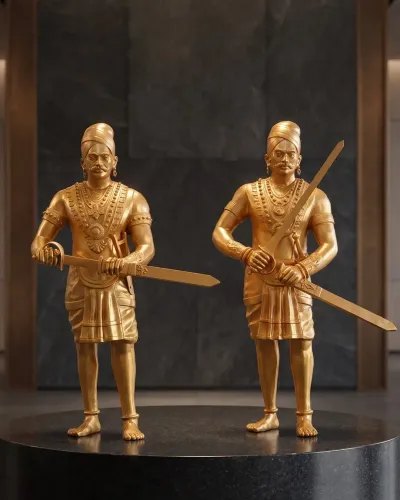
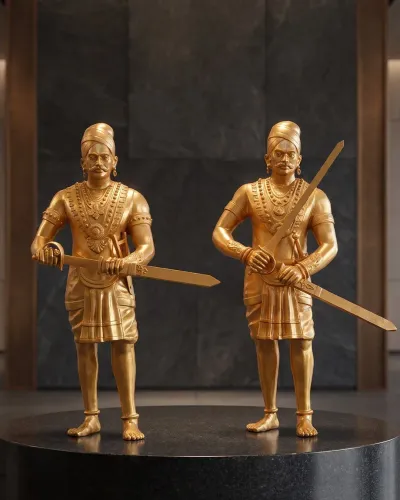
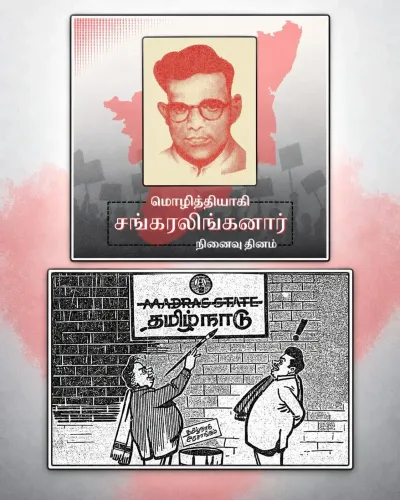
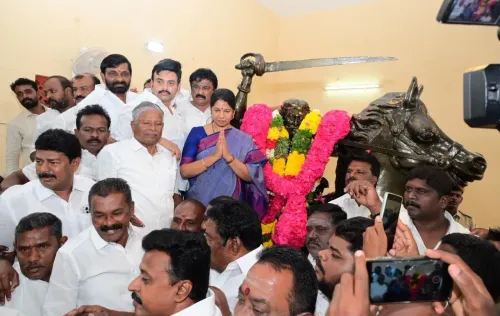
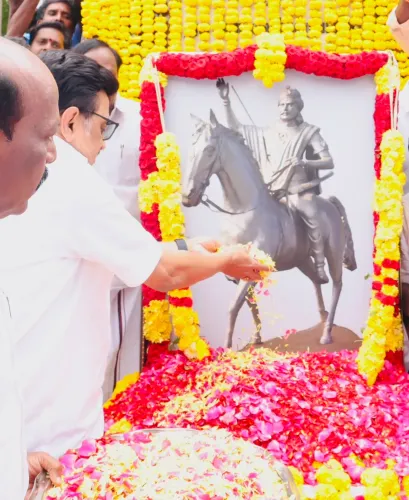
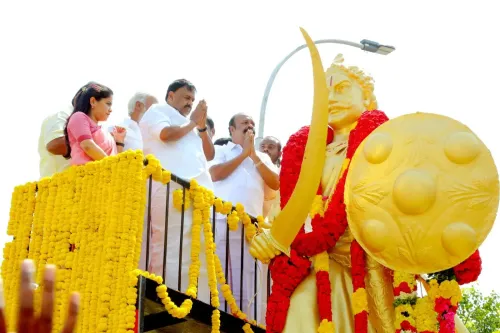
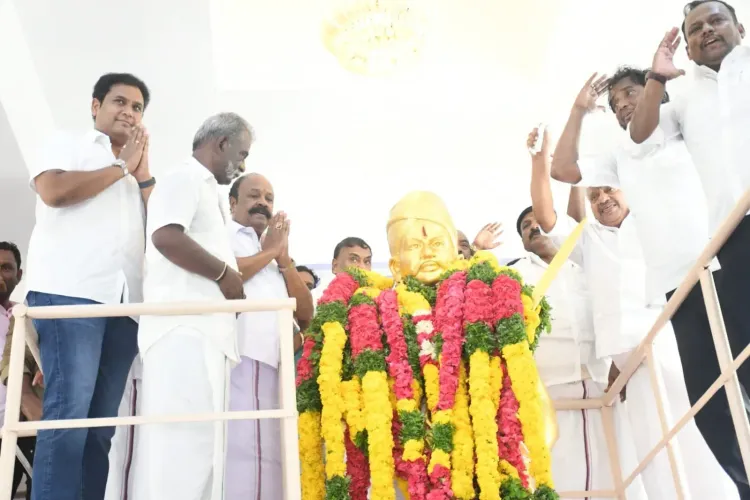
Stalin pays tribute to Marudhu Brothers on memorial day
Synopsis
DMK president M. K. Stalin marked the memorial day of the Marudhu Brothers on 24 October, saluting the Sivaganga polygar chieftains Periya Marudhu and Chinna Marudhu as pioneers of pan-Indian anti-colonial unity through the historic Jambudweepa Declaration.
Key Takeaways
Stalin posted a tribute to the Marudhu Brothers on their memorial day, 24 October 2026 .
Periya Marudhu and Chinna Marudhu were polygar chieftains of the Sivaganga estate in southern Tamil Nadu who led armed resistance against the British East India Company.
The brothers issued the Jambudweepa Declaration , an early pan-Indian call for unity across communities to expel colonial rulers.
Stalin described them as rooted in the tradition of the ancient Sangam text Purananooru and called them 'social harmony warriors.' The tribute reflects DMK's consistent practice of commemorating pre-1857 Tamil anti-colonial figures, linking party ideology to regional valour and social cohesion.
Two brothers who dared to declare war on an empire — centuries before 1857 — are remembered today by DMK president M. K. Stalin, who paid solemn tribute to the Marudhu Brothers on their memorial day, 24 October 2026, honouring the polygar chieftains of Sivaganga who gave their lives resisting British colonial rule.
In his post in Tamil, Stalin saluted Periya Marudhu and Chinna Marudhu as 'சீற்றமிகு காளைகள்' ('fierce bulls') of the Sivaganga region, calling them the very definition of the valour celebrated in the ancient Sangam text Purananooru. 'They fought standing against the British,' he wrote, 'embodying the heroism of the Tamils of that era.'
The Jambudweepa Declaration — India's earliest unity call
Stalin reserved particular emphasis for the brothers' most consequential act: the Jambudweepa Declaration, a proclamation the Marudhu Brothers issued calling on all Indians to set aside their differences and unite to expel foreign rulers. Stalin described them as 'social harmony warriors' who 'thundered this message to everyone before anyone else did' — a pointed assertion that the idea of pan-Indian unity against colonialism predates the mainstream freedom movement by decades.
The declaration is historically significant as one of the earliest known pan-Indian calls to resistance, issued from a regional Tamil kingdom at a time when the British East India Company was consolidating power across the subcontinent.
Sivaganga's chieftains who chose the scaffold
Periya Marudhu and Chinna Marudhu were polygar chieftains who administered the Sivaganga estate in what is now southern Tamil Nadu. They led sustained armed resistance against the British East India Company in the late eighteenth and early nineteenth centuries. Captured by colonial forces, they were executed — choosing death over submission. Stalin described their sacrifice in his post: 'On the remembrance day of those fighters who sacrificed their lives and sowed the seeds of the spirit of freedom, I offer them my heroic salute.'
A consistent DMK thread — reclaiming pre-Congress Tamil resistance
This tribute fits a well-established pattern within DMK's public commemorations. The party consistently brings attention to pre-1857 Tamil resistors of British rule, anchoring its ideology in narratives of regional valour and social harmony that predate the Indian National Congress-led freedom movement. By foregrounding the Marudhu Brothers' explicit message of unity across communities, Stalin also draws a line from eighteenth-century Tamil resistance to the DMK's own stated commitment to social cohesion.
Annual remembrance events are held in Sivaganga on 24 October, with cultural programmes typically marking the occasion at the district level in Tamil Nadu.
For a party that governs Tamil Nadu and frequently contests the Centre on questions of federal identity, invoking chieftains who defied an empire from the same soil carries unmistakable political texture — even in a solemn, reverential register.
Point of View
The DMK positions Tamil resistance as foundational to India's freedom story, not peripheral to it. This sits squarely within the party's broader effort to assert that the Tamil region produced anti-colonial thinkers and fighters whose vision preceded the organised national movement. For a regional party navigating centre-state tensions, owning this narrative is both cultural assertion and political signalling.
NationPress
24 Oct 2026
Frequently Asked Questions
Who were the Marudhu Brothers?
The Marudhu Brothers — Periya Marudhu and Chinna Marudhu — were polygar chieftains of the Sivaganga estate in southern Tamil Nadu who led armed resistance against the British East India Company in the late eighteenth and early nineteenth centuries and were executed by colonial forces.
What is the Jambudweepa Declaration?
The Jambudweepa Declaration was a proclamation issued by the Marudhu Brothers calling on all Indians, regardless of their differences, to unite and expel foreign rulers — considered one of the earliest known pan-Indian calls to resist colonial rule.
When is Marudhu Brothers memorial day?
The Marudhu Brothers are remembered on 24 October each year, with district-level remembrance events typically held in Sivaganga , Tamil Nadu.
Why does the DMK frequently commemorate pre-1857 Tamil freedom fighters?
The DMK has a consistent practice of honouring pre-1857 Tamil resistors of British rule, linking its ideology to narratives of regional valour and social harmony and asserting that Tamil resistance predates and contributed to the broader Indian freedom movement.
What did M. K. Stalin say about the Marudhu Brothers?
Stalin called them 'fierce bulls' of the Sivaganga region and 'social harmony warriors,' saying they sacrificed their lives to sow the seeds of the spirit of freedom, and offered them his 'heroic salute' on their memorial day.