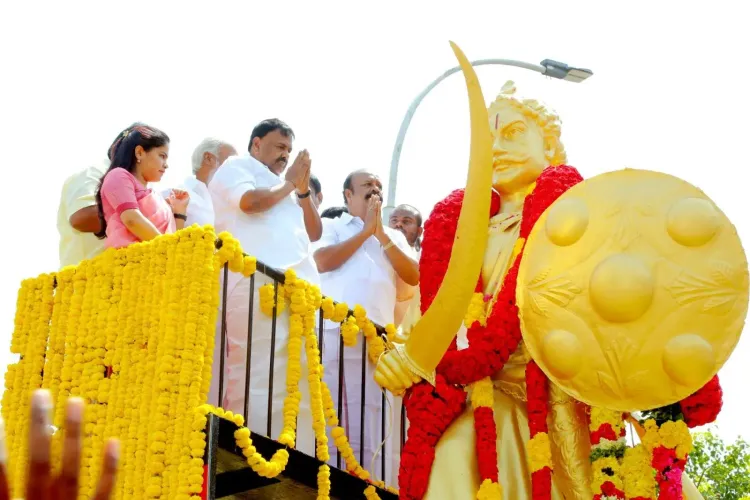
Stalin pays tribute to Tamil freedom fighter Alagu Muthukkon
Synopsis
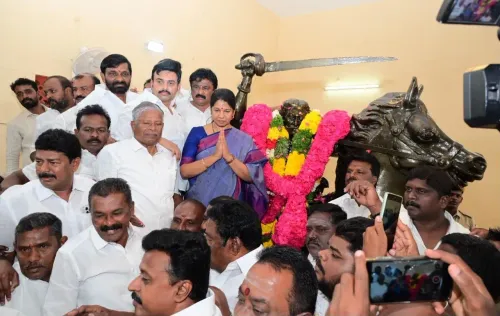
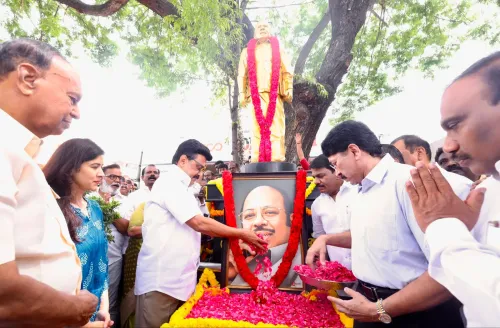
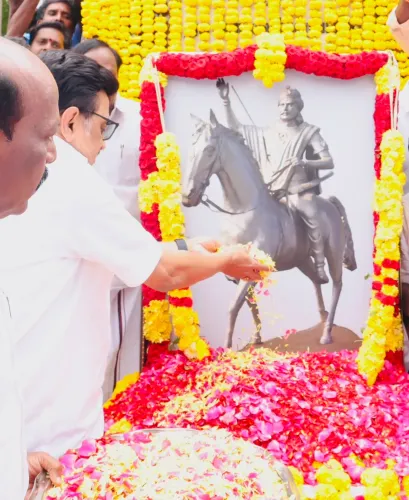
DMK president M. K. Stalin on 11 July 2026 paid homage to Alagu Muthukkon, an 18th-century Tamil chieftain who resisted colonial rule a century before the 1857 Sepoy Mutiny. Stalin called him a heroic seed of the freedom struggle and offered a salute on his birth anniversary.
Key Takeaways
Stalin posted a tribute to Alagu Muthukkon on 11 July 2026 , the fighter's birth anniversary.
Stalin described Muthukkon as a warrior who lit the flame of freedom on Tamil soil a hundred years before the 1857 Sepoy Mutiny .
He credited Muthukkon with embedding the conviction that dying in resistance is nobler than living in subjugation into the hearts of the people.
DMK administrations have a consistent record of commemorating Poligar-era resisters to highlight Tamil contributions to anti-colonial history.
The tribute is part of a broader DMK pattern of foregrounding Dravidian and regional narratives within India's independence story.
Historians and civil society groups may use the occasion to renew calls for curriculum inclusion of southern freedom fighters.
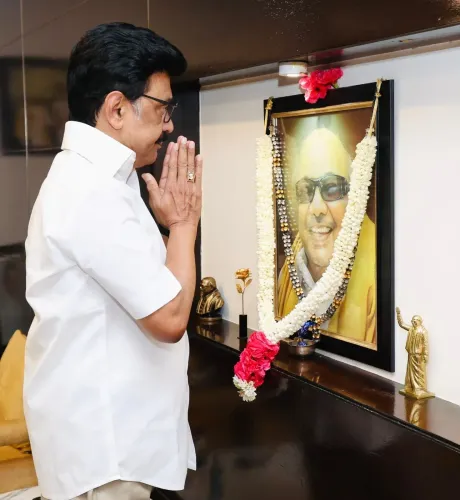
DMK president M. K. Stalin on Saturday, 11 July 2026, paid tribute to Alagu Muthukkon, an 18th-century Tamil chieftain who led early armed resistance against colonial rule, on the occasion of the fighter's birth anniversary. Stalin, posting in Tamil on X, hailed Muthukkon as a towering warrior who lit the flame of freedom on Tamil soil well before the 1857 Sepoy Mutiny.
In his post, Stalin wrote: 'சிப்பாய்ப் புரட்சிக்கு நூறாண்டுகளுக்கு முன்பே விடுதலைக் கனலை நம் மண்ணில் மூட்டிய மாபெரும் வீரர் அழகு முத்துக்கோன்' — translating to: 'Alagu Muthukkon is the great warrior who ignited the fire of freedom on our soil a hundred years before the Sepoy Mutiny.' He added that Muthukkon's conviction — that it is better to die fighting oppression than to live as a slave — had been planted as a heroic seed of the freedom struggle in the hearts of the people. Stalin closed with a salute: 'On his birthday, I offer him my heroic tribute.'
Context
Alagu Muthukkon is remembered in Tamil historical tradition as a Poligar-era chieftain who took up arms against colonial authority in southern India, a period that predates the more widely commemorated 1857 uprising by roughly a century. His birth anniversary falls on 11 July, and regional historians regard him as one of the earliest organised resisters of British expansion in the Tamil region. Stalin's tribute positions Muthukkon within a lineage of anti-colonial fighters whose stories, the DMK argues, deserve national recognition on a par with more celebrated northern Indian figures.
Policy Backdrop
DMK administrations have consistently supported memorials and commemorative events for Poligar-era resisters as part of a broader effort to highlight Tamil contributions to India's anti-colonial history. This practice reflects the party's longstanding emphasis on Dravidian cultural identity and the argument that armed resistance to British rule began in the south decades before it spread northward. Stalin and other DMK leaders regularly use social media anniversaries to reinforce this narrative, making it a recognisable feature of the party's public communication strategy.
Stakeholders and Impact
The tribute resonates primarily with Tamil Nadu's public and regional historians who have long advocated for greater inclusion of southern freedom fighters in mainstream national histories. For the DMK's political base, such posts affirm the party's role as a custodian of Tamil heritage and historical memory. Scholars of colonial-era resistance have noted that Poligar uprisings across the southern peninsula represent a significant but under-documented chapter of anti-British struggle in India.
What's Next
Stalin's post is likely to renew calls among historians and civil society groups in Tamil Nadu for state-level events, academic seminars, or school curriculum updates that formally incorporate figures like Alagu Muthukkon into the broader national independence narrative. Whether the tribute translates into concrete policy steps — such as a government-sponsored memorial event or a curriculum revision — remains to be seen. The DMK's track record of following social-media commemorations with institutional action makes such developments plausible in the months ahead.
Point of View
Reinforcing the DMK's long-held argument that the geography of India's anti-colonial resistance must be redrawn southward. By invoking Muthukkon's defiance a century before 1857, the party implicitly challenges a north-centric reading of the freedom struggle that has dominated mainstream national historiography. This social-media commemoration fits a consistent DMK playbook of converting birth anniversaries into political statements about Tamil identity and historical equity. The real test will be whether such tributes are followed by institutional steps — curriculum changes, state memorials — that embed these figures in public memory beyond the news cycle.
NationPress
10 Oct 2026
Frequently Asked Questions
Who is Alagu Muthukkon?
Alagu Muthukkon was an 18th-century Tamil chieftain who led early armed resistance against colonial authority in southern India, predating the 1857 Sepoy Mutiny by roughly a hundred years. He is remembered in Tamil historical tradition as one of the earliest organised fighters against British expansion in the region.
Why did M. K. Stalin pay tribute to Alagu Muthukkon?
Stalin paid tribute on Alagu Muthukkon's birth anniversary, which falls on 11 July. He hailed Muthukkon as a great warrior who ignited the flame of freedom on Tamil soil before 1857 and offered his 'heroic tribute' in a post on X.
What is the significance of Alagu Muthukkon in Tamil history?
Alagu Muthukkon is regarded as part of the Poligar-era resistance movement in southern India, a period of armed uprisings against British colonial expansion that predate the more widely known 1857 revolt. Tamil historians and the DMK argue that his story represents an under-recognised chapter of India's anti-colonial struggle.
What is the DMK's stance on Tamil freedom fighters?
The DMK has consistently supported memorials and commemorations for Poligar-era fighters as part of highlighting Tamil contributions to India's anti-colonial history. The party argues that armed resistance to British rule began in the south decades before it spread northward, and uses social media anniversaries to reinforce this narrative.
Will there be any official events to mark Alagu Muthukkon's birth anniversary?
No official events have been announced as of Stalin's post on 11 July 2026. However, the DMK's track record of following social-media commemorations with institutional action — such as state-sponsored events or curriculum references — makes such developments possible in the coming months.