CM Pinarayi slams Shah's demographic panel as divisive

Synopsis
Kerala Chief Minister Pinarayi Vijayan has strongly criticised Union Home Minister Amit Shah's framing of border-state demographic shifts as 'infiltration' and condemned the newly constituted High-Level Committee on Demographic Change as divisive and discriminatory, calling on India to uphold its secular and constitutional values.
Key Takeaways
Kerala CM Pinarayi Vijayan publicly condemned Amit Shah 's characterisation of demographic changes in border states as a result of 'infiltration.' Vijayan described the newly formed High-Level Committee on Demographic Change as 'deeply disturbing' and warned it could legitimise suspicion against entire communities.
He called on India to ensure 'fear does not replace facts' and that 'prejudice does not shape public policy.' Kerala has a consistent record of opposing central citizenship and immigration measures, including passing a state assembly resolution against the CAA in 2019 .
The Assam NRC , published in 2019 , and the CAA form the policy lineage behind the current controversy over demographic surveillance in border states.
The formal terms of reference and membership of the High-Level Committee on Demographic Change are yet to be made public.
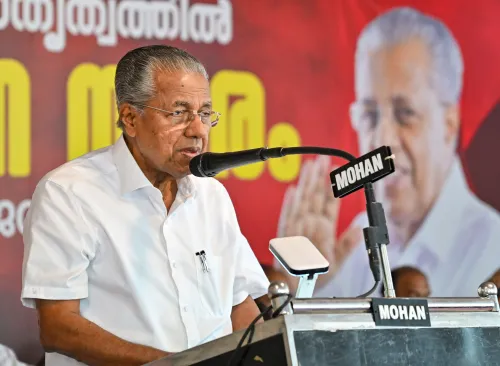
Kerala Chief Minister Pinarayi Vijayan on Saturday, 11 July 2026 sharply criticised Union Home Minister Amit Shah's framing of demographic changes in border states as a consequence of 'infiltration', and condemned the newly constituted High-Level Committee on Demographic Change as a move that risks legitimising suspicion against entire communities.
Context
In his post, Vijayan warned that Shah's narrative 'risks legitimising suspicion against entire communities and paving the way for divisive, discriminatory policies.' He called on the country to 'stand united to defend our secular, democratic and constitutional values,' framing the committee as a threat to constitutional principles rather than a legitimate security measure.
The Chief Minister's intervention comes amid a broader national debate over how the central government characterises demographic shifts along India's northeastern and other border regions. Vijayan argued that 'India cannot allow fear to replace facts or prejudice to shape public policy.'
Policy Backdrop
Concerns over illegal immigration from Bangladesh into northeastern states, particularly Assam, have driven central government policy for over a decade. The National Register of Citizens (NRC) for Assam was published in 2019 following a Supreme Court-supervised process aimed at identifying undocumented migrants. That same year, Parliament passed the Citizenship Amendment Act (CAA), which created a fast-track citizenship pathway for non-Muslim minorities from neighbouring countries.
Both measures drew fierce opposition from Left-led state governments, including Kerala, which passed a resolution in its state assembly against the CAA. Vijayan has consistently positioned his government as a defender of minority rights and federal principles against what he describes as the Centre's communal overreach.
The newly constituted High-Level Committee on Demographic Change — referenced in Shah's recent statements — represents the latest iteration of this long-running policy debate. Its formal terms of reference, membership and timeline have not yet been made public.
Stakeholders and Impact
The communities most directly affected by such a committee's work would be border populations in states such as Assam, West Bengal and other northeastern states, where demographic data has long been contested. Minority communities — particularly Bengali-speaking Muslims — have historically borne the brunt of citizenship verification exercises, with critics arguing that such processes expose them to statelessness and harassment.
Opposition parties, civil society groups and constitutional scholars have repeatedly raised concerns that framing demographic change primarily through the lens of 'infiltration' conflates legitimate residents with undocumented migrants, eroding trust in state institutions among vulnerable populations.
What's Next
Attention will now turn to the formal notification and terms of reference for the High-Level Committee on Demographic Change, which will determine the scope of its mandate and whether it triggers further pushback from non-BJP-ruled states. Kerala's response — and the possibility of coordinated opposition among Left and Congress-governed states — will be a key indicator of how far this issue escalates into a Centre-state confrontation. Parliamentary discussions and any formal state assembly resolutions in the coming weeks will set the tone for the political battle ahead.
Point of View
Extending a confrontation that began with the NRC and CAA in 2019. By framing the committee as a constitutional threat rather than a security measure, he is attempting to shift the debate from immigration enforcement to minority rights — terrain more favourable to the opposition. The intervention also serves a domestic purpose: reinforcing CPI(M)'s ideological identity ahead of potential electoral cycles in Kerala and nationally. Whether other non-BJP states echo his position will determine whether this remains a lone dissent or crystallises into organised federal resistance.
NationPress
11 Jul 2026
Frequently Asked Questions
What is the High-Level Committee on Demographic Change?
The High-Level Committee on Demographic Change is a body reportedly constituted by the central government under Union Home Minister Amit Shah to examine demographic shifts in border states. Its formal terms of reference and membership have not yet been made public as of July 2026 .
Why is Pinarayi Vijayan opposing the demographic change committee?
Kerala CM Pinarayi Vijayan argues that framing demographic changes as 'infiltration' risks legitimising suspicion against entire communities and could lead to discriminatory policies that undermine India's secular and constitutional values.
What is the connection between the NRC, CAA and this new committee?
The Assam NRC (published 2019 ) and the Citizenship Amendment Act ( 2019 ) were earlier central government measures to address illegal immigration and citizenship in border states. The new High-Level Committee on Demographic Change is seen by critics as a continuation of the same policy direction.
Has Kerala opposed central citizenship policies before?
Yes. The Kerala Legislative Assembly passed a resolution in 2019 against the Citizenship Amendment Act , making it one of the first states to formally oppose the legislation. CM Vijayan has consistently challenged such policies as communal and violative of federal principles.
Which communities are most affected by demographic change committees in border states?
Border populations in states such as Assam and West Bengal are most directly affected, particularly Bengali-speaking Muslim communities who have historically faced heightened scrutiny during citizenship verification exercises like the Assam NRC .