CM Samrat Choudhary Backs Shah's Vow on Demographic Change
Synopsis
Bihar Chief Minister Samrat Choudhary amplified Home Minister Amit Shah's declaration that demographic change will not be permitted in Tripura, West Bengal, or Bihar, calling it an 'unwavering resolve' — extending the BJP's decade-long immigration and citizenship messaging to three eastern states.
Key Takeaways
Bihar CM Samrat Choudhary shared Home Minister Amit Shah 's statement on June 5, 2026 via his official X account.
Shah declared that demographic change will not be allowed in Tripura , West Bengal , or Bihar , calling it an 'unwavering resolve.' The statement extends BJP's immigration and citizenship messaging beyond Assam to three additional eastern and northeastern states.
The policy lineage includes the Assam Accord (1985) , the NRC finalised in 2019 , and the Citizenship Amendment Act (December 2019) .
Bihar's inclusion broadens the political framing of demographic concerns beyond states directly bordering Bangladesh.
Analysts will watch for state-level follow-up measures in Bihar and potential campaign emphasis ahead of upcoming elections.
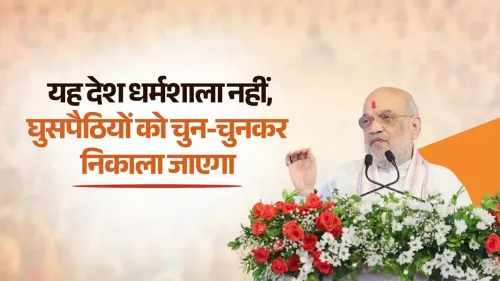
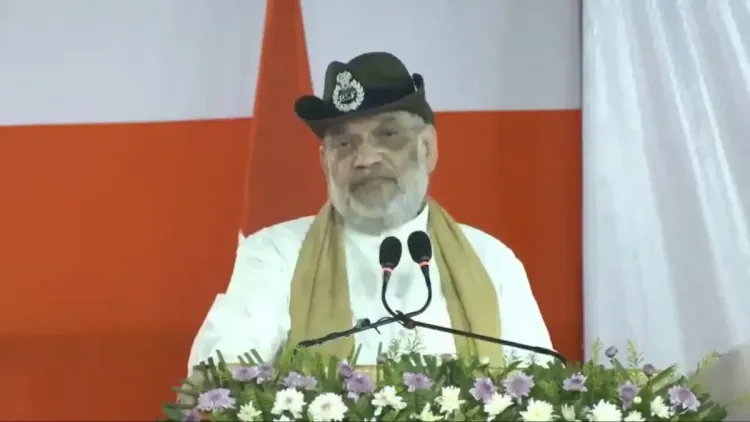
Bihar Chief Minister Samrat Choudhary on Friday, June 5, 2026 amplified a statement by Union Home Minister Amit Shah, sharing the minister's categorical assertion that demographic change will not be permitted in Tripura, West Bengal, or Bihar — framing it as an 'unwavering resolve' of the government.
Context
The post quotes Amit Shah directly: 'चाहे त्रिपुरा हो, चाहे बंगाल हो या चाहे बिहार हो, हम जनसांख्यिकीय बदलाव नहीं होने देंगे। यह हमारा अटल संकल्प है।' ['Whether it is Tripura, Bengal, or Bihar — we will not allow demographic change. This is our unwavering resolve.'] The statement names three states with distinct but related concerns about population composition along India's eastern frontier.
Tripura and West Bengal share long borders with Bangladesh and have historically been at the centre of debates over illegal immigration dating to partition-era and post-1971 migration waves. Bihar's inclusion broadens the political framing beyond the northeast.
Policy Backdrop
The BJP-led central government has maintained a consistent legislative and administrative focus on illegal immigration from Bangladesh over the past decade. The Assam Accord of 1985 first codified the commitment to identify and deport foreigners who entered after 25 March 1971.
The National Register of Citizens (NRC), finalised in Assam in 2019, was designed to distinguish citizens from undocumented migrants. The Citizenship Amendment Act (CAA), enacted in December 2019, created pathways for non-Muslim migrants from Bangladesh, Pakistan, and Afghanistan who entered before 2014 — together forming the legislative architecture underpinning Shah's stated resolve.
Border fencing along the India-Bangladesh frontier and intensified citizenship verification have been the operational pillars of this approach, with political messaging increasingly extending these frameworks beyond Assam to other eastern and northeastern states.
Stakeholders and Impact
Indigenous and long-settled communities in Tripura, West Bengal, and Bihar are the primary constituencies invoked by such statements. In Tripura, tribal communities have long raised concerns about demographic shifts resulting from decades of migration. In West Bengal, the issue intersects with electoral rolls and border-district politics.
Civil society groups and opposition parties in these states hold divergent views — with some welcoming stricter border enforcement and others cautioning against profiling of long-resident Muslim communities. The statement, shared by CM Choudhary from his official handle, signals that Bihar's state leadership is aligning itself squarely with this central government position.
What's Next
Observers will watch for any state-level follow-up from the Bihar government — including announcements on citizenship verification drives, border infrastructure cooperation, or legislative measures. The rhetoric also sets a backdrop for political mobilisation ahead of any upcoming assembly elections in the affected states.
With Home Minister Shah's statement now amplified by a sitting chief minister, pressure may build on other BJP-governed states along India's eastern border to issue similar affirmations, potentially shaping the party's campaign narrative across the region.
Point of View
CM Choudhary is deliberately positioning Bihar within a national BJP narrative on demographic security — a framing more typically associated with Assam and the northeast. The move signals that the party intends to make illegal immigration and citizenship verification a live political issue in Bihar, not merely a border-state concern. This fits a broader pattern of extending Assam-tested messaging to electorally significant states ahead of potential assembly contests. The explicit naming of three states in a single declaration also suggests coordinated messaging from the central leadership rather than a spontaneous remark.
NationPress
21 Oct 2026
Frequently Asked Questions
What did Amit Shah say about demographic change in Bihar, Bengal and Tripura?
Home Minister Amit Shah stated that demographic change will not be permitted in Tripura, West Bengal, or Bihar, describing it as the government's 'unwavering resolve.' Bihar CM Samrat Choudhary shared this statement on June 5, 2026.
Why is Bihar included in statements about demographic change alongside Tripura and West Bengal?
While Tripura and West Bengal directly border Bangladesh and have historically faced migration-related demographic concerns, Bihar's inclusion by Amit Shah broadens the BJP's political framing of the issue to a larger eastern Indian state, signalling a wider campaign narrative.
What is the NRC and how does it relate to this statement?
The National Register of Citizens (NRC), finalised in Assam in 2019, is a citizenship verification exercise designed to identify undocumented migrants. It forms part of the policy architecture behind BJP's stated commitment to preventing demographic change in border states.
What is the Citizenship Amendment Act and its connection to demographic concerns?
The Citizenship Amendment Act (CAA), enacted in December 2019, provides citizenship pathways to non-Muslim migrants from Bangladesh, Pakistan, and Afghanistan who entered India before 2014. It is part of the central government's broader response to illegal immigration and demographic pressures in eastern India.
What action is Bihar's state government expected to take following this statement?
No specific state-level measures have been announced yet. Observers are watching for possible citizenship verification initiatives, border infrastructure cooperation, or political mobilisation in Bihar linked to this messaging ahead of future elections.