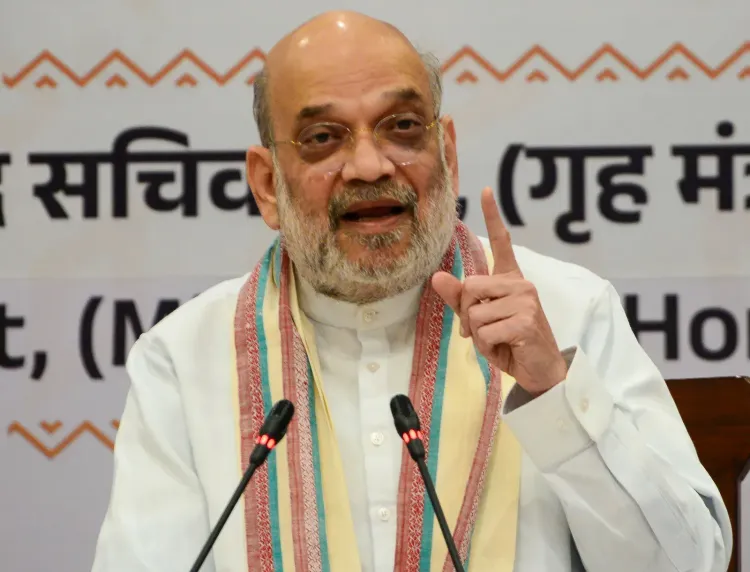
Amit Shah forms High-Level Committee on Demographic Change to counter infiltration
Synopsis
Months after PM Modi's Red Fort pledge, Home Minister Amit Shah has formally constituted the High-Level Committee on Demographic Change — chaired by a retired Supreme Court judge and staffed by senior retired bureaucrats. The panel's mandate to map population shifts by religious and social community makes it one of the most politically consequential policy bodies formed this term.
Key Takeaways
Home Minister Amit Shah announced the constitution of the High-Level Committee on Demographic Change on 27 May 2025 .
The committee is chaired by Justice Prakash Prabhakar Naolekar (Retd) and includes the Census Commissioner , Durga Shankar Mishra (Retd IAS) , Balaji Srivastava (Retd IPS) , and Dr Shamika Ravi .
The panel will assess demographic changes caused by illegal immigration and analyse population shifts across religious and social communities.
PM Modi had first announced the initiative on 15 August 2025 during his Independence Day address at the Red Fort .
The committee is expected to submit a time-bound report with policy recommendations; a formal deadline has not been disclosed.
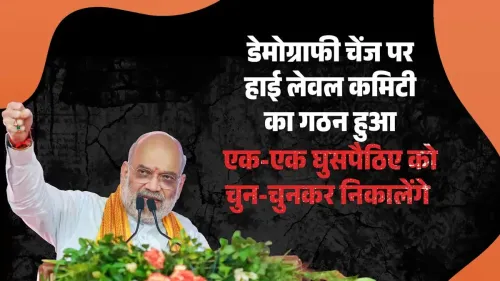
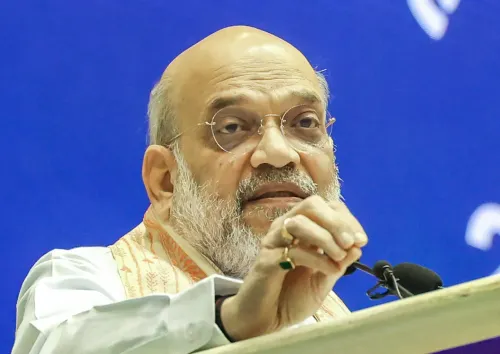
Union Home Minister Amit Shah on Tuesday, 27 May 2025, announced the formal constitution of the High-Level Committee on Demographic Change, a body mandated to assess and address what the government describes as 'unnatural demographic shifts' driven by illegal infiltration and related factors. The move fulfils a commitment made by Prime Minister Narendra Modi during his Independence Day address at the Red Fort on 15 August 2025.
Committee Composition and Leadership
The committee will be chaired by Justice Prakash Prabhakar Naolekar (Retd), a former senior judicial officer. Its members include the Census Commissioner, retired Indian Administrative Service officer Durga Shankar Mishra, retired Indian Police Service officer Balaji Srivastava, and economist Dr Shamika Ravi. The Joint Secretary (Foreigners-I) of the Ministry of Home Affairs will serve as Member Secretary.
Scope of the Mandate
According to Shah, the panel will conduct a comprehensive assessment of demographic changes occurring across India due to illegal immigration and other factors the government characterises as unnatural. It will analyse patterns of abnormal population shifts at the level of religious and social communities and is expected to present 'a planned and time-bound solution.' The Home Minister described demographic change as a matter tied not only to national sovereignty but also to national security, law and order, social structure, and the preservation of tribal society.
What PM Modi Said at the Red Fort
Announcing the initiative on 15 August 2025, Modi had asserted that the government would not allow infiltrators to seize land belonging to tribal communities. He characterised infiltrators as a threat to national security, alleging they 'snatch away the livelihood of the youth' and encroach on tribal land. 'So, the government has decided to start a high-powered demography mission,' he had said.
Political and Policy Context
The formation of this committee comes amid the Centre's sustained legislative and administrative push on border security and immigration, including the implementation of the Citizenship Amendment Act (CAA) and intensified operations along the Bangladesh and Myanmar borders. Critics and opposition leaders have previously argued that such framing of demographic change risks targeting religious minorities; the government maintains the focus is strictly on illegal infiltration. Notably, this is the first time a dedicated high-level body with judicial and bureaucratic representation has been constituted specifically to study and recommend policy on demographic shifts at the national level.
What Comes Next
The committee's terms of reference specify a time-bound report, though a formal deadline has not yet been made public. Its findings are expected to inform future legislative and administrative measures on immigration, border management, and tribal land protection. Civil society groups and legal experts are likely to scrutinise both the committee's composition and its eventual recommendations closely.
Point of View
But also raises the stakes: whatever this panel recommends will carry legal and administrative authority, not just political signal. The key question mainstream coverage is not asking is whether the committee's terms of reference include a clear, auditable definition of 'unnatural demographic change' — without which its findings risk being contested as politically motivated rather than empirically grounded. The time-bound mandate is notable, but the absence of a public deadline leaves room for the report to be timed for electoral cycles rather than policy urgency.
NationPress
9 Oct 2026
Frequently Asked Questions
What is the High-Level Committee on Demographic Change?
It is a government-constituted panel announced by Home Minister Amit Shah on 27 May 2025, tasked with assessing demographic shifts across India attributed to illegal infiltration and other factors the government describes as unnatural. The committee will analyse population changes at the level of religious and social communities and recommend time-bound policy solutions.
Who will chair the High-Level Committee on Demographic Change?
The committee will be chaired by Justice Prakash Prabhakar Naolekar (Retd), a former senior judicial officer. Other members include the Census Commissioner, retired IAS officer Durga Shankar Mishra, retired IPS officer Balaji Srivastava, and economist Dr Shamika Ravi.
When did PM Modi first announce this committee?
Prime Minister Narendra Modi first announced the initiative during his Independence Day address at the Red Fort on 15 August 2025, describing it as a 'high-powered demography mission' to protect tribal land and national security from infiltrators.
What is the committee's mandate?
The panel is mandated to conduct a comprehensive national assessment of demographic changes caused by illegal immigration, analyse abnormal population shifts across religious and social communities, and present planned, time-bound policy recommendations to the government.
Why has the government formed this committee?
The government states that illegal infiltration poses a significant challenge to national sovereignty, security, law and order, social structure, and tribal welfare. The committee is intended to provide an evidence-based assessment and actionable policy framework to address these concerns.