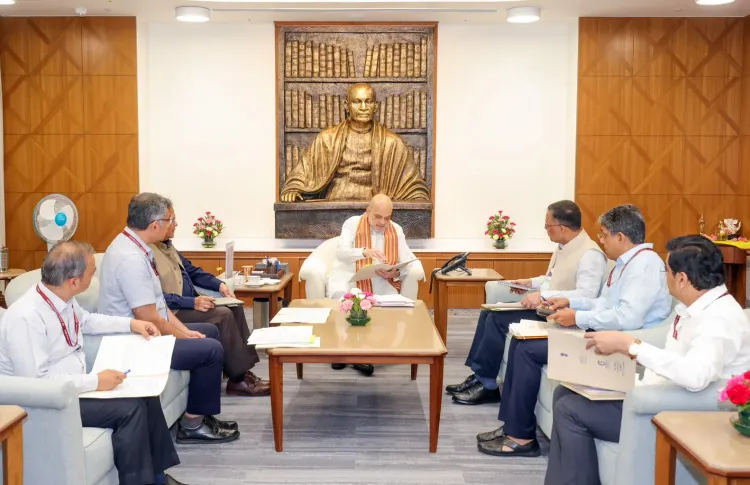
Amit Shah reviews logistics for Demographic Changes panel led by Justice Naolekar
Synopsis
Months after PM Modi announced it from the Red Fort, India's High-Level Committee on Demographic Changes is now operational — and Home Minister Amit Shah is personally overseeing its logistical backbone. Led by a former Supreme Court judge, the panel has sweeping powers to probe illegal migration and recommend new laws, but its final word rests entirely with Parliament.
Key Takeaways
Home Minister Amit Shah chaired a logistics review meeting for the High-Level Committee on Demographic Changes on 13 June .
The committee is headed by retired Supreme Court judge Justice Prakash Prabhakar Naolekar and has five members .
Formally constituted on 26 May 2026 , the panel was first announced by PM Modi from the Red Fort on 15 August 2025 .
The committee will study demographic shifts in border districts , cities , industrial towns , and tribal areas , and assess illegal migration .
It must submit its final report within one year , extendable by six months ; recommendations are advisory and require parliamentary legislation to take effect.
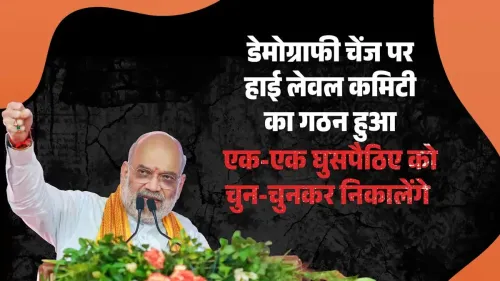
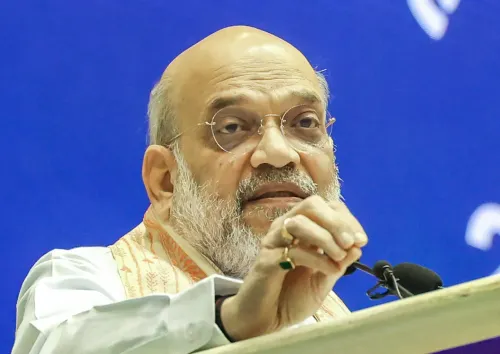
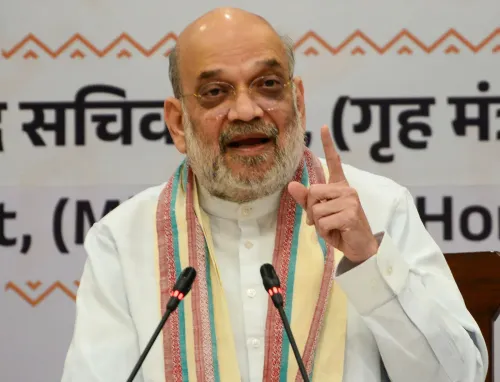
Home Minister Amit Shah on Saturday, 13 June chaired a meeting of senior officials to ensure full logistical and administrative support for the High-Level Committee on Demographic Changes, headed by retired Supreme Court judge Justice Prakash Prabhakar Naolekar. The Union Home Ministry will serve as the nodal support body for the five-member panel.
Committee Mandate and Scope
The committee has been tasked with studying demographic shifts across the country, with a particular focus on border districts, metropolitan areas, industrial towns, and tribal regions. Justice Naolekar clarified that the panel will examine the population demography of the entire country and not limit its inquiry to any particular zone.
The committee is also mandated to assess illegal migration and will recommend systems for identifying, detaining, and deporting illegal infiltrators. “We will suggest a proper system for identifying illegal immigration, custody and deportation of the illegal infiltrators. We will look at how and what laws to make for the deportation of such infiltrators,” Justice Naolekar said.
Origin and Constitution of the Panel
The committee's formation traces back to Prime Minister Narendra Modi's announcement from the Red Fort on 15 August 2025. It was formally constituted on 26 May 2026. Its first meeting has already been held and an agenda has been drawn up, according to an official statement.
At the time of constitution, Shah said, “Infiltration and other reasons causing unnatural demographic change pose a very significant challenge to the present and future of any nation.” He also posted on social media: “To address this very challenge, on August 15, 2025, Prime Minister @narendramodiji had announced the ‘High-Level Committee on Demographic Change’. I am delighted to inform you that the government has now constituted this committee.”
Role and Limits of the Committee
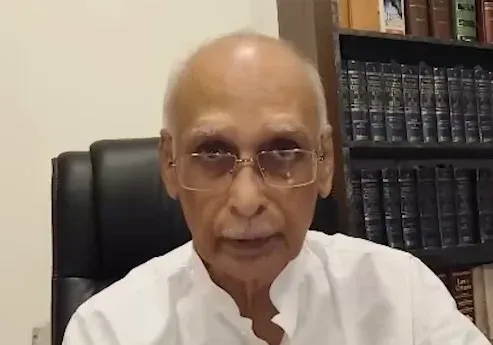
Justice Naolekar was explicit about the panel's advisory nature. “The committee will decide on the recommendations. The committee's report will go to the government. How much of the committee's report the government implements will depend on them,” he said. He added that Parliament would need to pass any resulting legislation: “The government will make the law after it is passed by the Parliament.”
The committee has broad powers to requisition data — it can seek information from any ministry, state government, or agency. It is required to submit its final report within one year, with a possible extension of six months if the report cannot be completed within the first six months.
What Comes Next
With logistical arrangements now being reviewed at the Home Minister level, the committee is expected to move quickly into its field assessment phase, including visits to border districts and urban centres. Its findings and eventual recommendations could shape future legislation on migration, border management, and demographic policy — making the next several months a critical window for public and parliamentary scrutiny.
Point of View
Cities, tribal areas, illegal migration — signals that the Centre intends its findings to anchor future legislation rather than gather dust. Yet Justice Naolekar's own caveat is telling: implementation depends entirely on the government, and any law must clear Parliament. The gap between a high-profile panel and enforceable policy has historically been wide in India. The real test will be whether the committee's one-year deadline produces a report with actionable metrics — or a document that feeds political messaging without moving the legislative needle.
NationPress
15 Sept 2026
Frequently Asked Questions
What is the High-Level Committee on Demographic Changes?
It is a five-member advisory panel constituted by the Centre on 26 May 2026, headed by retired Supreme Court judge Justice Prakash Prabhakar Naolekar. Its mandate is to study demographic shifts across India — particularly in border districts, cities, industrial towns, and tribal areas — and recommend policy and legal measures, including on illegal migration.
Who announced the committee and when?
Prime Minister Narendra Modi announced the committee from the Red Fort on 15 August 2025. It was formally constituted nearly nine months later, on 26 May 2026.
What powers does the committee have?
The committee can requisition information from any ministry, state government, or agency. It is required to submit its final report within one year, with a possible six-month extension. However, its role is purely advisory — it cannot make or enforce law.
What will the committee investigate?
The committee will assess demographic changes in border districts, metropolitan areas, industrial towns, and tribal regions, while also examining the broader national population picture. It will specifically look at illegal migration and recommend systems for identifying, detaining, and deporting illegal infiltrators.
When will the committee's report be ready?
The committee must submit its final report within one year of constitution. If that deadline cannot be met, a six-month extension is permissible. Any legislation arising from its recommendations would then need to be passed by Parliament.