Stalin Honours Quaid-e-Millath on 131st Birth Anniversary
Synopsis
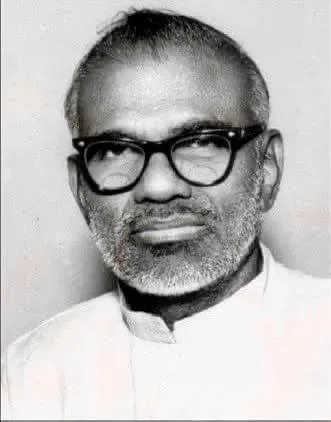
DMK president M. K. Stalin on June 5, 2026, marked Quaid-e-Millath's 131st birth anniversary, honouring the leader's Tamil language advocacy in the Constituent Assembly and renewing the party's pledge of solidarity with Tamil Muslim communities rooted in the Anna era.
Key Takeaways
Stalin posted a tribute to Quaid-e-Millath on his 131st birth anniversary on June 5, 2026 .
Stalin praised Quaid-e-Millath for demanding Tamil as an official language in the Constituent Assembly of India .
The DMK chief also recognised the leader's contributions to educational development in the region.
Stalin reaffirmed the party's solidarity with the Tamil Muslim community , describing it as a bond forged since the era of Perarignar Anna (C.
The tribute reflects the DMK 's long-standing positioning as a defender of Dravidian pluralism and social harmony in Tamil Nadu .
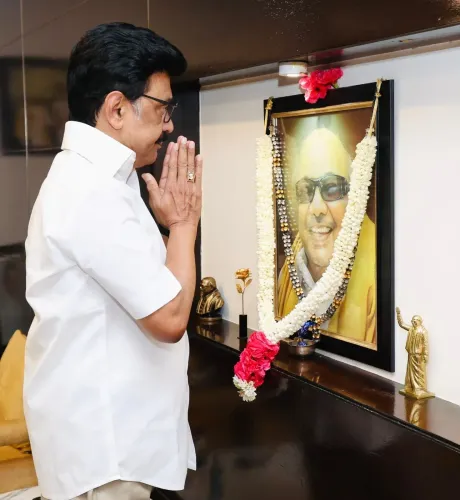
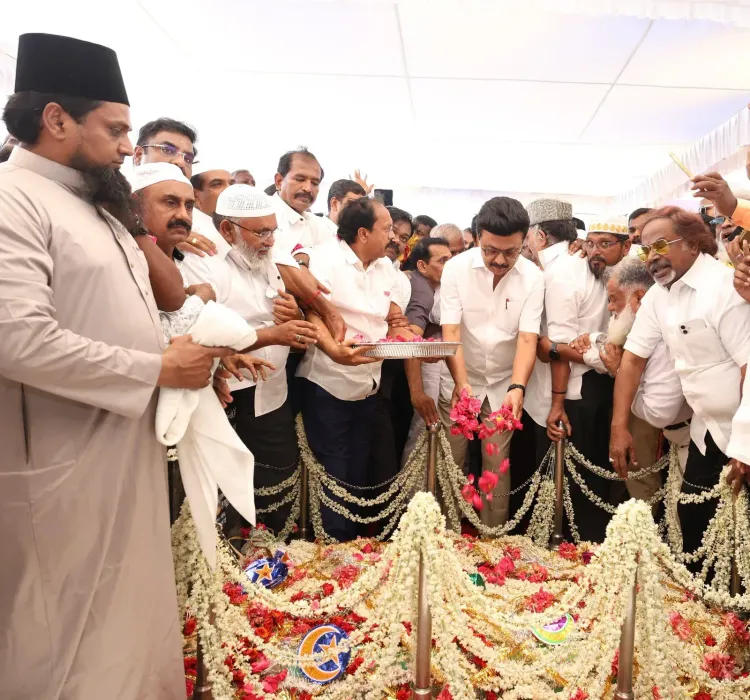
DMK president M. K. Stalin on Friday, June 5, 2026, paid tribute to Quaid-e-Millath on the leader's 131st birth anniversary, hailing him as a champion of Tamil linguistic rights and educational advancement. Stalin used the occasion to reaffirm the DMK's enduring commitment to social harmony and its alliance with Tamil Muslim communities — a bond he traced back to the party's founding era under Perarignar Anna (C. N. Annadurai).
Context
Posting in Tamil on X, Stalin described Quaid-e-Millath as a 'கண்ணியத் தென்றல்' ('the dignified breeze of the south') who 'rose in the south and shone in the north.' He specifically honoured the leader for raising the demand that Tamil be made an official language in the Constituent Assembly, calling him a figure of great stature who also rendered distinguished service to educational development.
Stalin closed his post with a pledge: 'Standing by the bond forged since the era of Perarignar Anna — a bond that goes beyond electoral politics — we will always stand with the Muslim community. We will uphold and protect social harmony.'
Policy Backdrop
The DMK's relationship with Tamil Muslim communities predates the party's formal founding in 1949, rooted in the broader non-Brahmin and minority-inclusion politics of the earlier Justice Party era. C. N. Annadurai institutionalised this outreach, and successive DMK leaders have maintained it as a core organisational principle rather than a purely electoral calculation.
Tamil language advocacy has been a defining DMK cause since the 1965 anti-Hindi agitations and the party's 1967 formation of a state government that established Tamil as Tamil Nadu's sole official language. Commemorating historical Muslim figures who championed the same linguistic cause allows the party to reinforce its self-image as the custodian of Dravidian pluralism.
Stakeholders and Impact
The statement is directed at the Tamil Muslim community and Tamil language advocates — two constituencies the DMK has historically treated as natural allies. By invoking Quaid-e-Millath's role in the Constituent Assembly, Stalin situates the community's contributions within the mainstream of India's constitutional founding, a framing that carries symbolic weight in contemporary debates over linguistic federalism.
The tribute also signals continuity to party workers and allied minority organisations, reinforcing that the DMK's minority outreach is a matter of ideological conviction rather than opportunistic positioning ahead of any specific election cycle.
What's Next
Observers will watch whether the DMK follows this commemorative statement with substantive policy moves — particularly any minority education initiatives or Tamil language provisions — during the next Tamil Nadu budget session. With local body elections on the horizon, the party's rhetoric around social harmony and minority rights is likely to intensify, testing whether the Anna-era alliance Stalin invokes translates into concrete programmatic commitments.
Point of View
Linking the DMK's present-day minority outreach to a pre-independence constitutional moment — the Constituent Assembly demand for Tamil as an official language. By invoking the Anna era as the origin of this alliance, Stalin elevates the relationship above transactional electoral politics, framing it as a civilisational commitment of the Dravidian movement. This fits a broader DMK pattern of commemorating Muslim leaders who intersected with Tamil linguistic nationalism, reinforcing the party's claim to be the natural home of minority communities in Tamil Nadu. With local body elections approaching, such statements serve both as internal party messaging and as a public signal to coalition partners and voters.
NationPress
21 Oct 2026
Frequently Asked Questions
Who is Quaid-e-Millath and why is he significant to Tamil politics?
Quaid-e-Millath was a prominent South Indian Muslim leader associated with Tamil linguistic rights who is credited in DMK narratives with demanding Tamil as an official language during the Constituent Assembly proceedings; he is regarded as a symbol of the intersection between Tamil identity and Muslim community leadership in the region.
What did M. K. Stalin say about Quaid-e-Millath on his 131st birth anniversary?
Stalin described Quaid-e-Millath as a 'dignified breeze' who rose in the south and shone in the north, honoured his advocacy for Tamil in the Constituent Assembly, and pledged that the DMK would always stand with the Muslim community and protect social harmony.
What is the DMK's historical relationship with Tamil Muslim communities?
The DMK's alliance with Tamil Muslim communities dates to the party's founding in 1949 by C. N. Annadurai, building on non-Brahmin and minority-inclusion politics; successive leaders including Stalin have maintained this as a core ideological commitment beyond electoral considerations.
Why does the DMK regularly commemorate Muslim leaders from the independence era?
The DMK uses such commemorations to reinforce its self-image as the custodian of Dravidian pluralism, connecting contemporary minority outreach to a historical tradition of Tamil linguistic nationalism that included Muslim voices in the Constituent Assembly.
What is the significance of the Constituent Assembly reference in Stalin's post?
By citing Quaid-e-Millath's demand for Tamil as an official language in the Constituent Assembly, Stalin situates the Tamil Muslim community's contributions within India's constitutional founding, lending historical legitimacy to the DMK's present-day Tamil language advocacy and minority solidarity.