ITBP 65th Raising Day: J&K LG Manoj Sinha salutes force's Himalayan vigil
Synopsis
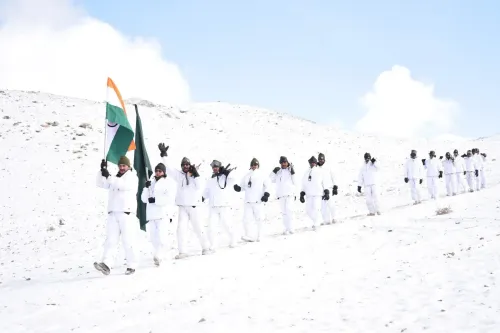
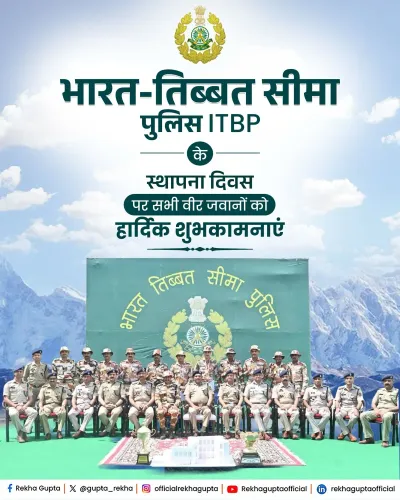
The Indo-Tibetan Border Police turned 65 on 24 October, the same date it was raised in 1962 in the wake of the Sino-Indian War. J&K LG Manoj Sinha marked the occasion with a salute to the force that guards every kilometre of India's 3,488 km Himalayan frontier — a mission that has only grown in strategic weight.
Key Takeaways
J&K Lieutenant Governor Manoj Sinha greeted the ITBP on its 65th Raising Day on 24 October 2026 , via a post on X.
The ITBP was established on 24 October 1962 following the Sino-Indian War , initially with 4 battalions .
The force is responsible for guarding India's 3,488 km border with Tibet, from Karakoram Pass in Ladakh to Jarep La in Arunachal Pradesh.
A dedicated ITBP Act was passed in 1992 , with rules framed in 1994 ; the force operates under the Union Ministry of Home Affairs .
In 2004 , ITBP replaced the Assam Rifles in Sikkim and Arunachal Pradesh under the 'One Border, One Force' principle.
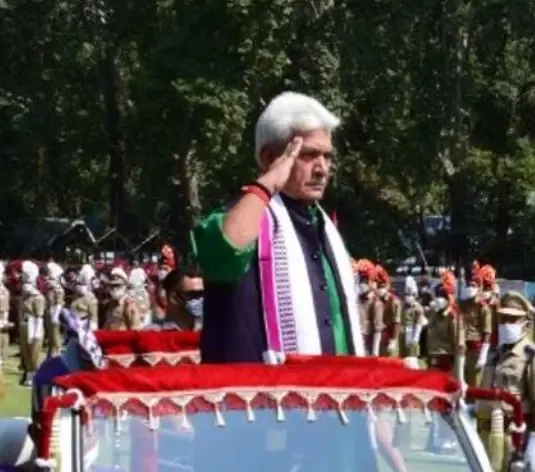
Jammu and Kashmir Lieutenant Governor Manoj Sinha on Saturday, 24 October 2026, extended greetings to the Indo-Tibetan Border Police (ITBP) on its 65th Raising Day, honouring the force's personnel for their courage and selfless service along India's northern frontiers.
LG Sinha's Message to the Force
Conveying warm wishes to all ranks and their families, Sinha wrote in a post on X: 'On ITBP Raising Day, my greetings to all ranks of @ITBP_official personnel and their families. The ITBP's steadfast vigil along formidable borders exemplifies unmatched courage, valour and excellence in the line of duty. I salute your dedication and selfless service to the motherland.'
He further noted that the nation takes pride in the force's commitment to protecting India's sovereignty and territorial integrity, especially given the demanding terrain and extreme climatic conditions under which its personnel operate.
Origins and Historical Background
The ITBP was established on 24 October 1962, in the immediate aftermath of the Sino-Indian War, initially raised under the CRPF Act to form a resistance force against foreign encroachments and infiltration. At its inception, it comprised 4 battalions deployed across Himachal Pradesh and areas of present-day Uttarakhand, focusing on intelligence collection and strengthening communication systems along the Chinese border.
The force's founding officer was Lt Col. Nasib Singh of the Indian Army. Over subsequent decades, the ITBP expanded its operational profile significantly, reportedly participating in both the 1965 and 1971 Indo-Pakistan Wars.
Expanding Charter and Reorganisation
In 1975, the ITBP's mandate was formally revised to make it responsible for managing India's northern borders, guarding against illegal crossings and criminal exploitation of frontier zones. By 1978, the force was reorganised into nine service battalions, four specialist battalions, and two training centres.
The force also rendered security services for high-profile events, including the 1982 Asian Games, the 7th Summit of the Non-Aligned Movement, and the 1983 Commonwealth Heads of Government Meeting. In 1987, six additional battalions were raised to address bank robberies in Punjab during the final stages of the insurgency there, and from 1989 to 2004 the ITBP maintained a presence in Jammu and Kashmir to combat militancy.
Statutory Status and Current Responsibility
A dedicated ITBP Act was passed by Parliament in 1992, formally assigning the force responsibility for the entire 3,488 km Indo-Tibetan border — stretching from the Karakoram Pass in Ladakh to Jarep La in Arunachal Pradesh. The Act's rules were framed in 1994.
In 2004, acting on recommendations stemming from a committee constituted after the 1999 Kargil War and the principle of 'One Border, One Force', the ITBP replaced the Assam Rifles in Sikkim and Arunachal Pradesh. Today, as a Central Armed Police Force under the Union Ministry of Home Affairs, the ITBP remains India's primary sentinel along its challenging Himalayan frontier.
As the force marks its 65th year, its role in India's border security architecture is likely to remain in focus amid continued attention on the India-China border situation.
Point of View
But the occasion itself carries strategic resonance at a moment when the India-China border remains a live policy concern. The ITBP's six-decade evolution — from a post-1962 emergency force to the sole guardian of a 3,488 km Himalayan frontier — reflects how seriously India has consolidated border management after hard lessons in 1962 and 1999. What the routine salutes tend to obscure is the force's chronic infrastructure and manpower strain in some of the world's harshest operating environments, a challenge that warrants as much political attention as ceremonial appreciation.
NationPress
24 Oct 2026
Frequently Asked Questions
When was the ITBP established and why?
The Indo-Tibetan Border Police was established on 24 October 1962, in direct response to the Sino-Indian War, to create a dedicated resistance force against foreign encroachment and infiltration along India's northern borders. It was initially raised under the CRPF Act with 4 battalions.
What is the ITBP responsible for today?
The ITBP is responsible for guarding India's entire 3,488 km border with Tibet, stretching from the Karakoram Pass in Ladakh to Jarep La in Arunachal Pradesh. It operates as a Central Armed Police Force under the Union Ministry of Home Affairs.
Why did J&K LG Manoj Sinha greet the ITBP on 24 October 2026?
24 October 2026 marks the ITBP's 65th Raising Day, the anniversary of the force's founding in 1962. LG Sinha posted greetings on X, saluting the force's vigil along India's formidable Himalayan frontiers.
How did the ITBP's charter change over the decades?
The ITBP's mandate was revised in 1975 to cover management of India's northern borders more broadly. A dedicated ITBP Act passed in 1992 formalised its responsibility for the full Indo-Tibetan border, and in 2004 it replaced the Assam Rifles in Sikkim and Arunachal Pradesh under the 'One Border, One Force' principle.
What major events has the ITBP been involved in beyond border guarding?
Beyond its core border mission, the ITBP reportedly participated in the 1965 and 1971 Indo-Pakistan Wars, provided security at the 1982 Asian Games, the 7th Non-Aligned Movement Summit, and the 1983 Commonwealth Heads of Government Meeting. In 1987, six additional battalions were raised to counter bank robberies during the Punjab insurgency.