Tamil Nadu CM Vijay honours Maruthu brothers on 224th death anniversary
Synopsis
On the 224th anniversary of their execution, Tamil Nadu CM C. Joseph Vijay paid tribute to the Maruthu Pandiyar brothers — the Sivaganga rulers who mounted organised armed resistance against the British East India Company in 1801, issued the historic Jambudweep Proclamation calling for cross-community unity, and were hanged at Tirupathur fort on 24 October 1801, more than five decades before the 1857 uprising.
Key Takeaways
Joseph Vijay paid tribute to the Maruthu Pandiyar brothers on 24 October 2025 , the 224th anniversary of their martyrdom.
The brothers, rulers of Sivaganga , were among the earliest organised opponents of the British East India Company in southern India.
They issued the Jambudweep Proclamation in June 1801 , calling for cross-caste, cross-religious unity against colonial rule.
Their resistance preceded the 1857 uprising — widely called India's First War of Independence — by over five decades.
Periya Maruthu and Chinna Maruthu were captured and hanged at Tirupathur fort on 24 October 1801 .
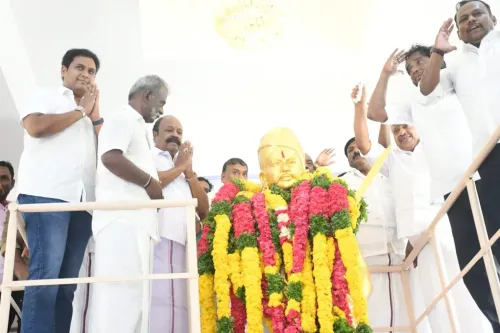
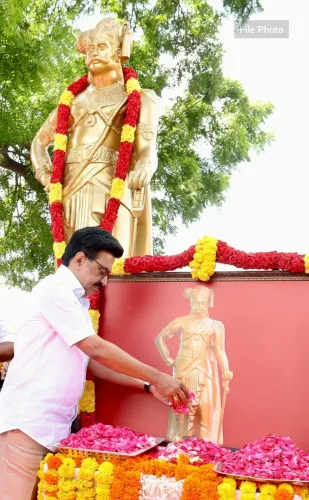
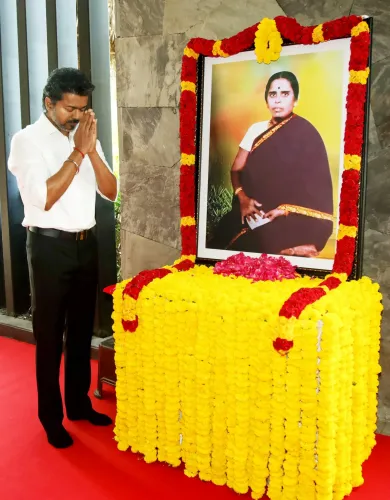
Tamil Nadu Chief Minister C. Joseph Vijay on Saturday, 24 October 2025, paid tribute to the Maruthu Pandiyar brothers on the 224th anniversary of their martyrdom, remembering their extraordinary courage and their pioneering role in organising armed resistance against British colonial rule in southern India. The Chief Minister's remarks underscored a recurring theme in Tamil political discourse: the elevation of pre-1857 southern resistance fighters as foundational figures of India's independence movement.
What Vijay Said
In a post on X, the Chief Minister described the brothers — who ruled Sivaganga — as leaders who laid down their lives for their motherland's freedom. Vijay specifically drew attention to the Jambudweep Proclamation of June 1801, through which the brothers called upon people across social and religious divisions to unite against European colonial domination. He noted that their resistance preceded the 1857 uprising, widely described as India's First War of Independence, and that their efforts to consolidate popular resistance reflected a political vision extending well beyond their own kingdom's boundaries. 'The heroic legacy of the brothers, who sowed the spirit of freedom in Tamil soil, would endure for generations,' Vijay was quoted as saying.
Who the Maruthu Brothers Were
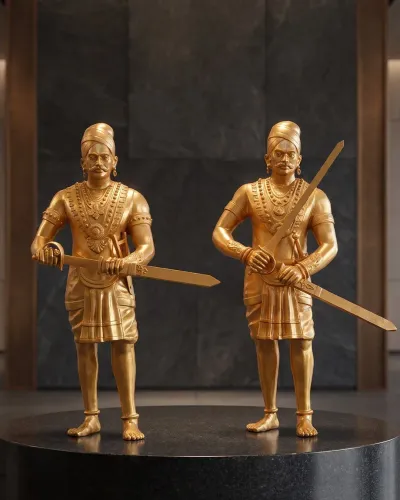
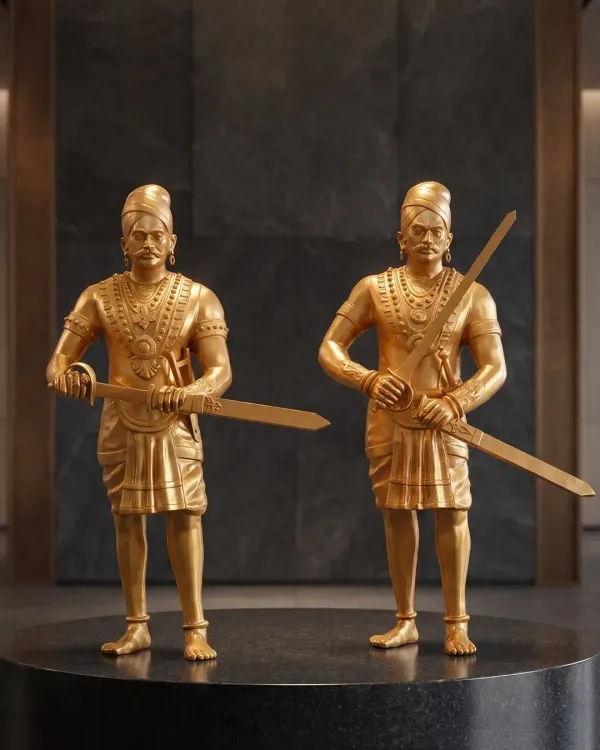
Periya Maruthu and Chinna Maruthu, collectively known as the Maruthu Pandiyar brothers, were among the most formidable opponents of the British East India Company in the Deccan south during the late 18th and early 19th centuries. Closely associated with Sivaganga queen Velu Nachiyar — herself one of the earliest Indian rulers to resist British expansion — the brothers became prominent commanders of sustained armed resistance. They leveraged their deep familiarity with the local terrain to repeatedly challenge Company troops.
During the fighting of June 1801, rebel forces mounted repeated attacks on Company contingents around Thiruppachethi and Paramakudi, striking from multiple directions and reportedly forcing British soldiers into retreat on several occasions. Their campaign also extended to strikes against British positions and supply convoys elsewhere across the region.
The Jambudweep Proclamation
Issued in June 1801, the Jambudweep Proclamation is historically significant because it framed the struggle against colonial rule as a collective civic cause rather than a dynastic dispute. Appealing to people across caste and religious lines, the document called for a unified front against European occupation — a remarkably modern political articulation for its time. Historians regard it as one of the earliest recorded examples of a mass-mobilisation appeal in Indian anti-colonial resistance.
Capture and Execution
Despite their determined military campaign, the brothers were eventually captured by British forces. They were hanged at Tirupathur fort on 24 October 1801, bringing their armed struggle to a brutal end. Their execution at the fort remains a defining moment in Tamil Nadu's history of resistance to colonialism, and the date is observed annually as a day of remembrance.
Historical Significance
The Chief Minister's tribute reflects a broader effort in Tamil political and cultural circles to ensure that pre-1857 southern warriors receive national recognition alongside more widely commemorated figures. This is the latest in a series of annual tributes by successive Tamil Nadu governments to the Maruthu brothers, whose martyrdom predates the conventionally recognised starting point of organised anti-British resistance by more than five decades. Their story continues to shape regional identity and the narrative of Tamil Nadu's contribution to India's freedom movement.
Point of View
Tamil Nadu's leadership is making a sustained case for recentring the national freedom narrative around southern warriors who remain under-acknowledged in mainstream history textbooks. The broader pattern — successive Tamil Nadu governments marking this date with increasingly prominent tributes — signals a deliberate effort to anchor regional identity in a distinct, pre-Independence genealogy of resistance. What is less often examined is whether this commemoration translates into curriculum reform or institutional recognition at the national level, which would be the real measure of its historical impact.
NationPress
24 Oct 2026
Frequently Asked Questions
Who were the Maruthu Pandiyar brothers?
Periya Maruthu and Chinna Maruthu, known as the Maruthu Pandiyar brothers, were rulers associated with the Sivaganga kingdom in southern India who mounted sustained armed resistance against the British East India Company in the late 18th and early 19th centuries. Closely allied with Sivaganga queen Velu Nachiyar, they used their knowledge of local terrain to challenge British troops and issued the Jambudweep Proclamation in 1801 calling for unified resistance.
When and how did the Maruthu brothers die?
The Maruthu brothers were captured by British forces and hanged at Tirupathur fort on 24 October 1801. Their execution ended one of the most organised armed campaigns against the East India Company in southern India.
What was the Jambudweep Proclamation?
The Jambudweep Proclamation was an appeal issued by the Maruthu brothers in June 1801, calling on people across caste and religious lines to unite against European colonial rule. It is historically significant as one of the earliest recorded mass-mobilisation appeals in Indian anti-colonial resistance, framing the struggle as a collective civic cause rather than a dynastic conflict.
Why did Tamil Nadu CM Vijay pay tribute to the Maruthu brothers today?
Chief Minister C. Joseph Vijay paid tribute on 24 October 2025 to mark the 224th death anniversary of the Maruthu Pandiyar brothers, who were executed on this date in 1801. His remarks highlighted their battlefield resistance, the Jambudweep Proclamation, and the fact that their struggle preceded the 1857 uprising by over five decades.
Why are the Maruthu brothers significant in Indian history?
The Maruthu brothers are significant because their organised resistance against the British East India Company predates the 1857 uprising — conventionally called India's First War of Independence — by more than 50 years. Their Jambudweep Proclamation is considered a pioneering document of collective anti-colonial mobilisation, and their story is central to Tamil Nadu's distinct narrative of contribution to India's freedom movement.