Tamil Nadu CMO Remembers Kattabomman on Martyrdom Day
Synopsis
The Chief Minister's Office of Tamil Nadu paid tribute to Veerapandiya Kattabomman on 16 October 2026, the 227th anniversary of his execution by the British East India Company, honouring his resistance against colonial rule as an enduring lesson in courage and self-respect.
Key Takeaways
Veerapandiya Kattabomman was the Palaiyakkarar of Panchalankurichi in present-day Tirunelveli district, Tamil Nadu .
He was executed by the British East India Company on 16 October 1799 after refusing to submit to colonial authority.
The Chief Minister's Office of Tamil Nadu posted a tribute in Tamil on 16 October 2026 , marking his martyrdom anniversary.
The CMO called his life 'a historical lesson' in courage against injustice, protection of rights, and love of the motherland.
Tamil Nadu governments across party lines have historically used such anniversaries to reinforce a distinctly Tamil narrative of sovereignty within the Dravidian political tradition.
Kattabomman's resistance predates the 1857 Revolt, making him one of India's earliest documented armed resisters of British rule.
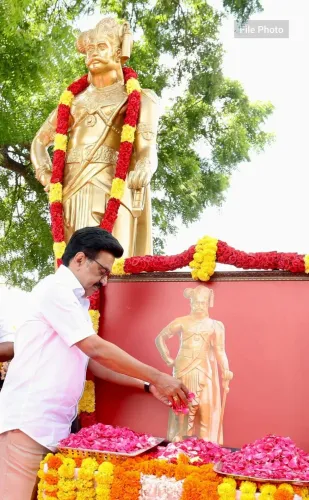
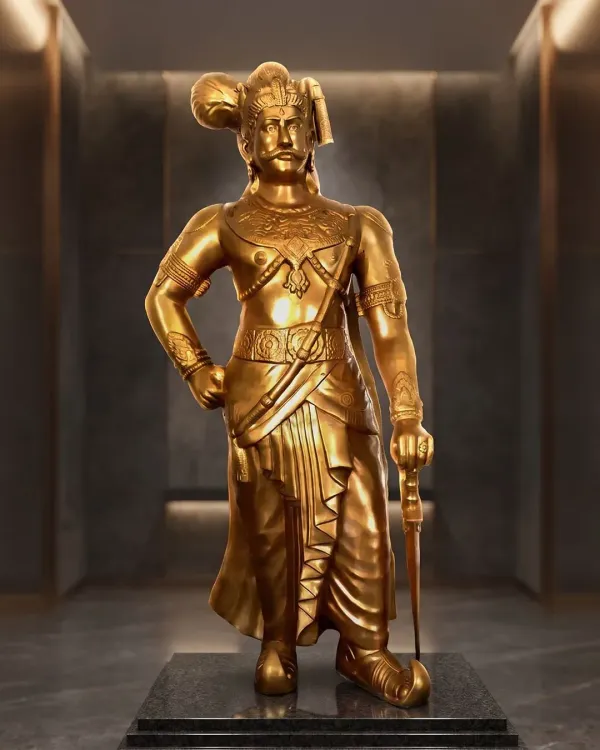
Two hundred and twenty-seven years ago on this date, a chieftain from southern Tamil Nadu was hanged by the British East India Company for refusing to surrender his land and dignity — and on Friday, 16 October 2026, the Chief Minister's Office of Tamil Nadu paused to honour that defiance. The official account paid tribute to Veerapandiya Kattabomman on his martyrdom anniversary, saluting the legacy of one of India's earliest armed resisters of colonial rule.
Posting in Tamil, the CMO wrote: 'On the remembrance day of freedom fighter Veerapandiya Kattabomman, who never bowed to the oppression of British rule and fought till the very end for the rights of his motherland and for self-respect, I bow in reverence to his sacrifice. His life stands as a historical lesson — so that the courage to speak against injustice, the resolve to protect one's rights, and the feeling of devotion to one's motherland may grow in every person. The sacrifice and valour of Veerapandiya Kattabomman will remain an immortal glory in Tamil history.'The chieftain who said no to the Company
Veerapandiya Kattabomman was the Palaiyakkarar (chieftain) of Panchalankurichi, a fortified settlement in what is today Tirunelveli district, Tamil Nadu. In the closing years of the 18th century, the British East India Company was methodically dismantling the Palaiyakkarar system — a network of semi-autonomous chieftains who had governed southern Tamil country for generations. Kattabomman's refusal to pay tribute to the Company, his confrontation with the British political agent at Ramanathapuram, and his subsequent military resistance made him the most prominent symbol of that defiance. He was captured after the fall of Panchalankurichi and publicly executed on 16 October 1799 — more than half a century before the Revolt of 1857 that history textbooks long called India's 'first war of independence.'Why Tamil Nadu marks this day every year
For the Dravidian political tradition that has governed Tamil Nadu for most of the past six decades, anniversaries like this one carry deliberate cultural weight. Successive state governments — across party lines — have consistently elevated the memory of pre-1857 regional resisters, weaving them into a distinctly Tamil narrative of sovereignty and self-respect that predates and runs parallel to the pan-Indian freedom movement. Kattabomman, immortalised in a landmark 1959 Tamil film and enshrined in school syllabi, is among the most recognisable of these figures. The Thiruvalluvar-era ideal of maanam — honour, self-respect — that the CMO's post invokes sits at the very heart of that tradition. School curricula across Tamil Nadu feature Kattabomman's story prominently, and annual state-level commemorations — including wreath-laying at statues and cultural programmes — mark 16 October as a date of civic remembrance rather than a mere historical footnote. The chieftain's last stand ended at the gallows in 1799. His memory, the CMO's post makes clear, is not going anywhere.Point of View
The post taps directly into the ideological vocabulary of the Dravidian movement, where suyamariyathai (self-respect) is foundational. Elevating a pre-1857 regional resister also subtly asserts that Tamil resistance to oppression has a longer and independent lineage than the pan-Indian narrative acknowledges. At a time when centre-state tensions over resource allocation and linguistic policy remain live issues in Tamil Nadu, such commemorations do double duty — historical tribute and quiet assertion of regional identity.
NationPress
16 Oct 2026
Frequently Asked Questions
Who was Veerapandiya Kattabomman?
Veerapandiya Kattabomman was an 18th-century Palaiyakkarar (chieftain) of Panchalankurichi in present-day Tirunelveli district, Tamil Nadu, who led armed resistance against the British East India Company and was executed on 16 October 1799.
When was Kattabomman executed and why?
He was publicly executed by the British East India Company on 16 October 1799 after he refused to pay tribute to the Company, confronted British officials, and led military resistance to protect his chieftaincy.
Why does Tamil Nadu observe 16 October every year?
16 October is observed as Kattabomman's martyrdom anniversary in Tamil Nadu, with state governments, schools, and cultural organisations commemorating his sacrifice through tributes, wreath-laying ceremonies, and public events.
What did the Tamil Nadu CMO post on 16 October 2026?
The Chief Minister's Office of Tamil Nadu posted a Tamil-language tribute on X honouring Veerapandiya Kattabomman on his death anniversary, calling his life a historical lesson in courage against injustice and devotion to the motherland.
Is Kattabomman mentioned in Tamil Nadu school textbooks?
Yes, Veerapandiya Kattabomman is a prominent figure in Tamil Nadu's school curricula and is widely regarded as one of India's earliest resisters of British colonial rule, predating the 1857 Revolt by nearly six decades.