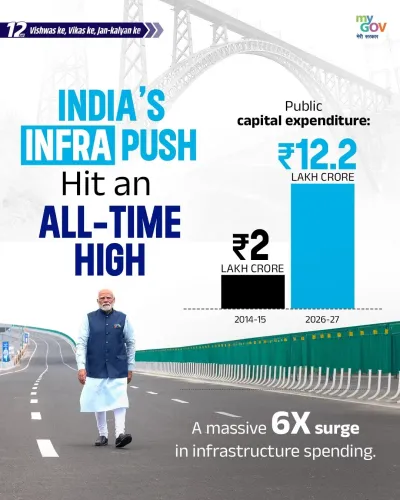
How is the Government Increasing Capex to Rs 12.2 Lakh Crore in the 2026-27 Budget?
Synopsis
The recent budget announcement by Finance Minister Nirmala Sitharaman promises unprecedented capital expenditure, positioning India for significant infrastructure advancements. With a focus on strategic sectors and global market integration, this budget aims to create jobs and stimulate economic growth, making it a pivotal moment for the nation's future.
Key Takeaways
Capital Expenditure: Rs 12.2 lakh crore announced for infrastructure.
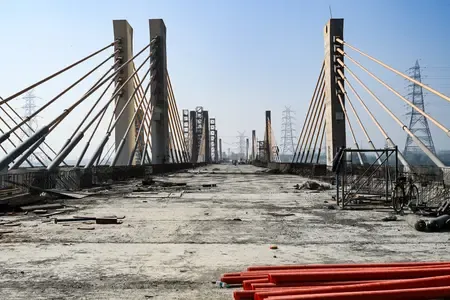
Infrastructure Focus: Major investments in highways, ports, railways, and power.
Reforms Rolled Out: Over 350 reforms to boost economy and productivity.
Global Integration: Emphasis on connecting with international markets.
AI as Catalyst: Use of advanced technologies to enhance growth.
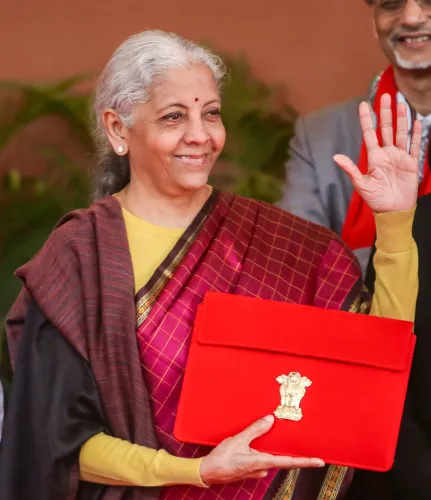
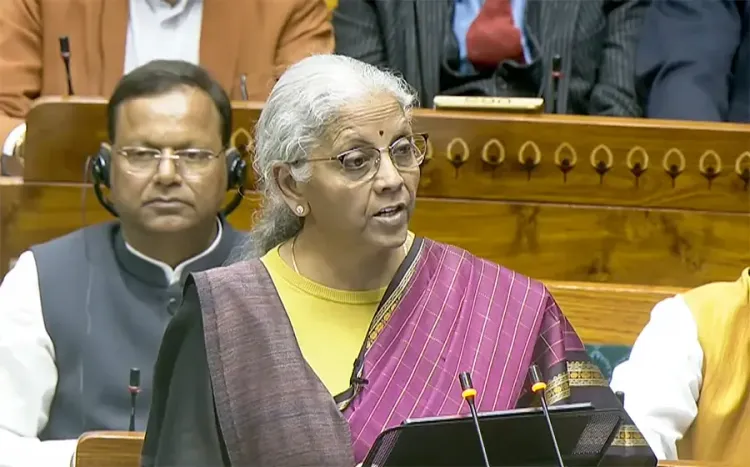
New Delhi, Feb 1 (NationPress) Finance Minister Nirmala Sitharaman revealed a significant capital expenditure allocation of Rs 12.2 lakh crore in the 2026-27 Budget to promote large-scale infrastructure projects aimed at enhancing economic growth and job creation.
While presenting the Budget, the Finance Minister announced the establishment of an Infrastructure Risk Development Fund designed to expedite the realization of major projects.
To stimulate economic advancement, the Budget includes substantial investments in infrastructure, such as highways, ports, railways, and power projects, alongside efforts to amplify manufacturing in seven critical sectors and support champion MSMEs.
The government has prioritized fiscal responsibility and monetary stability while promoting robust public investments. She emphasized the necessity for India to integrate more deeply with global markets, increase exports, and attract foreign investment.
The Finance Minister stated that the government has initiated extensive reforms aimed at generating jobs, enhancing productivity, and fostering growth. "Over 350 reforms have been implemented, and the 'Reforms Express' is on track, guiding India towards Viksit Bharat while balancing ambition with inclusion," she remarked.
Sitharaman indicated that the Union Budget crafted at Kartivya Bhavan is centered around three essential duties or kartavya: to accelerate and sustain economic growth, fulfill the aspirations of the populace, and ensure resource accessibility for every family, community, and region.
The first kartavya focuses on enhancing manufacturing in seven strategic sectors.
She noted that it is crucial to maintain the momentum of structural reforms, ensuring they are continuous, adaptive, and forward-looking.
"Advanced technologies, including AI, can act as catalysts for growth," she added.
"With over 350 reforms launched, as a burgeoning economy with expansive trade and capital needs, India must remain integrally connected with global markets," she concluded.
Point of View
The budget presented by Finance Minister Nirmala Sitharaman reflects a commitment to economic growth and infrastructural development. The introduction of substantial capital expenditure, alongside ongoing reforms, positions India favorably on the global stage, emphasizing the importance of innovation and integration.
NationPress
24 Sept 2026
Frequently Asked Questions
What is the capital expenditure amount announced for 2026-27?
The government has announced a capital expenditure of Rs 12.2 lakh crore for the 2026-27 fiscal year.
What sectors will benefit from this budget?
The budget focuses on enhancing infrastructure, including highways, ports, railways, and power projects, along with scaling up manufacturing in seven strategic sectors.
What is the Infrastructure Risk Development Fund?
This fund is established to expedite the development of significant infrastructure projects in India.
How many reforms have been implemented?
The government has rolled out over 350 reforms aimed at boosting employment and productivity.
What is the significance of AI in this budget?
AI is emphasized as a growth multiplier that can enhance efficiency and innovation across sectors.