Sitharaman in Bangkok: Bretton Woods must evolve for 21st century
Synopsis
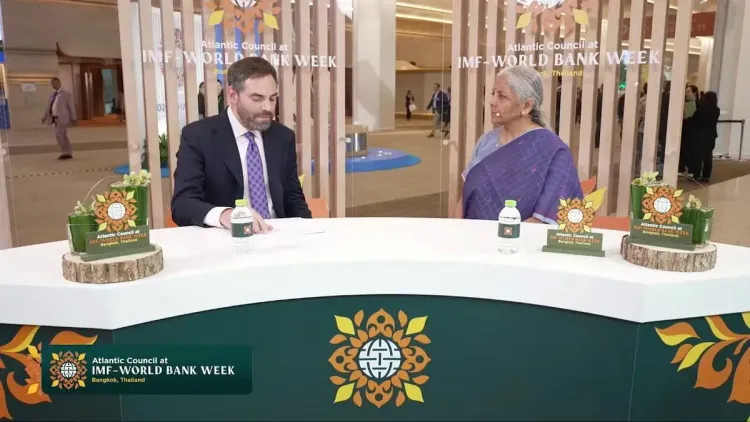
Union Finance Minister Nirmala Sitharaman, speaking in Bangkok, called for the IMF, World Bank, and other Bretton Woods institutions to modernise rapidly, citing India's 2023 G20 presidency push and new challenges like stablecoins and central-bank digital currencies.
Key Takeaways
Nirmala Sitharaman called for the IMF and World Bank to become 'more nimble-footed' during remarks in Bangkok, Thailand on 16 October 2026 .
She anchored the argument in India's 2023 G20 presidency , during which an Independent Expert Group on MDB reform was established.
Sitharaman specifically named stablecoins , central-bank digital currencies , and technology-driven cross-border payments as challenges the current architecture is ill-equipped to handle.
The Bretton Woods institutions — founded in 1944 — were credited for their historical contribution but challenged to match 21st-century expectations .
India's reform push links MDB modernisation to climate finance delivery, digital-payment systems, and fairer voting weight for emerging economies.
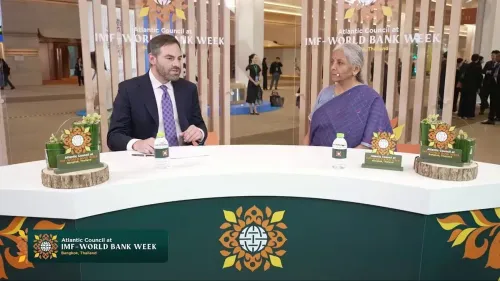
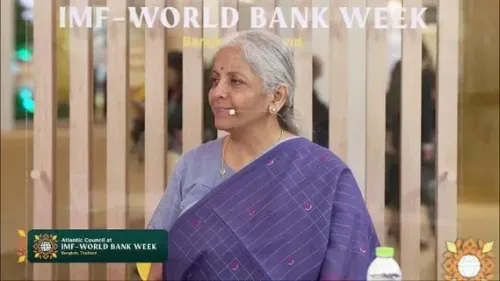
The institutions that stitched together the post-war financial order were built for a world that no longer exists — and Union Finance Minister Nirmala Sitharaman is pressing that case openly, this time from Bangkok, Thailand on 16 October 2026. Speaking at an international forum, she argued that the World Bank, the IMF, and the wider family of multilateral development institutions must become far more agile to stay relevant in an era of stablecoins, central-bank digital currencies, and technology-driven cross-border payments.
India's G20 presidency as the launchpad
Sitharaman traced the push directly to India's G20 presidency in 2023, when New Delhi made reforming multilateral development banks a centrepiece of its agenda. During that year, an Independent Expert Group was constituted under the G20 framework specifically to examine capital adequacy and operational changes inside these institutions. The Finance Minister's Bangkok remarks signal that India considers that work unfinished — and is keeping the pressure on.
'They have to live up to 21st-century expectations because these are Bretton Woods institutions,' she said, acknowledging the foundational contribution of bodies born at the 1944 Bretton Woods conference. 'They have contributed immensely to keeping the global systems going, financial markets understood, global financial systems supported.' The tribute, however, came paired with a sharp demand: that same institutional energy must now confront problems the architects of Bretton Woods never imagined.
Stablecoins, CBDCs, and the new cross-border challenge
The Finance Minister named three specific frontiers: cross-border, technology-driven payments; stablecoins; and central-bank-issued digital currencies. Each represents a category of financial risk that sits awkwardly inside the mandate structures of the IMF and World Bank as currently designed. Regulatory perimeters are national; the transactions are not. That mismatch, Sitharaman argued, is precisely where these institutions must demonstrate new reflexes.
India has made this argument consistently since its G20 presidency, linking MDB reform to climate finance delivery, digital-payment architecture, and cross-border financial stability. The Bangkok statement is the latest iteration — not a detour, but a continuation of a deliberate diplomatic drumbeat aimed at major economies and the institutions themselves.
What the reform push actually demands
The call for institutions to be 'more nimble-footed' is diplomatic shorthand for a cluster of structural asks: faster project approval timelines, expanded capital bases, greater voting weight for emerging economies, and new mandates that cover digital-financial risks. Developing nations have long argued that the current governance architecture — anchored in post-1945 economic weights — under-represents the global south at the very tables where their financial futures are decided.
The next IMF-World Bank annual meetings and forthcoming G20 finance ministers' communiqués will be the nearest test of whether that drumbeat is producing institutional movement. Sitharaman's remarks in Bangkok serve notice that India will keep asking — loudly — until it does.
Point of View
India is staking a claim to institutional-reform leadership that outlasts any single presidency. The explicit naming of stablecoins and CBDCs is strategically significant: it forces multilateral institutions to acknowledge digital-finance risks as a core mandate issue, not a peripheral one. For emerging markets watching from the sidelines, India is effectively auditing the Bretton Woods order on their behalf — and keeping the bill visible.
NationPress
16 Oct 2026
Frequently Asked Questions
What did Nirmala Sitharaman say about the IMF and World Bank in Bangkok?
She said the IMF, World Bank, and other Bretton Woods institutions must become 'more nimble-footed' and meet 21st-century expectations, particularly around stablecoins, central-bank digital currencies, and technology-driven cross-border payments.
Why did India push for multilateral development bank reform during its G20 presidency?
India used its 2023 G20 presidency to argue that post-1945 financial institutions under-represent emerging economies and are structurally ill-equipped for new risks like digital finance, climate funding gaps, and cross-border payment instability.
What are Bretton Woods institutions?
The Bretton Woods institutions — primarily the IMF and World Bank — were established at a 1944 international conference to stabilise global finance and support post-war reconstruction. They remain the central pillars of the international monetary system.
What is India's position on stablecoins and CBDCs in global finance?
Sitharaman's remarks suggest India wants multilateral institutions to develop frameworks covering stablecoins and central-bank digital currencies, which currently fall outside the clear mandate of existing global financial bodies.
When is the next opportunity to track progress on MDB reform?
The next IMF-World Bank annual meetings and any G20 finance ministers' communiqués are the nearest milestones where institutional reform commitments are expected to be tested or updated.