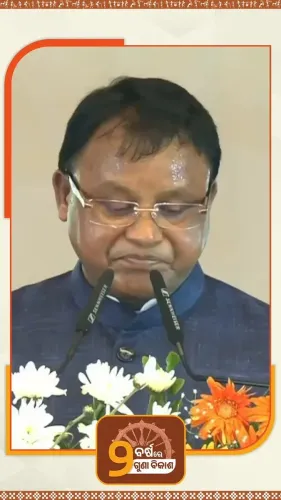
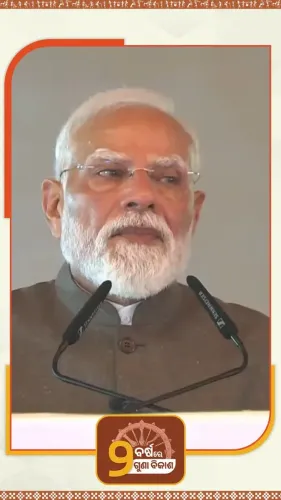
CM Majhi credits Modi's 12-year vision for India's rise
Synopsis
Odisha CM Mohan Charan Majhi lauded PM Modi's 12-year leadership and the 'Double Engine Government' model, crediting it with accelerating India's progress in infrastructure, energy, health, defence, and youth entrepreneurship — and calling it the foundation of a Viksit Bharat by 2047.
Key Takeaways
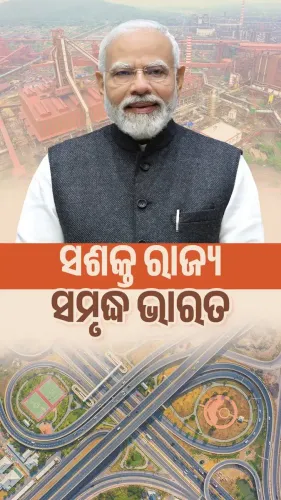
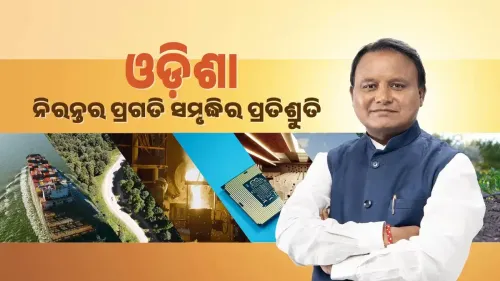
Odisha CM Mohan Charan Majhi posted on 7 August 2026 in Odia crediting PM Modi's leadership for India's development gains over 12 years .
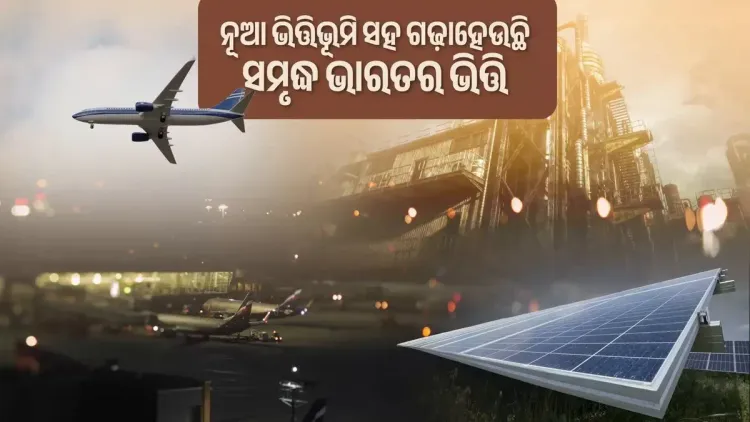
He highlighted progress in infrastructure, connectivity, energy, health, and defence as pillars of national growth.
The post invokes the BJP's 'Double Engine Government' concept, linking central and state governance for faster development.
Expanding entrepreneurship and innovation for youth are cited as key outcomes, echoing the Make in India programme launched in 2014 .
The 12-year record is framed as the foundation of the Viksit Bharat goal — a developed India by 2047 .
Odisha joined BJP rule in 2024 , making Majhi's alignment with the central narrative a politically significant signal.
Twelve years of governance, one sweeping verdict: Odisha Chief Minister Mohan Charan Majhi says the transformation of India under Prime Minister Narendra Modi has given the country's development journey a new speed and a new direction — and the foundation for a prosperous future is already in place.
Writing in Odia on 7 August 2026, CM Majhi declared that Modi's 'visionary leadership' and the momentum of the 'Double Engine Government' have reshaped India's development landscape — from modern infrastructure and rapid connectivity to growing capacity in energy, health, and defence. 'ବିଗତ ୧୨ ବର୍ଷର ଏହି ପରିବର୍ତ୍ତନ' ('this transformation of the last 12 years'), he wrote, is the firm foundation of a Viksit Bharat — a Developed India — and the bedrock of the prosperity ahead.
The 'Double Engine' argument and what it means for Odisha
The 'Double Engine Government' has been a defining BJP slogan since 2014 — shorthand for the proposition that when the same party governs both New Delhi and a state capital, development accelerates because policy, funding, and political will move in the same direction. Odisha, which elected a BJP government for the first time in 2024 after two decades of Biju Janata Dal rule, is now the party's newest test case for that argument.
Majhi's post explicitly links that synergy to outcomes in infrastructure, energy, health, and defence — sectors where central scheme funding is decisive. The framing is deliberate: by anchoring state progress to Modi's central agenda, the CM positions Odisha as both a beneficiary and a proof point of the national model.
Youth, entrepreneurship, and the Viksit Bharat clock
The post also highlights expanding entrepreneurship and innovation as engines of opportunity for young Indians — a direct echo of the Make in India programme launched in 2014 to grow manufacturing and job creation. The Viksit Bharat vision — Modi's publicly stated goal of making India a fully developed economy by 2047, the centenary of Independence — provides the long-run frame into which Majhi slots these 12 years of change.
BJP chief ministers have consistently used this rhetorical structure: credit the centre, highlight the sectors, invoke the 2047 horizon. What gives Majhi's version particular weight is that Odisha was outside this ecosystem until very recently. His endorsement carries the freshness of a convert — a state newly inside the Double Engine, now speaking its language fluently.
The real measure will come in state budget allocations and central scheme roll-outs in Odisha through the current financial year. The rhetoric is set; the numbers will follow.
Point of View
And Majhi is now actively assimilating the state into the party's national development narrative ahead of future budget cycles and scheme roll-outs. By anchoring his government's credibility to Modi's 12-year record rather than to Odisha-specific achievements, he signals that the state's political identity is being reoriented toward New Delhi. Watch whether central allocations to Odisha rise in tandem with this rhetorical alignment — that is where the Double Engine theory will be tested in practice.
NationPress
21 Sept 2026
Frequently Asked Questions
What did Odisha CM Mohan Majhi say about PM Modi?
CM Majhi credited PM Modi's 12-year visionary leadership and the 'Double Engine Government' model for giving India's development journey new speed and direction, citing gains in infrastructure, energy, health, defence, and youth entrepreneurship.
What is the 'Double Engine Government' concept?
The 'Double Engine Government' is a BJP slogan introduced around 2014 to describe the accelerated development that the party claims results when it holds power at both the central and state levels simultaneously.
What is Viksit Bharat and when is it targeted?
Viksit Bharat is PM Modi's vision for India to become a fully developed economy by 2047, the centenary of Indian Independence. It has been a central plank of BJP communications since 2023.
When did BJP come to power in Odisha?
The BJP won power in Odisha in 2024, ending over two decades of Biju Janata Dal rule. Mohan Charan Majhi became Chief Minister, making Odisha a new addition to the party's Double Engine network.
What sectors did CM Majhi highlight in his post?
Majhi highlighted modern infrastructure, rapid connectivity, energy, health, defence capacity, entrepreneurship, and innovation as areas where India has made significant progress under the Modi government.