Sitharaman in Bangkok: IMF too slow for middle-income crisis
Synopsis
Union Finance Minister Nirmala Sitharaman, speaking in Bangkok on October 16 2026, criticised the IMF for taking three to four years to respond to balance-of-payments crises in middle-income countries, while signalling that corrections are underway — part of India's sustained push for multilateral financial reform.
Key Takeaways
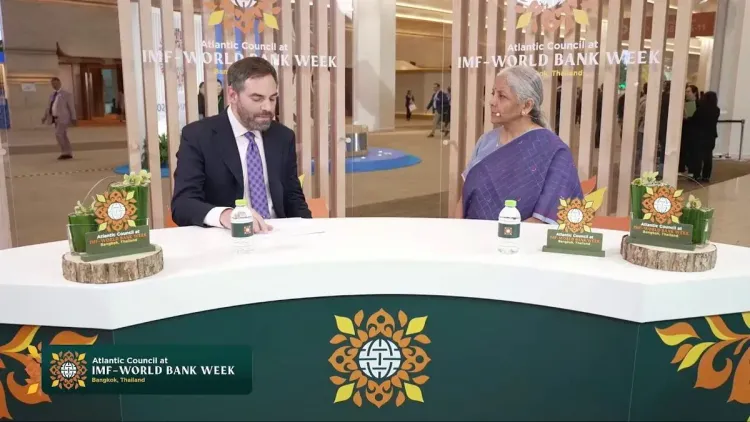
Union Finance Minister Nirmala Sitharaman made the remarks at a multilateral gathering in Bangkok, Thailand on October 16, 2026 .
She criticised the IMF for taking three to four years to provide solutions to middle-income countries in balance-of-payments distress.
She signalled cautious optimism, stating 'these kinds of things are getting corrected now.' The remarks reflect India's consistent advocacy for faster and more flexible IMF crisis-response mechanisms at G20 and multilateral forums.
Middle-income countries are particularly exposed because they are ineligible for concessional IMF facilities yet too vulnerable to absorb prolonged external shocks alone.
The comments come ahead of upcoming IMF-World Bank annual meetings , where reform of crisis-lending timelines is expected to feature.
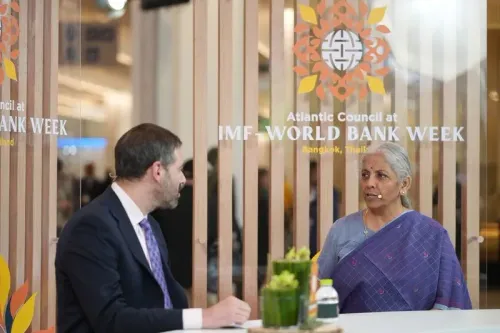
When a middle-income economy tips into a balance-of-payments emergency, every week without a lifeline is a week closer to collapse — and Union Finance Minister Nirmala Sitharaman used a platform in Bangkok, Thailand on Friday, October 16, 2026, to say that the global system has been failing those countries for far too long.
Three to four years without a solution
Speaking at what appears to be a multilateral economic gathering, Sitharaman delivered a pointed critique of the International Monetary Fund's response times. 'Countries which were in the middle-income group are suddenly dropping into desperate balance-of-payments struggles and need the IMF's help,' she said. 'They approach you in desperation for help and for nearly three or four years, no solution is given.'
The indictment is structural, not personal. A country that enters an IMF programme after three or four years of limbo has already endured currency freefall, import compression, and social pain that a faster intervention could have blunted. The delay is itself the damage.
India's voice for the Global South at the IMF
Sitharaman's remarks are the latest in a sustained Indian campaign to reform multilateral financial institutions from the inside. India has consistently argued at G20 forums and IMF-World Bank gatherings that the global financial safety net — designed largely in the post-war era — is structurally biased toward the pace and priorities of advanced economies, leaving emerging markets exposed during fast-moving external shocks.
The Finance Minister notably offered a sliver of optimism: 'These kinds of things are getting corrected now.' She did not name specific countries or spell out which reforms she was referencing — and those details remain unverified. But the framing signals that India is tracking movement at the institutional level, not just cataloguing grievances.
Why the middle-income trap in crisis response matters
Middle-income countries occupy a particularly precarious position in the IMF's architecture. Too wealthy for concessional facilities designed for low-income nations, yet too vulnerable to absorb prolonged external shocks on their own, they can fall through the gaps precisely when speed matters most. The concern Sitharaman is articulating is one shared widely across Asia, Africa, and Latin America — and it is gaining institutional traction ahead of upcoming IMF-World Bank annual meetings.
India has earned credibility on this front not merely by talking, but by having steered its own economy through multiple external shocks without going to the IMF — and by championing debt relief and faster crisis response for neighbours and partners in the Global South. Sitharaman speaking these words in Bangkok, in the heart of a region that has lived through its own financial crises, carries its own symbolic weight.
The real test now is whether the correction she says is underway translates into enforceable timelines — because a reform announced and a reform delivered are two very different things.
Point of View
Non-ideological champion of Global South concerns within Bretton Woods institutions. By framing the IMF's lag as a systemic design flaw rather than a failure of will, she keeps the pressure on institutional reform while avoiding the confrontational tone that alienates Western shareholders. The optimistic coda — 'these kinds of things are getting corrected now' — is equally strategic, suggesting India has secured behind-the-scenes movement it can later claim credit for. Watch whether India tables specific timeline benchmarks at the next IMF-World Bank meeting; that will signal how far the rhetoric has translated into negotiating capital.
NationPress
16 Oct 2026
Frequently Asked Questions
What did Nirmala Sitharaman say about the IMF in Bangkok?
Sitharaman criticised the IMF for taking three to four years to provide solutions to middle-income countries facing balance-of-payments crises, calling the delay unacceptable and saying the problem is beginning to be corrected.
Why are middle-income countries particularly vulnerable to IMF delays?
Middle-income countries do not qualify for the IMF's concessional lending facilities designed for low-income nations, yet they lack the reserves to sustain prolonged external shocks on their own, leaving them in a structural gap where help arrives late.
What is India's position on IMF reform?
India has consistently argued at G20 and multilateral forums for faster, more flexible IMF lending mechanisms for emerging and developing economies, positioning itself as a leading voice for the Global South on financial governance reform.
Where was Nirmala Sitharaman when she made these remarks?
She was speaking in Bangkok, Thailand, at what appears to be a regional or multilateral economic gathering, on October 16, 2026.
What does 'balance-of-payments crisis' mean for a country?
A balance-of-payments crisis occurs when a country cannot meet its international payment obligations — typically because foreign currency reserves run critically low — leading to currency collapse, import shortages, and severe economic contraction without external financial support.