Sitharaman Credits Tax Reforms for Middle-Class Gains
Synopsis
Finance Minister Nirmala Sitharaman has highlighted 12 years of NDA taxation reforms — from raised exemption limits to the optional new tax regime and faceless assessments — as a sustained drive to boost financial freedom and savings for India's middle class.
Key Takeaways
Finance Minister Nirmala Sitharaman posted on 15 June 2026 under #12YearsOfSakshamMiddleClass , crediting tax reforms with empowering middle-class families.
The basic income-tax exemption limit was raised from Rs 2 lakh to Rs 2.5 lakh in Budget 2014 , with further relief bringing the effective tax-free threshold to Rs 5 lakh by 2019 .
The optional new income-tax regime , introduced in Budget 2020 , offers lower slab rates without most exemptions and has been expanded in successive Finance Acts.
The Vivad se Vishwas scheme and faceless assessments rolled out in 2020-21 aimed to reduce litigation and simplify compliance for individual taxpayers.
The CBDT has digitised returns, refunds, and assessments, reducing filing friction for salaried and middle-income households.
The Union Budget 2027 and a new Income Tax Bill under drafting are the next milestones to watch for further middle-class tax relief.
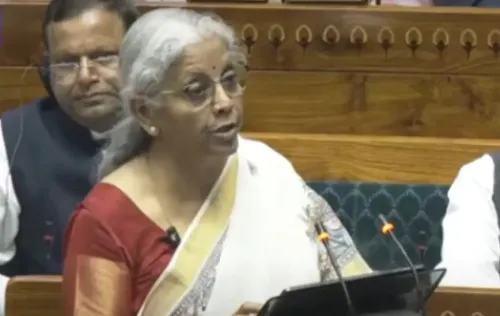
Union Finance Minister Nirmala Sitharaman on Monday, 15 June 2026 invoked a 12-year record of taxation reforms, asserting that policy changes under the NDA government have delivered greater financial freedom, higher savings, and expanded investment opportunities for middle-class families across India.
Context
Sitharaman's post, tagged #12YearsOfSakshamMiddleClass, frames over a decade of incremental tax changes as a coherent programme of middle-class empowerment. The hashtag anchors the claim to the period beginning with the BJP-led government's first term in 2014, when the basic income-tax exemption limit was raised from Rs 2 lakh to Rs 2.5 lakh and a new Rs 50,000 deduction under Section 80C was introduced for individual taxpayers.
The minister stated that these steps have given families 'greater financial freedom, higher savings, and more opportunities to invest in their future' — a formulation that doubles as a political summary of the government's tax philosophy ahead of future budget cycles.
Policy Backdrop
The reforms span multiple budget cycles. In Budget 2019, the effective tax-free income threshold was raised to Rs 5 lakh through a rebate mechanism. The landmark Budget 2020 introduced an optional new income-tax regime offering seven lower slab rates in exchange for forgoing most exemptions and deductions under Chapter VI-A, later expanded in subsequent Finance Acts.
Parallel to slab revisions, the government rolled out faceless assessments and the Vivad se Vishwas scheme in 2020-21 to reduce litigation and ease compliance for salaried and middle-income taxpayers. The Central Board of Direct Taxes (CBDT) has also overseen large-scale digitisation of returns, refunds, and assessments over this period, reducing the friction of filing for individual taxpayers.
Under Prime Minister Narendra Modi, successive budgets have emphasised simplification over targeted exemptions, pursuing a twin strategy of widening the tax base through digital infrastructure while periodically raising thresholds for lower-income earners.
Stakeholders and Impact
The primary beneficiaries cited in the government's narrative are salaried employees, self-employed professionals, and middle-income households — a demographic that sits at the intersection of direct-tax policy and consumer spending. By raising exemption limits and offering a lower-rate optional regime, the government argues it has left more disposable income in the hands of this segment.
Critics have periodically noted that the optional new regime's withdrawal of deductions — including on home-loan interest and provident fund contributions — may not benefit all middle-class sub-segments equally. However, Sitharaman's post does not engage with these trade-offs, presenting the reforms as uniformly positive for families.
What's Next
The Union Budget 2027 is expected to be the next major opportunity for further slab revisions or structural changes to the new income-tax regime. A new Income Tax Bill, reported to be under drafting, could consolidate and simplify the existing statute. Sitharaman's framing of a 12-year reform arc suggests the government intends to continue positioning tax policy as a middle-class welfare instrument in its political messaging ahead of future electoral cycles.
Point of View
Voter-legible narrative of middle-class care. The choice of the hashtag '#12YearsOfSakshamMiddleClass' signals a coordinated BJP communication exercise, likely timed to coincide with a campaign or anniversary milestone. By foregrounding 'financial freedom' and 'savings,' the government is contesting the perception that its tax reforms primarily served corporates, pivoting the messaging squarely toward the salaried demographic. With a new Income Tax Bill and Budget 2027 on the horizon, this framing is also groundwork for the next round of reform claims.
NationPress
22 Sept 2026
Frequently Asked Questions
What is the #12YearsOfSakshamMiddleClass hashtag about?
The hashtag marks 12 years of the BJP-led NDA government's taxation reforms, framing policies such as raised exemption limits, the optional new tax regime, and faceless assessments as a sustained effort to empower middle-class families financially.
How has the income-tax exemption limit changed since 2014?
The basic exemption limit was raised from Rs 2 lakh to Rs 2.5 lakh in Budget 2014. By Budget 2019, a rebate mechanism effectively made income up to Rs 5 lakh tax-free for eligible individuals.
What is the new income-tax regime introduced in Budget 2020?
The new income-tax regime, launched in Budget 2020, is an optional structure offering lower slab rates in exchange for forgoing most deductions and exemptions under Chapter VI-A. It has been expanded and refined in subsequent Finance Acts.
What is the Vivad se Vishwas scheme?
Vivad se Vishwas is a government dispute-resolution scheme launched in 2020 that allowed taxpayers to settle pending direct-tax disputes by paying the contested tax amount, waiving interest and penalties, aimed at reducing litigation backlogs.
What tax changes can middle-class taxpayers expect in the near future?
The Union Budget 2027 is the next key opportunity for slab revisions or changes to the new income-tax regime. A new Income Tax Bill is also reportedly under drafting and could consolidate and simplify the existing tax statute.