Sitharaman Credits 12 Years of Reforms for Middle-Class Growth
Synopsis
Finance Minister Nirmala Sitharaman on June 15 invoked twelve years of structural reforms — from Jan Dhan and GST to Digital India and PMAY — to argue that targeted policy has empowered crores of middle-class Indians, framing the campaign as both an economic record and a forward-looking mandate ahead of Budget 2026-27.
Key Takeaways
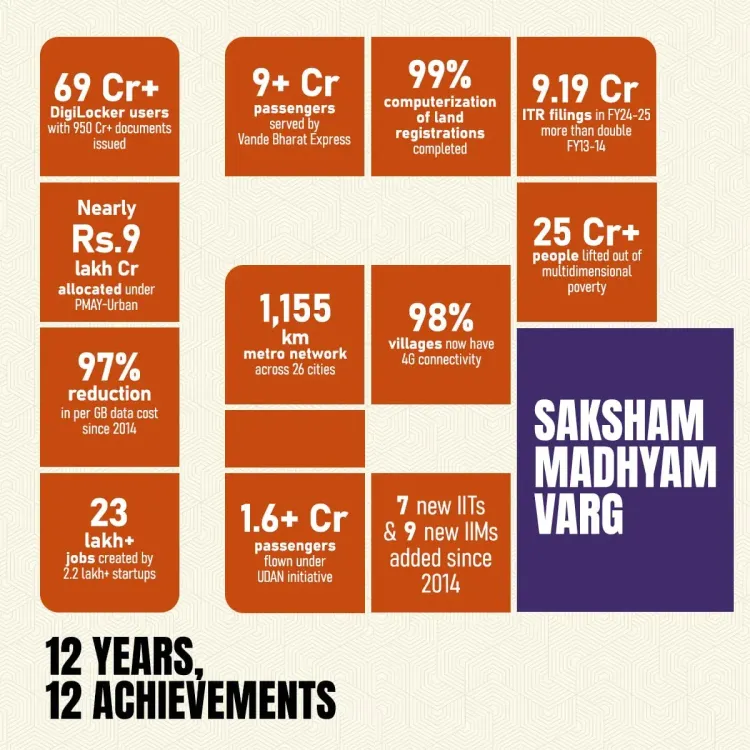
Union Finance Minister Nirmala Sitharaman posted on June 15, 2026 under #12YearsOfSakshamMiddleClass , crediting a decade-plus of reforms with middle-class empowerment.
Key reforms cited in government messaging include Pradhan Mantri Jan Dhan Yojana (2014) , Make in India (2014) , Pradhan Mantri Awas Yojana (2015) , Digital India (2015) , GST (July 2017) , and the Insolvency and Bankruptcy Code (2016) .
The campaign frames middle-class expansion — tracked through consumption, vehicle ownership, and housing demand — as a core political and developmental achievement since May 2014 .
Independent verification of exact middle-class size remains contested, pending a fresh Household Consumption Expenditure Survey .
The messaging arrives ahead of the Union Budget 2026-27 , where middle-income provisions are widely anticipated.
Union Finance Minister Nirmala Sitharaman on Monday, June 15, 2026, credited twelve years of transformative economic reforms and targeted investments under the BJP-led government with expanding opportunity and empowering crores of Indians to realise their aspirations, calling a stronger middle class 'the foundation of a stronger India.'
Context
Posting under the hashtag #12YearsOfSakshamMiddleClass, Sitharaman framed the anniversary as a milestone in a deliberate policy journey that began when Prime Minister Narendra Modi took office in May 2014. The message positions middle-class expansion not merely as an economic outcome but as the stated political and developmental objective of the last twelve years. The phrase 'saksham' (capable or empowered) signals that the campaign is aimed at voters and households who identify with upward mobility.
The post arrives ahead of the Union Budget 2026-27, a period when government communication typically intensifies around economic achievements and the aspirations of salaried and self-employed households.
Policy Backdrop
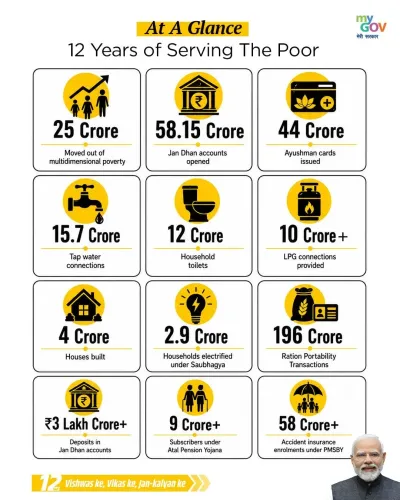
The twelve-year arc Sitharaman references spans several structural and welfare reforms. The Pradhan Mantri Jan Dhan Yojana, launched in 2014, brought previously unbanked households into the formal financial system. The Digital India programme, initiated in 2015, expanded broadband access and accelerated adoption of UPI-based payments and e-governance services that reduced friction for small entrepreneurs and urban professionals alike.
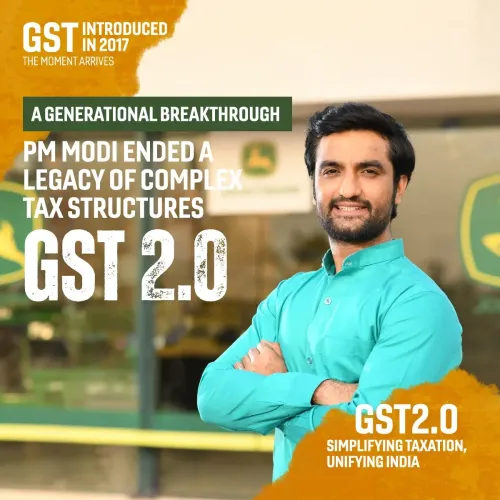
The Goods and Services Tax, implemented in July 2017, replaced a fragmented web of central and state levies with a unified indirect-tax structure, lowering compliance costs for small businesses. The Insolvency and Bankruptcy Code of 2016 improved the credit culture by streamlining resolution of stressed assets, indirectly easing lending conditions for middle-income borrowers. The Pradhan Mantri Awas Yojana, launched in 2015, extended housing subsidies to lower-middle income groups in both urban and rural areas, with home ownership widely tracked as a proxy for middle-class consolidation.
The Make in India campaign, announced in September 2014, sought to attract manufacturing investment and generate formal-sector employment — a key channel through which households cross into the middle-income bracket. Successive economic surveys and NITI Aayog reports have cited rising consumption, vehicle ownership, and housing demand as indicators of this broadening consumer base.
Stakeholders and Impact
The primary beneficiaries invoked in the government's framing are middle-class households, urban professionals, and small entrepreneurs — segments that have gained from digital financial inclusion, formalisation of the economy, and improved physical and digital connectivity. These groups are also among the most electorally consequential in India's rapidly urbanising states.
Critics and independent economists have noted that measuring middle-class growth precisely remains difficult without a fresh Household Consumption Expenditure Survey. The last comprehensive survey data has been a subject of methodological debate, and the government's own messaging has relied on proxy indicators rather than a single authoritative headcount of the middle class.
What's Next
The release of the next Household Consumption Expenditure Survey will be closely watched as the most credible benchmark for whether middle-class incomes and consumption have meaningfully expanded over the period the government is celebrating. Any new provisions targeting middle-income households in the Union Budget 2026-27 — such as income-tax relief, housing incentives, or skilling outlays — will be read against this anniversary messaging as a test of whether the political narrative translates into fresh fiscal commitments.
Point of View
The communication targets salaried professionals and small business owners who are more likely to identify with 'empowerment' than subsidy. The hashtag's use of the Sanskrit-rooted 'saksham' is deliberate cultural signalling. Coming ahead of Budget 2026-27, the post also sets up a narrative expectation: that the next fiscal statement will deliver on this twelve-year arc with fresh, middle-class-specific provisions.
NationPress
15 Sept 2026
Frequently Asked Questions
What is the #12YearsOfSakshamMiddleClass campaign about?
It is a government communication campaign marking twelve years of BJP-led economic reforms since 2014, arguing that policies such as GST, Digital India, Jan Dhan, and PMAY have expanded opportunity and empowered middle-class households across India.
What reforms did Nirmala Sitharaman highlight for middle-class growth?
The government's messaging points to the Pradhan Mantri Jan Dhan Yojana (2014), Make in India (2014), Pradhan Mantri Awas Yojana (2015), the Digital India programme (2015), the Insolvency and Bankruptcy Code (2016), and the Goods and Services Tax (July 2017) as key structural reforms benefiting the middle class.
How is India's middle class measured?
India does not have a single official definition of the middle class. Economists and government surveys typically use consumption expenditure, vehicle ownership, housing demand, and formal employment as proxy indicators. The Household Consumption Expenditure Survey is the most authoritative benchmark, and its latest iteration is awaited.
Will Budget 2026-27 have provisions for the middle class?
No announcements have been made yet, but the government's anniversary messaging ahead of the Union Budget 2026-27 has raised expectations of middle-income targeted measures such as income-tax relief, housing incentives, or skilling outlays.
Who is Nirmala Sitharaman?
Nirmala Sitharaman is India's Union Finance Minister and Minister of Corporate Affairs, a position she has held since 2019. She is a senior BJP leader and is responsible for presenting the Union Budget and steering fiscal policy.