Sitharaman Marks 12 Years of Youth-Led Growth Push
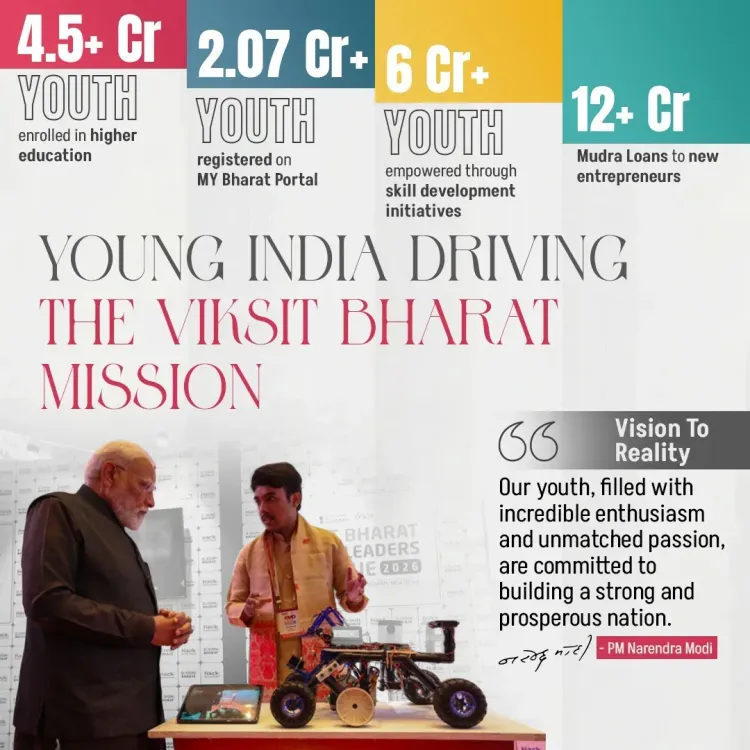
Synopsis
Union Finance Minister Nirmala Sitharaman marked the 12-year milestone of India's youth empowerment agenda on 13 June 2026, crediting young Indians with driving innovation and national progress toward the Viksit Bharat 2047 goal.
Key Takeaways
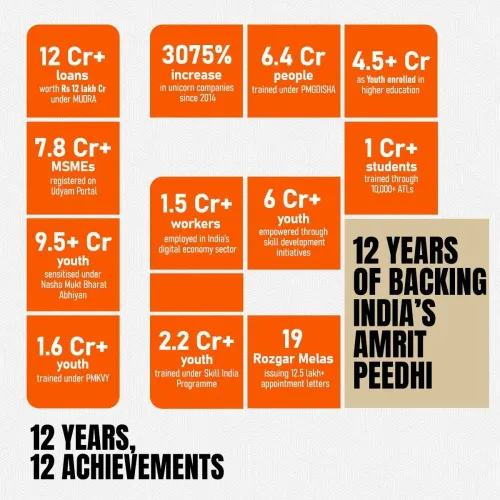
Finance Minister Nirmala Sitharaman posted on 13 June 2026 under #12YearsOfYuvaShakti , marking a 12-year milestone in India's youth empowerment narrative.
The post frames India's youth as active agents 'turning ambition into action' through learning, innovation and leadership.
The messaging ties directly to the Viksit Bharat 2047 vision of achieving developed-nation status by India's centenary of independence.
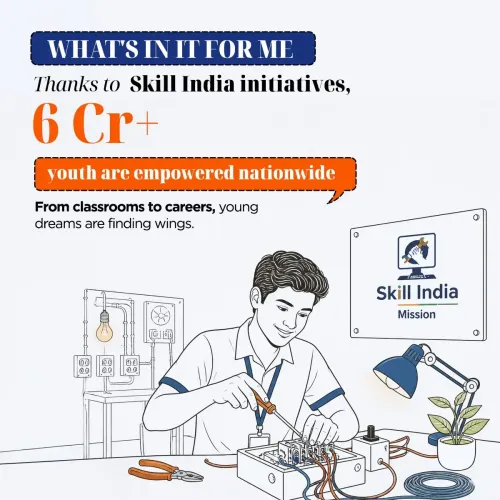
The 12-year arc encompasses flagship schemes including Skill India , Startup India (both 2015) and the National Education Policy 2020 .
Future Union Budget allocations for skilling and NEP 2020 implementation will be the key policy tests of this narrative.
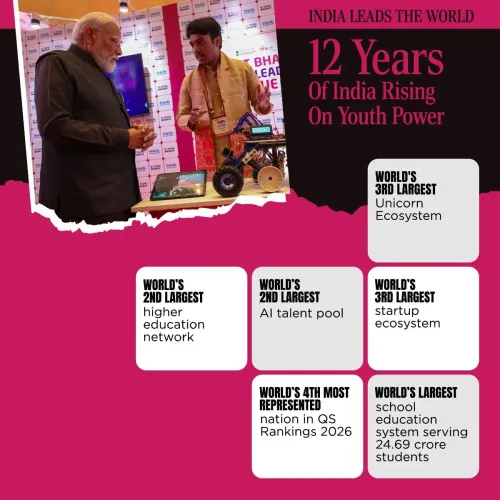
Union Finance Minister Nirmala Sitharaman on Saturday, 13 June 2026 celebrated the 12-year milestone of the government's youth empowerment narrative, crediting India's young population with driving learning, innovation and national transformation toward a developed Bharat.
Context
Sitharaman's post, tagged #12YearsOfYuvaShakti, marks twelve years since the Narendra Modi-led government placed demographic dividend at the centre of its development agenda after coming to power in May 2014. The message frames India's youth not as beneficiaries of policy but as active agents of change — 'turning ambition into action by learning, innovating and leading change,' in her words.
The phrase 'developed Bharat' is a direct reference to the government's Viksit Bharat 2047 vision, which sets India's centenary of independence as the target year for achieving developed-nation status. Youth agency has consistently been cited as the demographic engine behind that goal.
Policy Backdrop
The twelve-year arc began with the simultaneous launch of flagship programmes including the Skill India Mission and Startup India initiative in 2015, designed to channel youth energy into vocational training and enterprise creation. The National Youth Policy 2014 had earlier outlined formal objectives around education, skilling and leadership development.
The National Education Policy 2020 deepened this agenda by embedding multidisciplinary learning, innovation and vocational training from early school grades. Together, these schemes represent a layered policy architecture built over a decade, with each successive intervention reinforcing the message that India's youth are both the target constituency and the primary instrument of national growth.
As Finance Minister, Sitharaman has directly shaped the budgetary allocation underpinning these programmes, making her voice on youth empowerment carry both political and fiscal weight.
Stakeholders and Impact
India's youth population — among the largest in the world — stands at the centre of this messaging. Young entrepreneurs, first-generation college students, and vocational trainees are the primary audience and intended beneficiaries of the policy ecosystem the hashtag commemorates.
The government's consistent framing of youth as 'Yuva Shakti' (youth power) has also shaped how Union Budgets since 2014 have prioritised spending on skilling infrastructure, digital access and startup incentives. The anniversary serves as a moment for the ruling BJP to consolidate its political identity as the party that harnessed India's demographic advantage.
What's Next
Attention will now turn to the next Union Budget and whether allocations for youth skilling and innovation see a meaningful increase, particularly under the Skill India Mission and NEP 2020 implementation frameworks. Parliamentary updates on NEP rollout across states will also be closely watched.
As India moves deeper into the second half of the decade, the government's ability to translate the 'Yuva Shakti' narrative into measurable employment and entrepreneurship outcomes will determine how durable this political and policy framing remains heading toward 2047.
Point of View
Using a round-number anniversary to reinforce the BJP's decade-long brand identity as the party of demographic dividend. By invoking 'developed Bharat' alongside youth agency, the Finance Minister aligns fiscal stewardship with civilisational aspiration — a framing that has grown more prominent as the 2047 deadline draws closer. The hashtag also signals coordinated party messaging, with senior ministers lending institutional weight to what is essentially a political anniversary. The real test, however, lies in whether the next Union Budget translates this anniversary rhetoric into fresh, measurable commitments on skilling and employment.
NationPress
29 Jul 2026
Frequently Asked Questions
What is #12YearsOfYuvaShakti?
#12YearsOfYuvaShakti marks twelve years since the Modi government placed youth empowerment at the centre of its development agenda after coming to power in May 2014, commemorating a decade-plus of schemes like Skill India and Startup India.
What is Viksit Bharat 2047?
Viksit Bharat 2047 is the Indian government's vision to achieve developed-nation status by 2047, the centenary of India's independence, with youth-led growth cited as a primary driver.
What schemes has India launched for youth empowerment since 2014?
Key schemes include the Skill India Mission and Startup India (both 2015), the National Youth Policy 2014, and the National Education Policy 2020, which together form a layered policy architecture for youth skilling and entrepreneurship.
Why did Nirmala Sitharaman post about youth empowerment?
As Finance Minister and a senior BJP leader, Sitharaman marked the 12-year milestone of the government's youth empowerment narrative, reinforcing the ruling party's identity as the driver of India's demographic dividend strategy.
What is the Skill India Mission?
Skill India Mission is a flagship government programme launched in 2015 to provide vocational training and entrepreneurship skills to millions of young Indians, forming a cornerstone of the Yuva Shakti policy agenda.