Rijiju Marks 12 Years of Empowering India's Middle Class
Synopsis
Union Minister Kiren Rijiju marked 12 years of NDA governance on 15 June 2026 with a post celebrating an 'empowered middle class,' linking household savings and aspirations to BJP policies on tax relief, Direct Benefit Transfers, and subsidy reform since 2014.
Key Takeaways
Kiren Rijiju posted on 15 June 2026 under #12YearsOfSakshamMiddleClass , marking 12 years of NDA rule through a middle-class empowerment lens.
The campaign frames everyday household savings and aspirations as direct outcomes of government policy since May 2014 .
The NDA government has expanded Direct Benefit Transfer and Aadhaar -linked subsidies since 2014 to reduce leakages and household expenses.
Union Budgets from 2019 onward raised the basic income-tax exemption limit and standard deduction under the new tax regime for salaried taxpayers.
The Saksham Middle Class theme targets a politically significant bloc: salaried families, first-generation graduates, and aspirational urban and semi-urban households.
The next Union Budget and any changes to income-tax slabs or GST rates will be the key test of whether the campaign translates into further policy action.
Union Parliamentary Affairs Minister Kiren Rijiju on Monday, 15 June 2026, invoked the theme of household savings, sacrifice, and aspiration to mark what the BJP is calling 12 years of an empowered middle class under the Narendra Modi-led NDA government, anchoring the message in the hashtag #12YearsOfSakshamMiddleClass.
Context
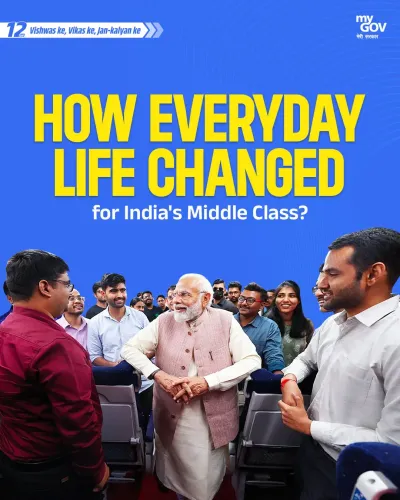
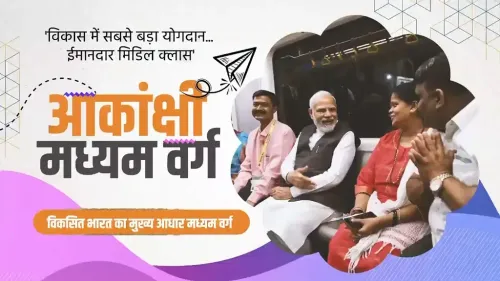
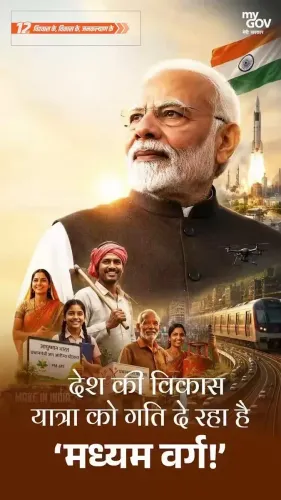
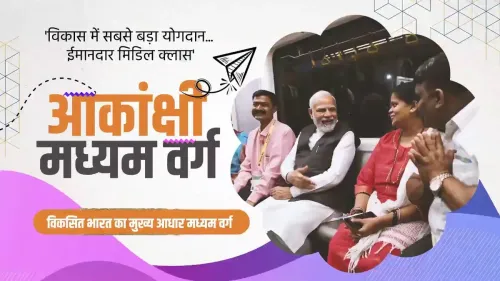
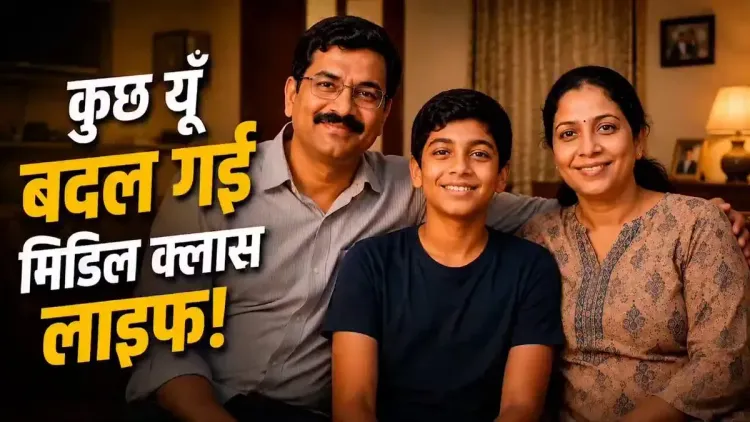
Rijiju's post frames the last 12 years — dating to May 2014, when the NDA first came to power — as a period in which policy choices deliberately reduced everyday financial burdens on middle-class families. 'Every saving tells a story. Every sacrifice has a purpose. Every dream is for a better future,' he wrote, tying household-level financial decisions to a larger national narrative. The accompanying video underscores the campaign's visual communication strategy.
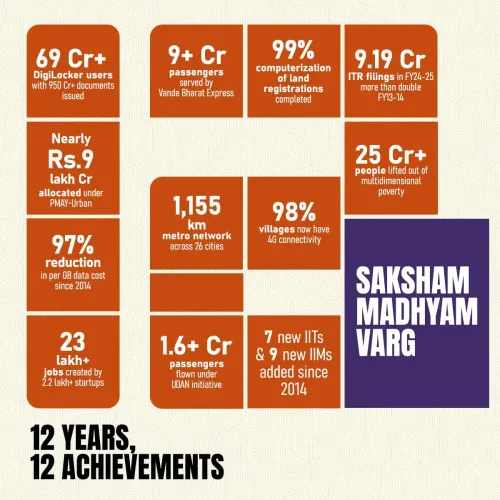
The phrase 'Saksham Middle Class' (roughly, 'capable' or 'empowered middle class') has emerged as a thematic anchor in BJP messaging, positioning economic reforms not merely as macro statistics but as lived improvements in the lives of salaried families, small traders, and aspirational households.
Policy Backdrop
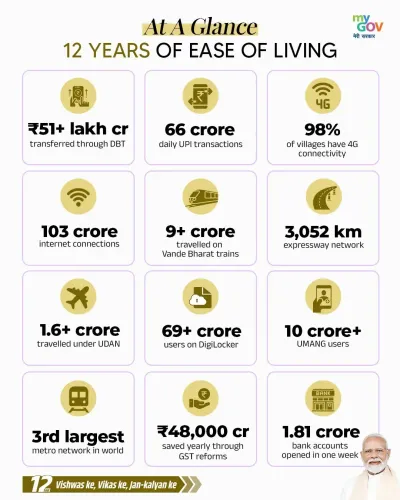
Since 2014, the NDA government has expanded Direct Benefit Transfer (DBT) mechanisms and Aadhaar-linked subsidy delivery, arguing that eliminating leakages translates directly into household savings. Successive Union Budgets from 2019 onward raised the basic income-tax exemption limit and enhanced the standard deduction under the new tax regime, providing measurable relief to salaried middle-class taxpayers.
Taken together, the government has consistently presented this policy cluster — tax rationalisation, DBT, reduced GST on essential goods, and expanded social insurance — as a package that frees middle-class disposable income for education, housing, and investment rather than routine expenditure.
Stakeholders and Impact
Middle-class families — broadly defined in Indian policy discourse as salaried employees, small business owners, and urban and semi-urban households with aspirational consumption patterns — are the explicit audience of the #12YearsOfSakshamMiddleClass campaign. For this segment, income-tax relief and reduced subsidy leakage are among the most directly felt policy outcomes.
The campaign also speaks to a politically significant demographic: first-generation degree holders, new homeowners, and families channelling savings into children's education and skill development — precisely the voters the BJP has sought to consolidate over successive election cycles.
What's Next
Political observers will watch whether the #12YearsOfSakshamMiddleClass campaign builds toward a larger policy announcement, particularly around the next Union Budget. Any further revision of income-tax slabs, changes to GST rates on middle-class goods, or new targeted welfare instruments would be read as a direct policy extension of the communication line Rijiju and other senior BJP leaders are now amplifying. The narrative also sets a benchmark against which the government's future economic record will inevitably be measured.
Point of View
The BJP attempts to give its economic record a human face at a time when middle-class cost-of-living concerns remain electorally potent. The 12-year marker is not incidental: it allows the party to claim a long enough arc to show compounding benefits from tax relief, DBT, and subsidy rationalisation. Whether the campaign precedes a concrete policy announcement — particularly a Budget-cycle tax concession — will determine if it lands as a substantive milestone or a purely communicative exercise.
NationPress
23 Sept 2026
Frequently Asked Questions
What is the Saksham Middle Class campaign by BJP?
The Saksham Middle Class campaign is a BJP communication initiative that frames 12 years of NDA governance as a period of deliberate empowerment of middle-class families through tax relief, Direct Benefit Transfers, and reduced subsidy leakages, positioning everyday household savings as evidence of policy success.
What has the Modi government done for the middle class in 12 years?
Since 2014, the NDA government has expanded Direct Benefit Transfer schemes, linked subsidies to Aadhaar to cut leakages, and raised income-tax exemption limits and standard deductions in successive Union Budgets, particularly from 2019 onward, to increase disposable income for salaried taxpayers.
Who is Kiren Rijiju and why did he post about the middle class?
Kiren Rijiju is the Union Minister of Parliamentary Affairs and Minority Affairs and a senior BJP leader from Arunachal Pradesh. His 15 June 2026 post marked the 12th anniversary of NDA rule by celebrating middle-class empowerment as a central achievement of the Modi government.
What does Saksham Middle Class mean?
'Saksham' is a Hindi word meaning 'capable' or 'empowered.' The term Saksham Middle Class refers to the BJP's framing of India's middle class as having become more financially capable and aspirationally confident over the 12 years of NDA governance since May 2014.
What policy changes could follow the 12YearsOfSakshamMiddleClass campaign?
Political observers are watching the next Union Budget for potential further reductions in income-tax rates or slab revisions, changes to GST on goods consumed by the middle class, or new targeted welfare instruments that would give concrete policy weight to the Saksham Middle Class messaging.