Rijiju Highlights Digital Gains for India's Middle Class
Synopsis
Union Parliamentary Affairs Minister Kiren Rijiju on June 15, 2026, marked #12YearsOfSakshamMiddleClass by citing mobile payments, faster travel, online services, and direct benefit transfers as evidence of a more connected and inclusive India under BJP governance.
Key Takeaways
Kiren Rijiju , Union Minister of Parliamentary Affairs, posted on June 15, 2026 under the hashtag #12YearsOfSakshamMiddleClass .
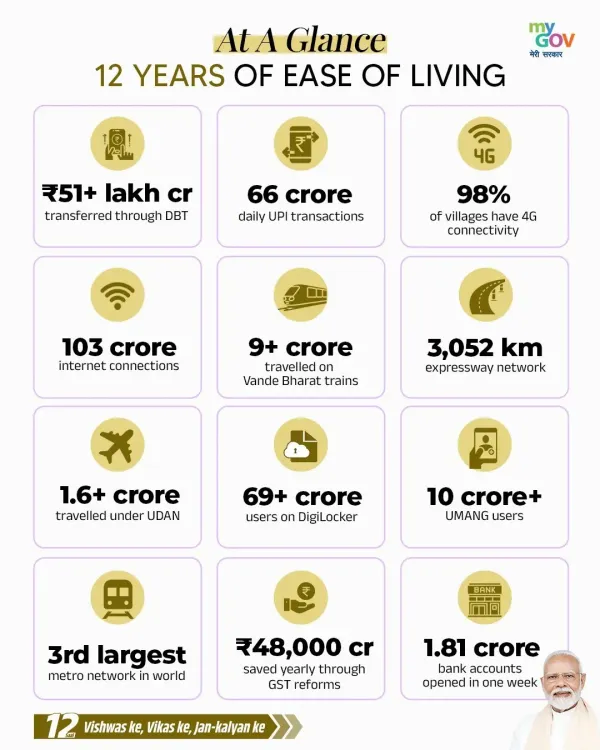
The post highlights four pillars of citizen experience: mobile payments, faster travel, online services, and direct benefit transfers.
Digital India was launched in July 2015 to digitise public services and expand connectivity.
UPI , rolled out in 2016 , now underpins India's real-time mobile payments ecosystem.
Direct Benefit Transfer (DBT) has been scaled since 2014 to deliver subsidies directly into beneficiaries' bank accounts.
The campaign reflects the BJP's broader strategy of anchoring its governance record in the lived experiences of the middle class.
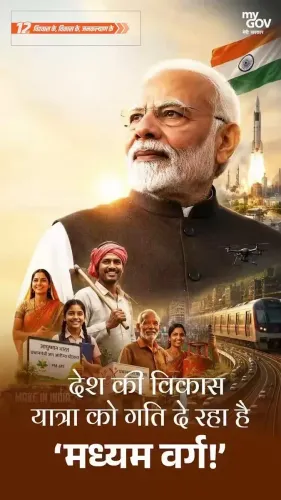
Union Parliamentary Affairs Minister Kiren Rijiju on Monday, June 15, 2026, invoked the everyday experiences of ordinary Indians — from mobile payments to faster travel and online service access — to mark what the ruling BJP is calling #12YearsOfSakshamMiddleClass, a campaign celebrating over a decade of governance reforms aimed at empowering India's middle class.
Context
Rijiju's post frames the transformation of daily life as the defining story of 'New India.' 'Whether paying with a mobile phone, travelling faster, accessing services online or receiving benefits directly,' he wrote, 'millions of citizens are experiencing the impact of a more connected, efficient and inclusive India.' The hashtag #12YearsOfSakshamMiddleClass signals a coordinated BJP communication effort marking roughly twelve years since the party's governance agenda began taking shape at the national level.
The minister's message cuts across multiple policy domains — digital payments, infrastructure, e-governance, and direct welfare delivery — presenting them as a unified arc of middle-class uplift rather than isolated programmes.
Policy Backdrop
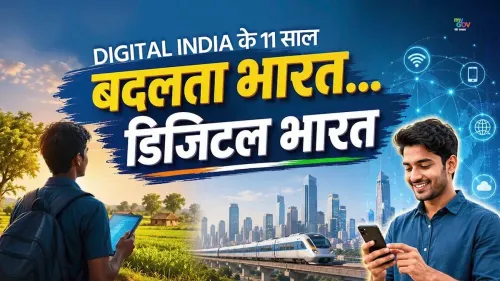
The pillars Rijiju references have deep institutional roots. The Digital India programme, launched in July 2015, set out to expand broadband connectivity, digitise public services, and promote electronic delivery of government benefits. It underpins the shift to online service access the minister describes.
The Unified Payments Interface (UPI), rolled out in 2016, has since become one of the world's largest real-time payments platforms, enabling the mobile-phone transactions Rijiju highlights. Simultaneously, the expansion of Direct Benefit Transfer (DBT) — scaled aggressively from 2014 onward — moved subsidies and welfare payments directly into beneficiaries' bank accounts, cutting intermediaries and reducing leakage. Together, these three pillars — Digital India, UPI, and DBT — form the backbone of the governance reform narrative the BJP has consistently promoted.
Stakeholders and Impact
The primary audience of this messaging is India's expanding middle class, a demographic that has grown substantially over the past decade and that both uses and benefits from digital public infrastructure. For this segment, UPI-based payments, online government portals, and faster rail or road connectivity represent tangible quality-of-life improvements that translate into political salience.
Welfare beneficiaries at the lower end of the income spectrum are equally implicated: DBT has channelled subsidies for cooking gas, food, fertiliser, and scholarships directly to bank accounts, reducing dependence on intermediaries. The convergence of these experiences — from urban professionals paying via mobile to rural households receiving benefits digitally — is precisely the 'inclusive India' framing Rijiju deploys.
What's Next
Parliamentary debates on the next phase of Digital India and fresh budget allocations for digital infrastructure and DBT expansion are expected to be closely watched in the coming legislative sessions. The #12YearsOfSakshamMiddleClass campaign is likely to intensify as the BJP seeks to consolidate its governance record as a political asset heading into the 2024-2029 policy cycle. How the government translates this messaging into concrete new announcements — whether on infrastructure spending, digital public goods, or welfare scheme expansion — will determine whether the campaign moves beyond communication into policy action.
Point of View
A faster train, an online form — the party sidesteps abstract statistics in favour of felt reality. This approach is particularly potent with India's urban and semi-urban middle class, whose digital adoption has outpaced earlier projections. The campaign also signals that as the 2024-2029 policy cycle deepens, the BJP intends to run on its governance record rather than pivot to new promises alone.
NationPress
20 Sept 2026
Frequently Asked Questions
What is the #12YearsOfSakshamMiddleClass campaign?
#12YearsOfSakshamMiddleClass is a BJP communication campaign marking approximately twelve years of governance reforms — including Digital India, UPI, and Direct Benefit Transfer — that the party says have empowered India's middle class through technology and direct welfare delivery.
What did Kiren Rijiju say about New India?
Kiren Rijiju said the story of New India is reflected in everyday citizen experiences such as paying with a mobile phone, travelling faster, accessing services online, and receiving benefits directly — describing this as evidence of a more connected, efficient, and inclusive India.
What is Direct Benefit Transfer (DBT) in India?
Direct Benefit Transfer is a government mechanism, scaled from 2014 onward, that transfers subsidies and welfare payments directly into beneficiaries' bank accounts, reducing intermediaries and leakage in schemes covering cooking gas, food, fertiliser, and scholarships.
When was Digital India launched?
Digital India was launched in July 2015 as a flagship programme to expand broadband infrastructure, digitise public services, and promote electronic delivery of government benefits across India.
What is UPI and how does it relate to India's digital growth?
UPI, or Unified Payments Interface, was rolled out in 2016 and enables instant mobile-based digital payments. It has grown into one of the world's largest real-time payments platforms and is a central example of India's digital public infrastructure success.