Bhupender Yadav hails 12 years of gains for India's middle class
Synopsis
Union Environment Minister Bhupender Yadav marked twelve years of BJP-led NDA rule on 15 June 2026, crediting the government with growing opportunities and strengthening the confidence of India's middle class under the hashtag #12YearsOfSakshamMiddleClass.
Key Takeaways
Union Environment Minister Bhupender Yadav posted on 15 June 2026 to mark twelve years of the BJP-led NDA government .
The post credits the government with expanding opportunities and strengthening confidence for India's middle class .
The hashtag #12YearsOfSakshamMiddleClass indicates a coordinated BJP campaign to mark the party's twelve-year tenure since May 2014 .
The NDA government's middle-class-focused measures have included tax rationalisation, digital financial inclusion, and infrastructure expansion.
The forthcoming Union Budget and Economic Survey will be key markers of whether fresh middle-class-oriented policy announcements follow the messaging campaign.
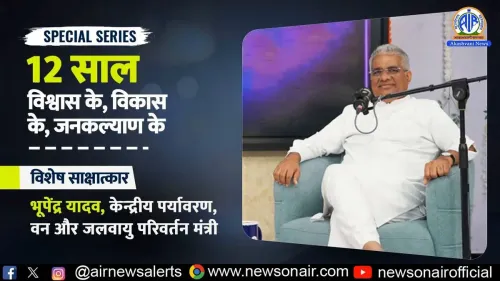
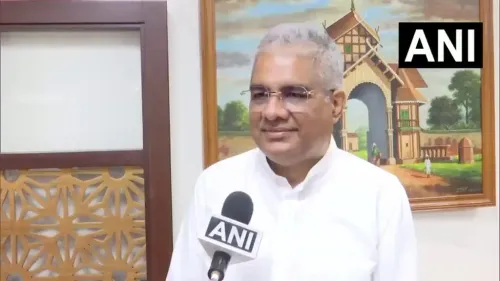
Union Environment Minister Bhupender Yadav on Monday, 15 June 2026 credited the BJP-led NDA government with expanding opportunities and strengthening the confidence of India's middle class over the past twelve years, marking the anniversary with a social media post under the hashtag #12YearsOfSakshamMiddleClass.
Context
Yadav's post, written in Hindi, states: 'Pichhle 12 varshon mein madhyam varg ke liye badhe avsar aur mazboot hua vishwas' — 'In the last 12 years, opportunities for the middle class have grown and confidence has been strengthened.' The message marks twelve years since the BJP under Prime Minister Narendra Modi came to power following the May 2014 general election, which installed the NDA government at the centre.
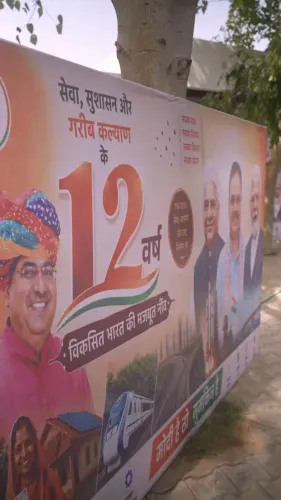
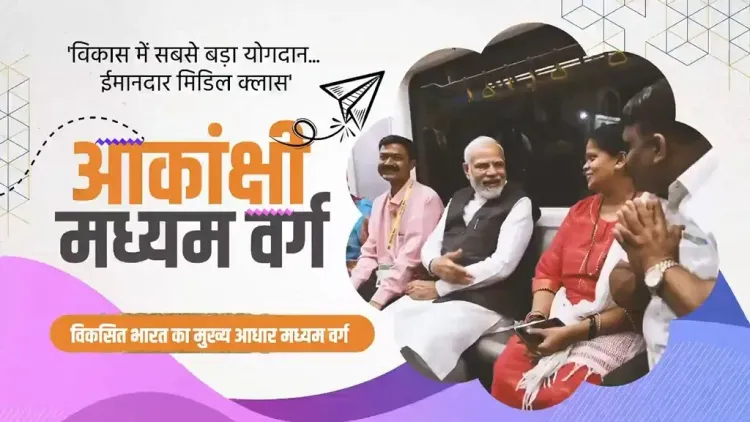
The post is part of a coordinated campaign by BJP leaders and ministers to mark the party's twelve-year tenure in government, with the hashtag framing the period as one of empowerment for middle-income households across India.
Policy Backdrop
Since assuming office in May 2014, the NDA government has pursued a range of economic and social measures that its official narrative credits with benefiting middle-income groups. These include tax rationalisation, expansion of digital financial infrastructure, and large-scale investment in roads, railways, and urban housing.
Schemes such as housing assistance, health insurance coverage, and skill-development programmes have been positioned by the government as directly addressing the aspirations of salaried and self-employed middle-class households. The broader thrust of the BJP's economic messaging has consistently centred on formalisation of the economy and upward mobility for this demographic.
Stakeholders and Impact
India's middle class — broadly understood to include salaried professionals, small business owners, and aspirational urban and semi-urban households — represents one of the largest and most politically consequential demographic blocs in the country. Government policies on income tax slabs, home loan interest rates, and employment generation directly affect this group's economic security and sentiment.
BJP ministers have routinely used social media to communicate policy achievements to this constituency, and the present post continues that established pattern. The campaign signals that the party intends to keep middle-class welfare at the centre of its political messaging heading into the next budget cycle.
What's Next
Observers will watch the forthcoming Union Budget and the Economic Survey for fresh announcements on personal income tax relief, housing finance, and skill or employment schemes targeted at middle-income groups. Any such measures would be expected to carry forward the narrative that the government has built over twelve years of NDA rule.
As the BJP continues to consolidate its twelve-year record as a campaign asset, the middle-class vote bloc is likely to remain a focal point of both policy design and political communication in the months ahead.
Point of View
Reinforcing a narrative of upward mobility that the party has cultivated since 2014. Whether the rhetoric translates into fresh policy relief in the next budget will determine how effectively the campaign lands with its intended audience.
NationPress
19 Sept 2026
Frequently Asked Questions
What did Bhupender Yadav post about the middle class?
Bhupender Yadav posted on 15 June 2026 that the past twelve years under the BJP-led NDA government have brought greater opportunities and stronger confidence for India's middle class, using the hashtag #12YearsOfSakshamMiddleClass.
What is the #12YearsOfSakshamMiddleClass hashtag about?
The hashtag marks twelve years since the BJP-led NDA government came to power in May 2014, with 'Saksham' meaning 'capable' or 'empowered' in Hindi, framing the period as one of middle-class empowerment.
What policies has the Modi government introduced for the middle class?
The NDA government has pursued tax rationalisation, digital financial inclusion, housing assistance, health insurance coverage, and skill-development programmes, all of which have been positioned as benefiting middle-income households.
Who is Bhupender Yadav?
Bhupender Yadav is a senior BJP leader and currently serves as India's Union Minister of Environment, Forest and Climate Change.
When did the BJP-led NDA government come to power?
The BJP-led NDA government, headed by Prime Minister Narendra Modi, came to power in May 2014 following that year's general election.