Asian Games 2026: Nagoya organisers roll out cricket guide for Japanese fans
Synopsis
At the Asian Games in Nagoya, organisers have done something rarely seen at a major sporting event: published a two-page illustrated primer on cricket for local fans experiencing the sport live for the first time. From LBW to umpire signals to reading the scoreboard, the guide covers the full game — a small but telling sign of cricket's ambitions beyond its traditional heartlands.
Key Takeaways
The Asian Games organising committee in Nagoya has distributed a two-page illustrated cricket guide to Japanese spectators.
The guide covers the T20 format ( 20 overs per innings , approximately 3 hours per match) and basic rules of play.
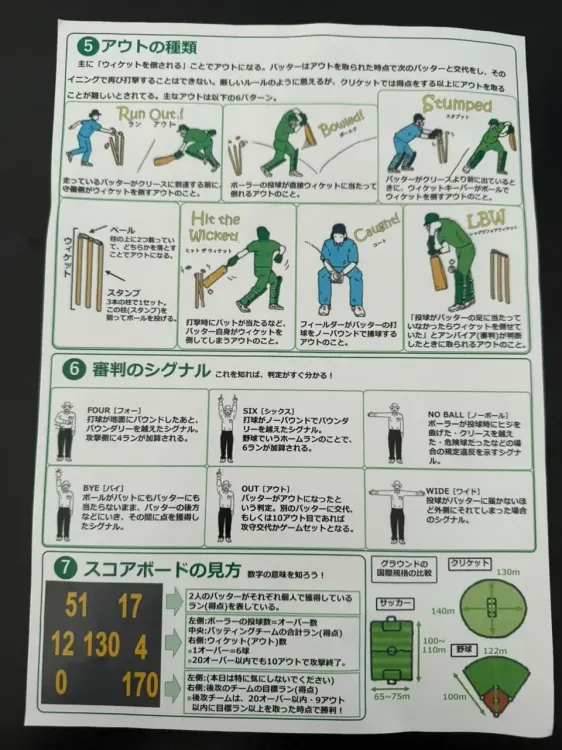
Six modes of dismissal are explained — bowled, caught, run out, stumped, hit wicket and LBW — using simple graphics.
Umpiring signals for four, six, no-ball, wide, bye and out are included to help fans follow on-field decisions.
The initiative reflects cricket's push to build audiences in non-traditional markets across Asia.
The Asian Games organising committee in Nagoya has released a two-page illustrated guide to cricket, aimed at helping Japanese spectators follow the sport as it makes its presence felt at the Games on 22 September 2026. The initiative reflects organisers' awareness that cricket remains largely unfamiliar to local audiences, and marks a deliberate effort to bridge that gap before the first ball is bowled.
What the Guide Covers
The illustrated booklet, distributed directly to Japanese fans at the venue, opens with a basic introduction: cricket is played between two teams of 11 players, and the T20 format used at the Asian Games consists of 20 overs per innings, with each match lasting approximately three hours. The guide explains how batting and bowling sides alternate innings and clarifies that a team's innings can end before the full 20 overs if 10 wickets fall.
A dedicated illustrated section maps out the cricket ground, identifying key positions — the bowler, batter, wicketkeeper, fielders and on-field umpires — giving first-time spectators a spatial understanding of the game before action begins.
Scoring, Dismissals and Umpire Signals
Organisers have explained the three fundamental ways of scoring runs: running between the wickets, hitting four runs when the ball reaches the boundary after bouncing, and striking six runs when the ball clears the rope without bouncing. The guide also covers six modes of dismissal — run out, bowled, stumped, hit wicket, caught, and leg before wicket (LBW) — using simple graphics and concise captions that require no prior knowledge of the game.
Umpiring signals are given their own section, decoding calls for four, six, no-ball, bye, wide and out, so spectators can interpret on-field decisions in real time rather than waiting for scoreboard updates.
Reading the Scoreboard
A final section demystifies the cricket scoreboard, explaining the three numbers that matter most to a newcomer: runs scored, overs bowled and wickets lost. The layout is designed so that a spectator with no prior exposure to cricket can follow the match's progression from the opening over to the final delivery.
Significance for Cricket's Asian Footprint
Cricket's inclusion at the Asian Games represents a significant moment for the sport's expansion in non-traditional markets. Japan is among the countries where the game has minimal grassroots penetration, making audience education a practical necessity rather than a courtesy. This comes amid broader efforts by global cricket bodies to grow the sport beyond its established South Asian, British and Caribbean strongholds. Rather than assuming knowledge, the Nagoya organisers have opted for a visual-first approach that meets spectators where they are — a model that could inform how cricket presents itself at future multi-sport events in Asia.
Point of View
The Nagoya initiative is a rare acknowledgement that spectator education must precede spectator loyalty. The real question is whether cricket's governing bodies will build on this at future Asian Games editions and at the Olympics, where the sport is set to return in 2028. A two-page pamphlet is a start — a sustained grassroots programme is what retention requires.
NationPress
22 Sept 2026
Frequently Asked Questions
What is the cricket guide distributed at the Asian Games 2026?
It is a two-page illustrated booklet distributed by the Nagoya Asian Games organising committee to Japanese spectators, covering T20 rules, scoring, dismissals, umpire signals and how to read the scoreboard. The guide is designed for fans with no prior knowledge of cricket.
What format of cricket is being played at the Asian Games 2026?
The T20 format is used, consisting of 20 overs per innings with each match lasting approximately three hours. An innings can end before the full 20 overs if 10 wickets fall.
How does the guide explain ways to score runs in cricket?
The guide outlines three methods: running between the wickets, hitting a boundary that bounces to score four runs, and clearing the boundary without a bounce for six runs.
Which modes of dismissal are covered in the guide?
Six dismissals are illustrated: bowled, caught, run out, stumped, hit wicket, and leg before wicket (LBW). Each is accompanied by simple graphics and a brief caption for easy understanding.
Why is the cricket guide significant for the sport in Japan?
Cricket has minimal grassroots presence in Japan, meaning many local spectators at the Asian Games are watching the sport live for the first time. The guide represents a broader effort to grow cricket in non-traditional Asian markets, a priority as the sport eyes global expansion including a return to the Olympics in 2028.