CM Revanth Reddy Joins Varuna Yagam at Yadagirigutta Temple
Synopsis
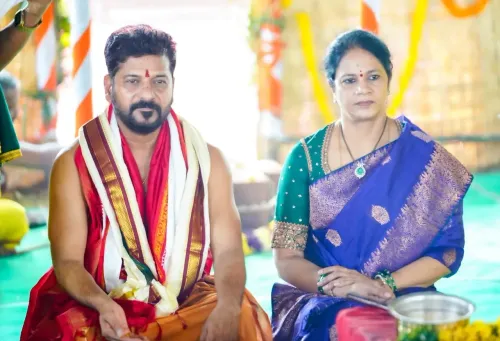
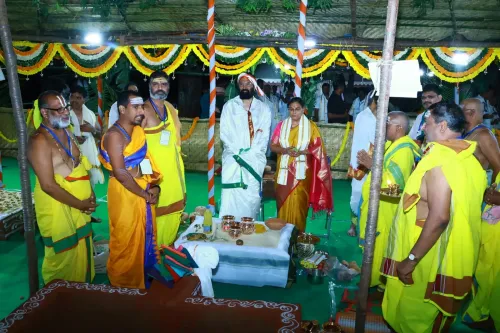
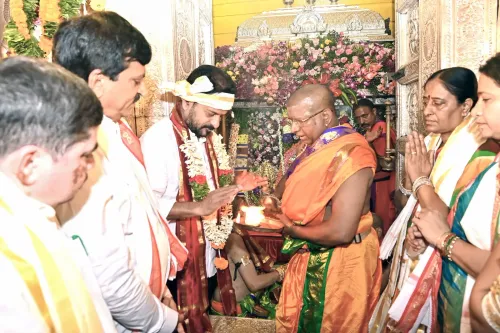
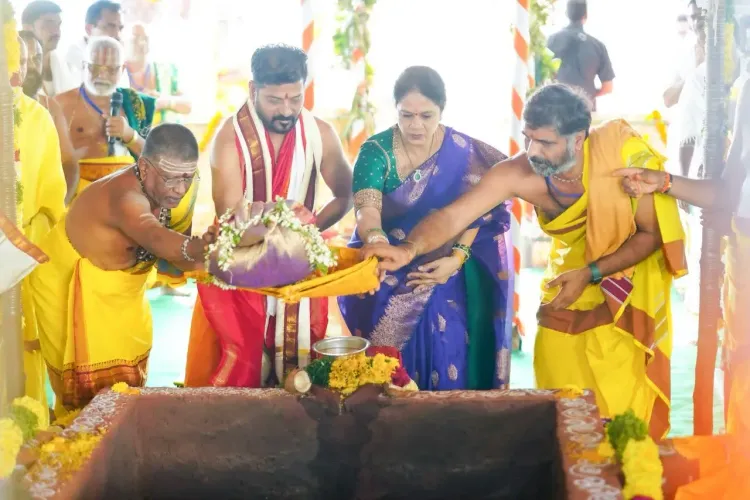
Telangana CM A. Revanth Reddy and his wife attended the Varuna Yagam purnahuti at Yadagirigutta on 10 August 2026, praying for abundant rains in Krishna and Godavari catchments to ensure a prosperous harvest for the state's farming families.
Key Takeaways
Revanth Reddy participated with his wife in the Varuna Yagam purnahuti on 10 August 2026 .
The ritual was held at the Yadagirigutta Sri Lakshmi Narasimha Swamy Temple , Yadadri Bhuvanagiri district.
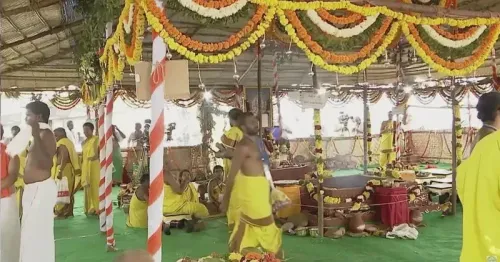
The yagam involved 108 ritwiks and 11 homa kundas , conducted by temple priests and Vedic scholars.
Revanth Reddy specifically prayed for rainfall in the Krishna and Godavari river catchment areas and for reservoirs to fill.
The event underscores the political salience of farmer welfare in Telangana, where both river basins are critical to irrigation.
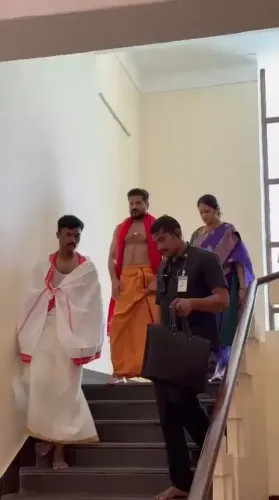
When a chief minister lights a sacred fire and prays for rain, it is not just ritual — it is a signal to millions of farmers watching the sky. Telangana Chief Minister A. Revanth Reddy participated alongside his wife in the concluding ceremony (purnahuti) of a Varuna Yagam — a traditional Hindu fire ritual invoking the rain deity Varuna — on Monday, 10 August 2026, expressing his hope that abundant rains would bring joy and prosperity to the state's farming families.
The ritual was conducted under the guidance of priests and Vedic scholars from the Yadagirigutta Sri Lakshmi Narasimha Swamy Temple in Yadadri Bhuvanagiri district, Telangana. The ceremony featured 108 ritwiks (ritual officiants) and 11 homa kundas (sacred fire altars), as described by the Chief Minister in his post.
A Prayer for Krishna and Godavari to Fill
Revanth Reddy's wishes were specific and agricultural: that the Krishna and Godavari river catchment areas receive widespread rainfall, that ponds and reservoirs fill to capacity, and that crops yield abundantly. 'May every family live happily and in prosperity. The welfare of the people and the well-being of farmers is always the highest priority of a people's government,' he wrote.
The two rivers are the lifelines of Telangana's irrigation network. The Godavari basin supports extensive paddy cultivation across the state's northern and eastern districts, while the Krishna basin feeds reservoirs and canals critical to the southern and western regions. A deficit monsoon in either catchment can cascade into crop failure, debt distress, and rural hardship — making the symbolism of the yagam pointed rather than merely ceremonial.
Yadagirigutta: Sacred Ground for a Public Moment
The choice of venue carries weight. The Yadagirigutta Sri Lakshmi Narasimha Swamy Temple is one of Telangana's most revered Vaishnava shrines, drawing lakhs of pilgrims annually. Holding the Varuna Yagam here — rather than at a government premises — frames the event as a community act of faith rather than a state function, even as the Chief Minister's presence gives it unmistakable political visibility.
Indian state leaders have a long tradition of participating in monsoon-linked rituals, particularly in agrarian states where the gap between a good harvest and a failed one can be measured in rainfall inches. For Telangana, a state where farming households remain a core constituency, such participation serves as a visible demonstration of solidarity with rural concerns — even as formal policy instruments like irrigation projects and crop insurance operate on a separate track.
With reservoir storage levels and official monsoon progress reports in the Krishna and Godavari basins set to define the coming weeks, the prayer offered at Yadagirigutta will be tested not in fire and ritual, but in the rain gauges of a monsoon season still unfolding.
Point of View
The Chief Minister ties his public image directly to outcomes farmers care most about: water and yield. It is a pattern seen across India's monsoon-dependent states, where ritual participation complements — and sometimes substitutes for — visible policy action. The real measure will come from reservoir storage data and kharif crop assessments in the weeks ahead.
NationPress
25 Sept 2026
Frequently Asked Questions
What is a Varuna Yagam?
A Varuna Yagam is a traditional Hindu fire ritual invoking Varuna, the deity of rain and water, performed to pray for adequate rainfall and agricultural prosperity. It involves Vedic priests conducting homa (fire offerings) at sacred altars.
Where was the Varuna Yagam held in Telangana?
The Varuna Yagam purnahuti was held at the Yadagirigutta Sri Lakshmi Narasimha Swamy Temple in Yadadri Bhuvanagiri district, Telangana, on 10 August 2026.
Why did CM Revanth Reddy attend the Varuna Yagam?
CM Revanth Reddy attended to pray for abundant rains in the Krishna and Godavari river catchment areas so that reservoirs fill, crops flourish, and farming families in Telangana prosper.
Which rivers did Revanth Reddy mention in his Varuna Yagam prayer?
He specifically prayed for widespread rainfall in the Krishna and Godavari river catchment areas, both of which are critical to Telangana's irrigation network and agricultural output.
How many priests participated in the Telangana Varuna Yagam 2026?
According to CM Revanth Reddy's post, 108 ritwiks (ritual officiants) participated alongside Vedic scholars and priests from the Yadagirigutta temple, conducting the yagam across 11 homa kundas.