Telangana holds Varuna Yagam at Nagarjuna Sagar amid monsoon deficit
Synopsis
Telangana's Nagarjuna Sagar dam holds barely 145.65 TMC — less than half its 312 TMC capacity — while it stood nearly full on the same date last year. The state government's Varuna Yagam, drawing 108 Vedic officiants and senior ministers, reflects both a cultural tradition and an urgent, unresolved water crisis heading into the critical second half of the monsoon.
Key Takeaways
The Telangana government conducted Varuna Yagam at Nagarjuna Sagar Dam , Nalgonda district, on 10 August 2025 .
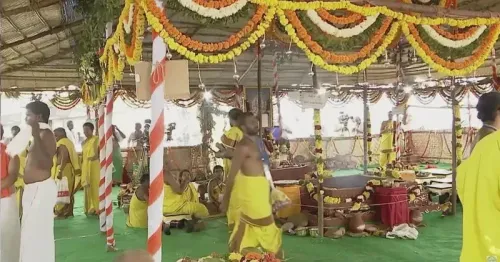
The ritual involved 108 Rithwiks and 11 Homa Kundas , led by priests from the Yadagirigutta temple.
Nagarjuna Sagar currently holds 145.65 TMC against a gross capacity of 312.045 TMC , with the water level at 518 feet versus a full level of 590 feet .
On the same date last year, the reservoir held 310.25 TMC at 589.40 feet — nearly full.
The Southwest monsoon rainfall deficit has narrowed to 5 per cent , but Krishna and Godavari river inflows remain inadequate.
Revanth Reddy attended the concluding Poornahuti ceremony; Irrigation Minister Uttam Kumar Reddy participated from the start.
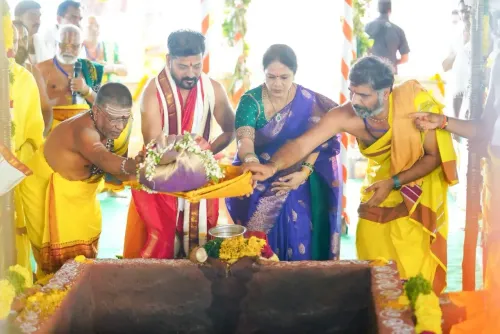
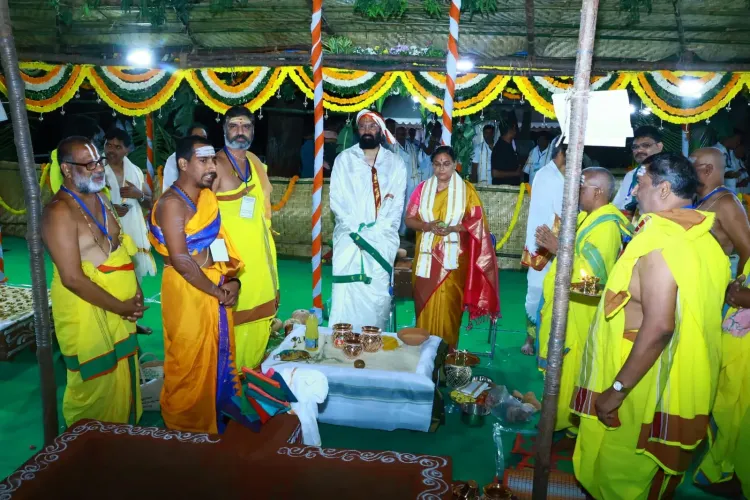
The Telangana government on Monday, 10 August conducted the Varuna Yagam — a traditional Vedic rain-prayer ritual — on the banks of the Nagarjuna Sagar Dam across the Krishna River in Nalgonda district, as the state's major reservoirs continue to face critically low inflows despite a partial recovery in the Southwest monsoon. The event, organised under the Endowments Department, was led by priests and Vedic scholars from the Yadagirigutta Sri Lakshmi Narasimha Swamy Temple.
Scale and Conduct of the Ritual
The Yagam was performed with 108 Rithwiks (Vedic officiants) and 11 Homa Kundas (consecrated sacrificial fire pits), with a full complement of Vedic scholars presiding over the ceremonies. The auspicious date and time for the ritual were fixed by the temple priests at Yadagirigutta. The event began early Monday morning and was scheduled to conclude with the Poornahuti — the final oblation ceremony — in the afternoon.
Ministers and Officials in Attendance
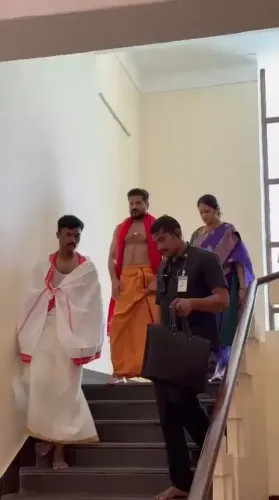
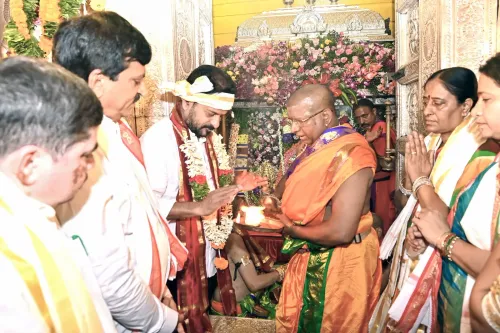
Irrigation Minister Uttam Kumar Reddy and his wife participated in the Yagam from its commencement. Chief Minister A. Revanth Reddy was set to attend the Poornahuti ceremony. Endowments Minister Konda Surekha, Roads and Buildings Minister Komatireddy Venkat Reddy, along with other ministers, Members of Parliament, Members of the Legislative Council, and Members of the Legislative Assembly, were also present.
What the Government Said
Irrigation Minister Uttam Kumar Reddy said the decision to hold the Varuna Yagam was driven by a collective prayer for the well-being of the people of Telangana and the country, and for abundant rainfall and bountiful harvests. He said officials and participants were also praying for vigorous flows in the Krishna and Godavari Rivers, for the filling of the Nagarjuna Sagar reservoir and all other reservoirs and tanks across the state, and for Telangana to remain free from the adverse impact of El Niño.
The Reservoir Crisis Behind the Ritual
The immediate context is stark. Although rains in the second half of July and early August brought the Southwest monsoon rainfall deficit down to 5 per cent, reservoirs in the Krishna and Godavari basins are yet to receive meaningful inflows. Nagarjuna Sagar, one of the state's largest dams, currently holds 145.65 TMC against a gross storage capacity of 312.045 TMC, with the water level at approximately 518 feet — well below the full reservoir level of 590 feet. By contrast, on 9 August last year, the reservoir held 310.25 TMC with the level at 589.40 feet, nearly at full capacity. The year-on-year shortfall underscores the severity of the current situation.
What to Watch
With the peak monsoon weeks ahead, the pace of inflows into the Krishna and Godavari systems will determine whether Telangana can meet its irrigation and drinking water needs through the dry season. Authorities will be closely monitoring reservoir levels and river flows in the coming weeks as the state balances ritual appeal with practical water management imperatives.
Point of View
It is also acknowledging that the conventional levers of water management are under stress. Nagarjuna Sagar at barely 47 per cent capacity, against near-full levels a year ago, is a sobering data point. Telangana's dependence on two interstate rivers — Krishna and Godavari — means inflow timing is largely outside state control, making the gap between reservoir targets and reality a perennial vulnerability. The ritual draws attention to that gap; the harder question is what administrative and inter-state coordination steps follow it.
NationPress
24 Sept 2026
Frequently Asked Questions
What is Varuna Yagam and why did Telangana conduct it?
Varuna Yagam is a traditional Vedic ritual performed to invoke the rain deity Varuna for abundant rainfall and good harvests. Telangana conducted it on 10 August 2025 at Nagarjuna Sagar Dam as reservoirs in the Krishna and Godavari basins remain critically low despite a partial recovery in Southwest monsoon rainfall.
What is the current water level at Nagarjuna Sagar?
As of 10 August 2025, Nagarjuna Sagar holds 145.65 TMC against a gross storage capacity of 312.045 TMC, with the water level at around 518 feet — significantly below the full reservoir level of 590 feet. On the same date last year, the reservoir was nearly full at 589.40 feet with 310.25 TMC of water.
Who attended the Varuna Yagam in Telangana?
Irrigation Minister Uttam Kumar Reddy and his wife participated from the morning. Chief Minister A. Revanth Reddy attended the concluding Poornahuti ceremony. Endowments Minister Konda Surekha, Roads and Buildings Minister Komatireddy Venkat Reddy, and several other ministers, MPs, MLCs, and MLAs were also present.
How is the Southwest monsoon performing in Telangana this year?
Rains in the second half of July and early August have brought the Southwest monsoon rainfall deficit in Telangana down to 5 per cent. However, the Krishna and Godavari rivers are yet to receive significant inflows, leaving major reservoirs well below seasonal norms.
What is the significance of El Niño in the context of Telangana's rainfall concerns?
El Niño weather patterns are associated with suppressed monsoon rainfall over India, leading to below-normal precipitation and reduced river flows. Telangana officials specifically prayed for the state to remain free from El Niño's adverse impact, reflecting concerns that the phenomenon could further delay or reduce critical inflows into the Krishna and Godavari systems.