Assam CM Office: Anti-Erosion Works Underway on Ronganadi Embankment
Synopsis
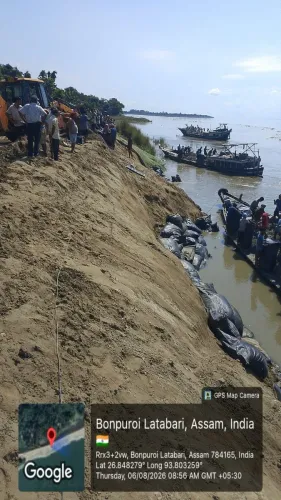
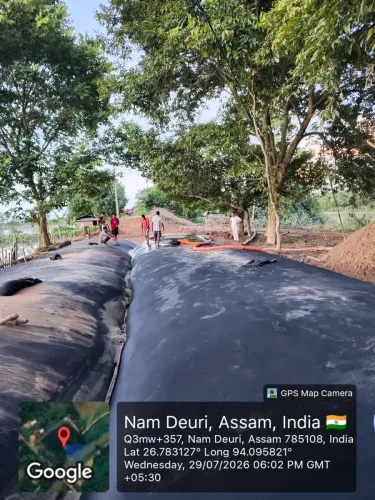
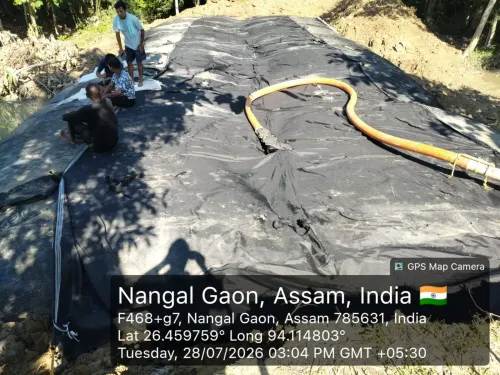
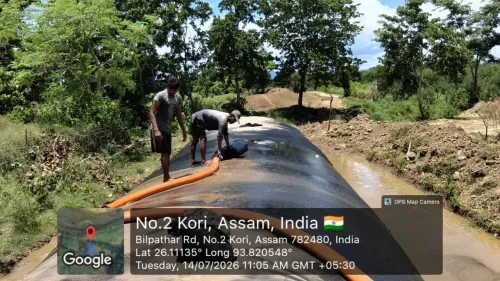
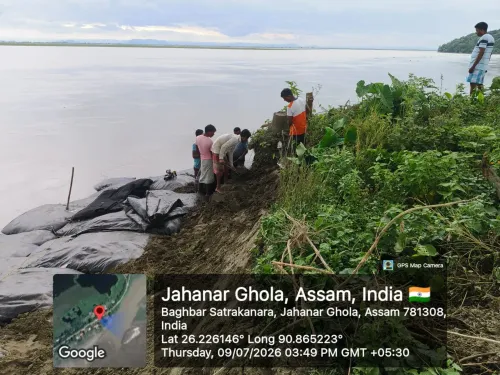
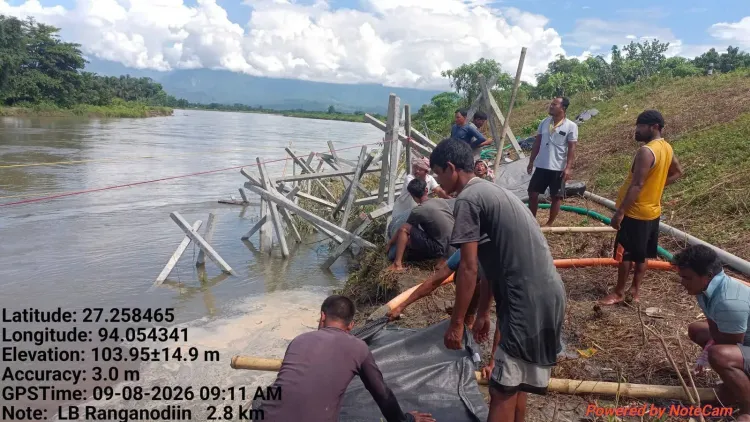
Assam's Chief Minister's Office confirmed active erosion protection works at the 5th and 9th km of the Ronganadi Left Bank embankment in North Lakhimpur, with PSC porcupines and Geo-bags Type-B being launched at erosion-affected reaches by the state Water Resources Department.
Key Takeaways
Erosion protection works are underway at the 5th and 9th km of the Ronganadi Left Bank embankment in North Lakhimpur .
PSC porcupines and Geo-bags Type-B are being launched at erosion-affected reaches.
Works are being executed by the North Lakhimpur Water Resources (WR) Division under Assam's Water Resources Department.
The Ronganadi , a Brahmaputra tributary, poses chronic erosion risks to embankments and nearby settlements in Lakhimpur district .
Assam has used porcupines and geo-bags as standard anti-erosion interventions under flood management programmes since the early 2000s .
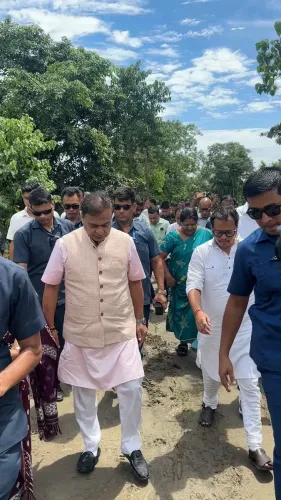
Along the vulnerable banks of the Ronganadi river in Lakhimpur district, Assam's water resources machinery is pushing back against one of the state's most persistent threats — riverbank erosion. The Chief Minister's Office of Assam confirmed on Sunday, August 9, 2026, that active erosion protection works are underway at the 5th and 9th kilometre stretches of the Ronganadi Left Bank (LB) embankment under the North Lakhimpur Water Resources Division.
The works involve the launching of PSC (Pre-Stressed Concrete) porcupines and Geo-bags Type-B at erosion-affected reaches — two standard structural interventions deployed by Assam's Water Resources Department to arrest bank loss and reinforce embankment foundations. PSC porcupines are interlocking concrete units placed along the riverbed and banks to dissipate current energy, while geo-bags are sand-filled geosynthetic sacks used to stabilise eroding slopes.
Ronganadi's Chronic Threat to Lakhimpur's Banks
The Ronganadi is a tributary of the Brahmaputra, and like much of Assam's river network, its course shifts unpredictably — particularly during and after monsoon surges. The Left Bank embankment at North Lakhimpur has long been a pressure point, with erosion threatening both the earthen embankment structure and the farmland and settlements it protects. Lakhimpur district residents and farmers in the floodplain are the most directly exposed to any breach.
Assam has deployed porcupines and geo-bags as recurring protective measures under successive state and centrally sponsored flood management programmes dating back to the early 2000s. The North Lakhimpur WR Division, a field unit of the state's Water Resources Department, is the executing agency for this stretch.
A Race Against the River
The timing matters. Anti-erosion works carried out during or immediately after the monsoon season are both the most urgent and the most operationally difficult — high water levels complicate launching operations even as the threat is at its peak. Completing works at the critical 5th and 9th km reaches before river levels rise further is the immediate operational priority for the division.
Riverbank erosion costs Assam thousands of hectares of land annually, a slow-motion crisis that compounds flood damage and displaces farming communities with little warning. Structural measures like these buy time — but the broader pattern of erosion along the Brahmaputra basin demands sustained, season-on-season investment from the Water Resources Department.
Whether these works hold through the remaining monsoon weeks will be the real test for the embankment at North Lakhimpur — and for the communities counting on it.
Point of View
But the recurring nature of these works at the same reaches signals that durable, engineered solutions remain elusive. For the ruling dispensation, visible on-ground action during the monsoon season serves both a protective and a political function — demonstrating administrative responsiveness in a flood-vulnerable district. The real policy test is whether the state's Water Resources Department budget allocations scale up to match the chronic scale of erosion across the Brahmaputra basin.
NationPress
24 Sept 2026
Frequently Asked Questions
What are PSC porcupines used for in river embankment protection?
PSC (Pre-Stressed Concrete) porcupines are interlocking concrete units placed along riverbeds and banks to break and dissipate the energy of river currents, reducing erosion of embankment foundations and banks.
Where is the Ronganadi Left Bank embankment located?
The Ronganadi Left Bank embankment is located in Lakhimpur district of Assam, along the Ronganadi river — a tributary of the Brahmaputra — and is maintained by the North Lakhimpur Water Resources Division .
What are Geo-bags Type-B and how are they used?
Geo-bags Type-B are geosynthetic fabric bags filled with sand or similar material, placed along eroding riverbanks and slopes to stabilise them and prevent further land loss.
Why is riverbank erosion such a serious problem in Assam?
Assam's rivers, especially the Brahmaputra and its tributaries like the Ronganadi, shift course frequently due to high sediment loads and monsoon floods, causing chronic erosion that destroys farmland, displaces communities, and threatens embankments every year.
Which department is responsible for embankment protection in Assam?
The Water Resources Department, Government of Assam , is responsible for flood control, embankment maintenance, and anti-erosion works across the state's river systems, with field-level execution handled by divisions such as the North Lakhimpur WR Division.