Assam CM Office: Flood Breach Work Intensified Across Jorhat
Synopsis
Assam's Water Resources Department has launched simultaneous round-the-clock geotube and geobag operations at five embankment sites in Jorhat — Kakodonga, Jhanji Left Bank, Bhogdoi Right Bank (two locations), and Charaipani — to close monsoon breaches on top priority, the Chief Minister's Office announced on 29 July 2026.
Key Takeaways
Five embankment sites in the Jorhat Water Resources Division are under simultaneous 24/7 breach-closing operations as of 29 July 2026 .
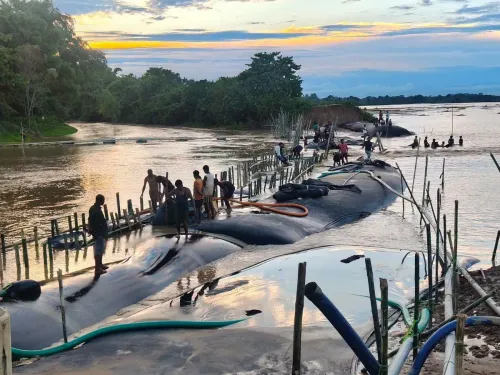
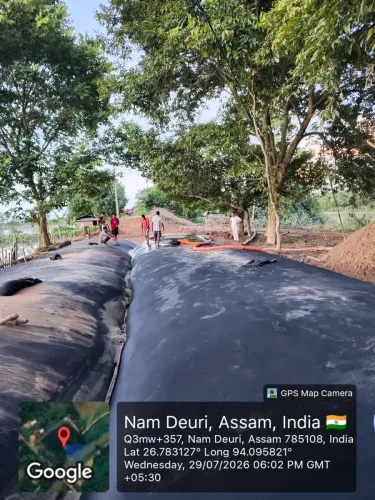
At Kakodonga Embankment (Hologuri) , the 3rd and final geotube installation is in progress — the most advanced site in the repair sequence.
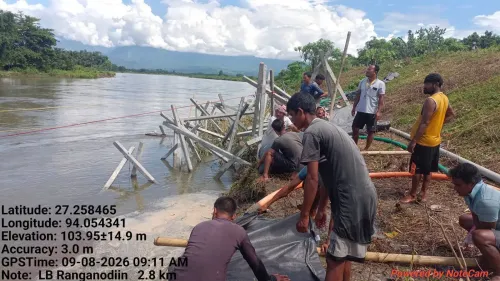
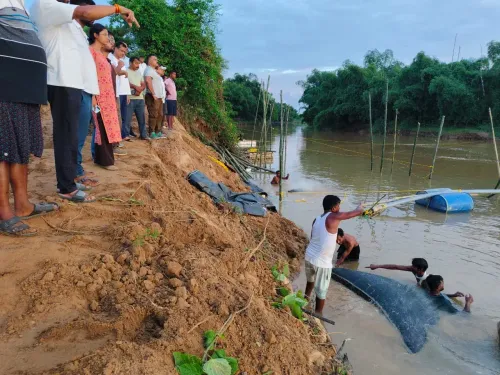
Bamboo palisading and B-type geobag launching are underway at Jhanji Left Bank (Dhontula) and Bhogdoi Right Bank (Pohumora) .
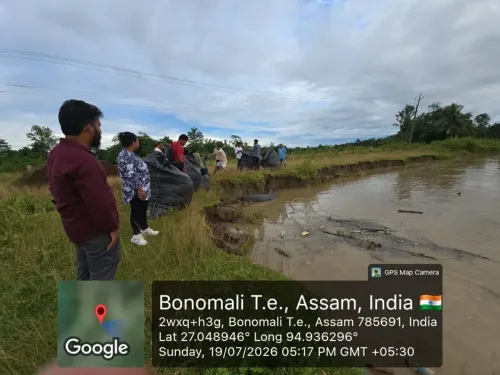
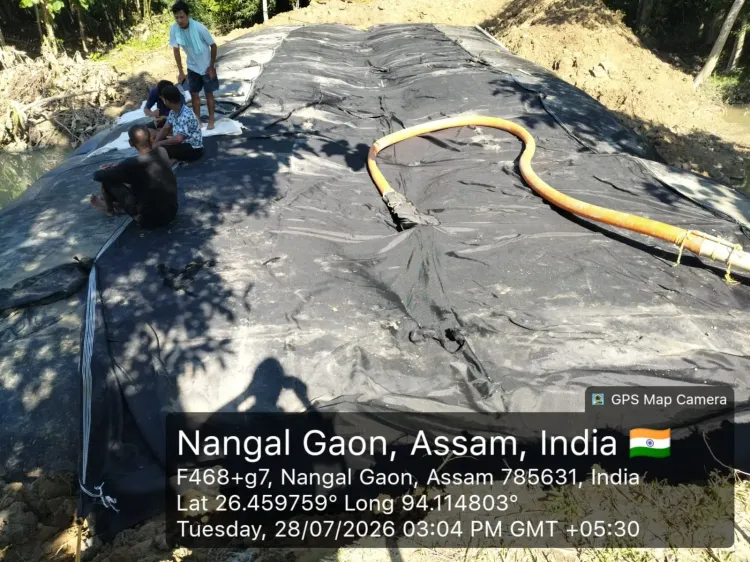
Bhogdoi Right Bank (Solmora) is filling its 2nd geotube ; Charaipani Embankment has completed base preparation and is filling its 1st geotube .
The operations cover three river corridors — Bhogdoi, Jhanji, and Kakodonga — that drain into the Brahmaputra basin and recurrently threaten Jorhat villages.
Assam has increasingly deployed geotextile tubes and geobags under central Flood Management Programme funding to accelerate breach closure over traditional earthwork methods.
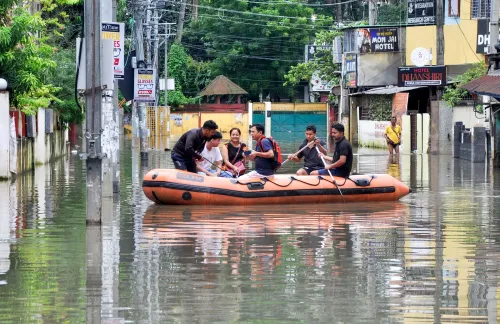
Five embankment sites in Jorhat are now under simultaneous round-the-clock repair — and the race against the monsoon is very much on. The Chief Minister's Office of Assam announced on Wednesday, 29 July 2026 that the Water Resources Department has escalated breach-closing and embankment restoration operations across the Jorhat Water Resources Division on top priority, deploying geotubes and B-type geobags at multiple vulnerable stretches.
Five Sites, One Deadline: What Is Happening Where
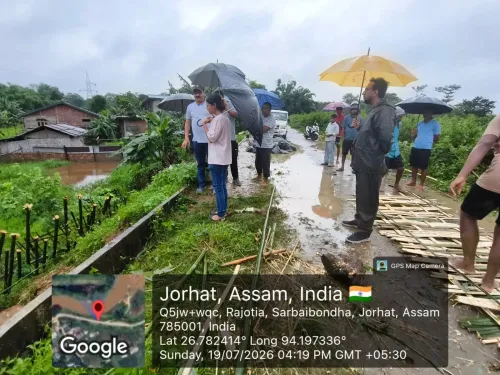
The update lists five active worksites in granular detail. At Kakodonga Embankment (Hologuri), installation of the 3rd and final geotube is in progress — the last piece of a sequenced repair. At Jhanji Left Bank (Dhontula) and Bhogdoi Right Bank (Pohumora), crews are simultaneously deploying bamboo palisading and launching B-type geobags, a rapid-response technique used to stabilise breached banks before permanent earthworks can follow.
At Bhogdoi Right Bank (Solmora), filling of the 2nd geotube is underway, while Charaipani Embankment has completed base preparation and is now filling its 1st geotube. Taken together, the five sites represent a coordinated push across the river corridors — Bhogdoi, Jhanji, and Kakodonga — that drain into the Brahmaputra basin and regularly threaten low-lying villages in upper Assam.
Geotubes and Geobags: The New Speed of Flood Response
Jorhat sits on the south bank of the Brahmaputra and has faced recurring inundation from its tributaries for decades. Assam's embankment network — much of it built in the 1950s under early state water resource plans — was designed for earthen repair cycles that take weeks. Geotextile tubes filled with locally sourced material, and geobag launching into breach channels, cut that timeline dramatically.
The state has progressively shifted toward these techniques under central Flood Management Programme funding, recognising that traditional methods cannot keep pace with mid-monsoon breach events. The simultaneous activation of five worksites under a single division signals that this year's damage is both widespread and urgent.
What Flood-Affected Residents in Jorhat Are Waiting For
For rural households along the Bhogdoi, Jhanji, and Kakodonga corridors, the speed of geotube completion at Kakodonga (Hologuri) — now on its third and final tube — is the most immediate indicator of when floodwaters can begin to recede from breached zones. Completion of that site would close one of the active breach points, allowing relief logistics to move more freely.
The remaining four sites are at earlier stages, meaning sustained overnight operations will be critical through the coming days. Whether supplementary budget releases follow to cover remaining vulnerable stretches before the next rain cycle will determine how much of Jorhat's embankment network is secured before the monsoon's peak.
Five sites, one department, zero margin — Assam's flood engineers are in a sprint that the calendar will not pause for.
Point of View
Post-peak repair to concurrent, breach-by-breach containment during the monsoon itself. Deploying geotubes and geobags in parallel across multiple river corridors is resource-intensive and politically visible, suggesting the state is keen to demonstrate operational credibility after years of criticism over embankment neglect. The granular, site-by-site public update from the CM's Office also signals a communications strategy aimed at flood-affected constituents — accountability through real-time disclosure. Whether this intensity is sustained through the monsoon's remaining weeks, or tapers once the political moment passes, will be the real measure of institutional commitment.
NationPress
28 Oct 2026
Frequently Asked Questions
Which embankment sites in Jorhat are being repaired right now?
Five sites are under active repair as of 29 July 2026: Kakodonga Embankment (Hologuri), Jhanji Left Bank (Dhontula), Bhogdoi Right Bank (Solmora), Charaipani Embankment, and Bhogdoi Right Bank (Pohumora), all under the Jorhat Water Resources Division.
What is a geotube and how is it used in flood repair?
A geotube is a large geotextile fabric tube filled with sand or locally available material to plug embankment breaches quickly. Assam's Water Resources Department uses them because they can be installed far faster than traditional earthen embankment repairs, making them effective during active monsoon flooding.
Why does Jorhat flood so often?
Jorhat lies on the south bank of the Brahmaputra and is drained by several tributaries including the Bhogdoi, Jhanji, and Kakodonga rivers. Seasonal Brahmaputra flooding puts pressure on ageing embankments — many built in the 1950s — causing annual breaches that inundate low-lying villages.
What is the Flood Management Programme funding Assam's embankment work?
The Flood Management Programme is a central government scheme that provides funds to states for flood control infrastructure, including embankment construction, breach repair, and the adoption of modern techniques like geotextile tubes and geobags.
Which Assam department is handling the Jorhat flood embankment work?
The Water Resources Department of Assam, specifically its Jorhat Water Resources Division, is conducting the round-the-clock breach-closing and embankment restoration operations announced by the Chief Minister's Office on 29 July 2026.