CM Samrat Choudhary Hails India's G7 Role Under PM Modi
Synopsis
Bihar Chief Minister Samrat Choudhary praised PM Narendra Modi's leadership on 17 June 2026, calling India's G7 Summit participation a powerful symbol of the country's rising global trust, influence, and the Viksit Bharat vision.
Key Takeaways
Bihar CM Samrat Choudhary posted on 17 June 2026 crediting PM Modi for India's elevated global standing.
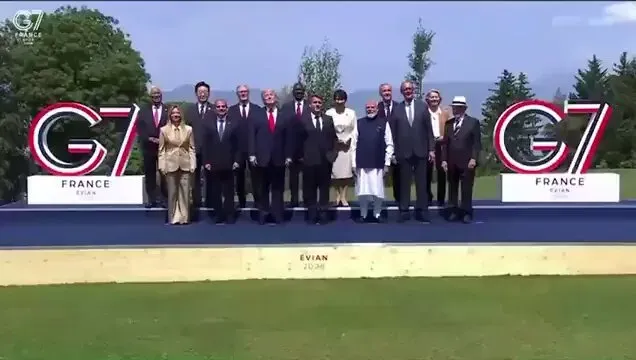
He cited India's participation in the G7 Summit as proof of the world's growing trust and respect for India.
The post highlighted India's role in amplifying the Global South voice and driving inclusive development.
The hashtag #ViksitBharat linked the statement to the government's 2047 developed-India vision.
India has participated in multiple G7 editions as an invited guest, including the 2023 Hiroshima Summit .
India's dual-track diplomacy — engaging Western forums while leading developing-country coalitions — has been a consistent foreign policy pattern since the early 2020s.
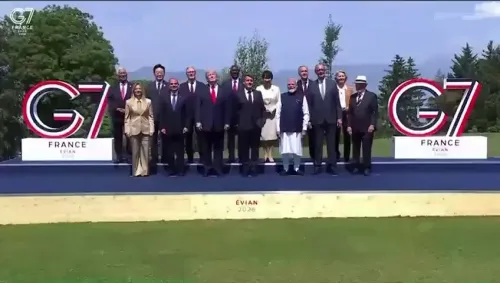
Bihar Chief Minister Samrat Choudhary on Wednesday, 17 June 2026, credited Prime Minister Narendra Modi's leadership for elevating India's standing on the world stage, citing the country's participation in the G7 Summit as evidence of its growing global influence.
Posting in Hindi on X, CM Choudhary wrote that under PM Modi's 'visionary leadership' (dूरदर्शी नेतृत्व), India has emerged as a symbol of 'trust, development and leadership' (विश्वास, विकास और नेतृत्व) on the world stage. He added that India is playing a leading role in amplifying the voice of the Global South, driving innovation, and establishing new benchmarks of inclusive development.
Context
The post was made in the backdrop of India's participation in the G7 Summit, an annual gathering of the world's major advanced economies. CM Choudhary described India's involvement as 'a powerful proof of the world community's growing trust, respect, and the rising global influence of a Viksit Bharat' (developed India).
The hashtags #G7Summit and #ViksitBharat anchored the post, reflecting alignment with the ruling BJP's twin messaging pillars of diplomatic assertiveness and the long-term national development vision targeting 2047.
Policy Backdrop
India has participated in multiple G7 editions as an invited guest nation, most notably at the 2023 Hiroshima Summit, where it used the platform to foreground Global South concerns alongside outcomes from its own G20 presidency. This pattern of dual-track engagement — participating in Western-led forums while simultaneously leading developing-country coalitions — has defined New Delhi's foreign policy posture since the early 2020s.
The Viksit Bharat vision, a government framework aiming to make India a fully developed nation by 2047, encompasses economic, technological, and diplomatic milestones. G7 participation is frequently cited by the ruling dispensation as a diplomatic validation of that trajectory.
Stakeholders and Impact
India's Global South advocacy at multilateral forums has resonance across Africa, Southeast Asia and Latin America, regions that have looked to New Delhi for representation in rule-making institutions historically dominated by wealthy nations. The Indian diplomatic corps is central to sustaining this positioning across successive G7, G20 and BRICS cycles.
Domestically, statements such as CM Choudhary's serve to reinforce the political narrative that PM Modi's foreign policy has translated economic growth into enhanced global voice — a message with electoral salience in a state like Bihar, where national pride and development discourse intersect closely.
What's Next
Observers will watch for any formal outcomes or communiqué language from the current G7 cycle that references Global South priorities or India-specific deliverables. On the domestic front, milestones tied to the Viksit Bharat@2047 vision document will continue to serve as benchmarks against which India's multilateral engagements are measured. Whether India's guest status at the G7 eventually translates into a more formalised role in the grouping's institutional architecture remains a longer-term question for New Delhi's foreign policy establishment.
Point of View
Tying a multilateral event to the party's flagship 'Viksit Bharat' brand ahead of future electoral cycles. The invocation of the Global South is strategically significant — it frames India not merely as an aspirant to Western-club membership but as a legitimate spokesperson for the developing world, a distinction that broadens the diplomatic appeal. This dual positioning has been a consistent feature of the Modi government's foreign policy communication, and endorsements from state leaders like Choudhary help domesticate that narrative for regional audiences. The statement carries added weight given Bihar's own development imperatives, where the Viksit Bharat framing resonates as both national aspiration and local political promise.
NationPress
19 Sept 2026
Frequently Asked Questions
Why did Bihar CM Samrat Choudhary comment on the G7 Summit?
Bihar CM Samrat Choudhary posted on X to praise PM Modi's foreign policy, citing India's G7 Summit participation as evidence of the country's growing global influence and the success of the Viksit Bharat vision.
What is the Viksit Bharat vision mentioned in Samrat Choudhary's post?
Viksit Bharat is the Indian government's vision to make India a fully developed nation by 2047, encompassing economic growth, technological advancement, and stronger diplomatic standing globally.
Is India a permanent member of the G7?
No, India is not a permanent member of the G7. It has participated as an invited guest nation in multiple editions, including the 2023 Hiroshima Summit, where it highlighted Global South concerns.
What is India's role in advocating for the Global South?
India has positioned itself as a key voice for developing nations in multilateral forums including the G7, G20, and BRICS, pushing for greater representation of Global South concerns in global rule-making institutions.
What did Samrat Choudhary say about PM Modi and the G7?
CM Choudhary said that under PM Modi's visionary leadership, India has emerged as a symbol of trust, development and leadership on the world stage, and that India's G7 participation is powerful proof of the world community's growing respect for India.