Bihar CM Calls on Native Officers to Invest in State's Growth
Synopsis
Chief Minister Nitish Kumar has called on Bihar-origin officers serving across central and state cadres to actively contribute to Bihar's development — channelling their expertise back to their home state alongside their current duties.
Key Takeaways
On October 22, 2026 , Bihar CM Nitish Kumar appealed to officers of Bihar origin to contribute to the state's development.
The appeal urged officers to serve both their karmabhoomi (current posting) and their janmbhoomi (Bihar) simultaneously.
Bihar-origin officers are spread across central government ministries, public sector undertakings, and other state cadres.
Bihar has historically faced out-migration of skilled administrative talent, making this appeal a recurring governance strategy.
A formal follow-up mechanism — advisory panels or structured consultations — could give the appeal institutional weight beyond symbolism.
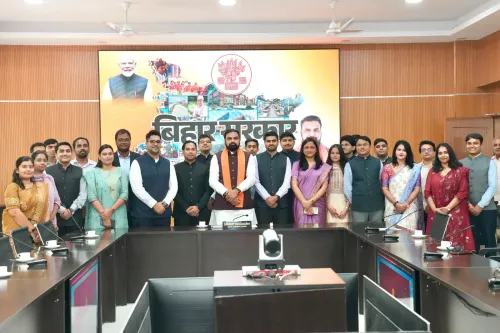
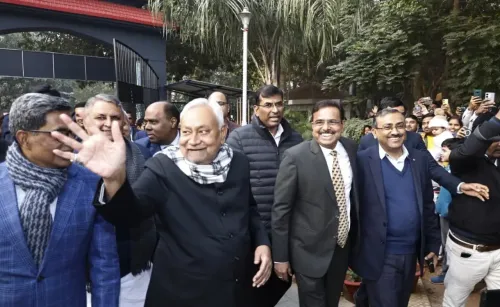
A state that has long watched its brightest minds migrate outward is now asking them to look back. On Thursday, October 22, 2026, the Chief Minister's Office of Bihar shared that Chief Minister Nitish Kumar personally appealed to officers of Bihar origin to contribute not just to their current postings but to the development of their home state — their janmbhoomi (birthplace).
The CM's message, posted by the official @officecmbihar handle, carried a pointed dual call: excel in your karmabhoomi (the land where you serve) and give back to janmbhoomi Bihar. The appeal was directed at Bihar-origin bureaucrats serving across central government and other state cadres — a significant and often underutilised reservoir of administrative expertise.
Why Bihar Is Looking to Its Officer Diaspora
Bihar has historically been one of India's largest exporters of civil service talent. Officers from the state occupy senior positions in central ministries, public sector undertakings, and other state governments — yet their institutional knowledge has rarely been formally channelled back home. Nitish Kumar's administration has periodically sought to bridge this gap, recognising that governance reforms and policy implementation benefit enormously from insider expertise delivered with home-state commitment.
The broader pattern across Indian states is well established: governments appeal to native officers for advisory inputs, structured mentorship of younger cadres, or direct knowledge transfer on areas like urban planning, fiscal management, and social welfare delivery. For Bihar — a state that has made measurable strides in infrastructure and law-and-order over the past two decades but still faces development gaps — tapping this network carries real strategic weight.
What an Engaged Officer Network Could Mean for Bihar
If the CM's appeal translates into a formal engagement mechanism — structured consultations, advisory panels, or deputation schemes — it could accelerate policy learning in departments where capacity remains thin. Officers who have administered larger budgets or complex programmes elsewhere bring experience that no training course fully replicates. The question is whether this appeal, warm and symbolic for now, acquires institutional architecture behind it.
Bihar's development story is still being written. And if Nitish Kumar has his way, some of its most important authors will be officers who carry the state in their roots — wherever they are posted today.
Point of View
Such appeals tend to remain aspirational gestures. That the CM's Office amplified the message publicly suggests an intent to build political momentum for a more formal programme. Whether 2026 marks the year that intent acquires architecture will be the real test of this initiative.
NationPress
23 Oct 2026
Frequently Asked Questions
What did Bihar CM Nitish Kumar say to Bihar-origin officers?
He called on officers of Bihar origin serving in central government or other state cadres to contribute to Bihar's development alongside their current official duties, urging them to give back to their birthplace.
Why does Bihar appeal to its officers serving outside the state?
Bihar has historically seen significant out-migration of skilled administrative talent. The state government periodically appeals to native officers to channel their expertise back home through advisory inputs or knowledge transfer.
What does karmabhoomi and janmbhoomi mean in this context?
'Karmabhoomi' refers to the land where one works or serves, while 'janmbhoomi' means birthplace. CM Nitish Kumar urged Bihar-origin officers to honour both — performing their duties where posted while also contributing to Bihar.
Could this appeal lead to a formal programme for Bihar-origin officers?
The research suggests a possible follow-up in the form of structured engagement mechanisms such as consultations or advisory panels, though no specific formal programme has been announced yet.
Who is Bihar's Chief Minister in 2026?
Nitish Kumar continues as the long-serving Chief Minister of Bihar, known for focusing on administrative reforms and state development initiatives.