Amit Shah vows to end Naxalism, drug menace under Modi's 'New India'
Synopsis
Union Home Minister Amit Shah, responding to the BJP national president, declared that every party worker is committed to reclaiming India's glory — specifically by eliminating Naxalism's 'inhuman ideology' and defeating drug networks under PM Narendra Modi's leadership.
Key Takeaways
Amit Shah pledged on 23 October 2026 that BJP workers are fully dedicated to India's progress and security.
He named two specific fronts: ending Naxalism and its ideology , and the fight against narcotics .
The post frames both campaigns under the 'New India' banner led by PM Narendra Modi .
The Ministry of Home Affairs has since 2014 combined security operations with development in Naxal-affected states like Chhattisgarh, Jharkhand, and Odisha .
Anti-drug efforts have included an expanded Narcotics Control Bureau role and tighter enforcement in Punjab and border regions.
Annual MHA incident data from Naxal-affected districts will be the key metric for evaluating progress on both fronts.
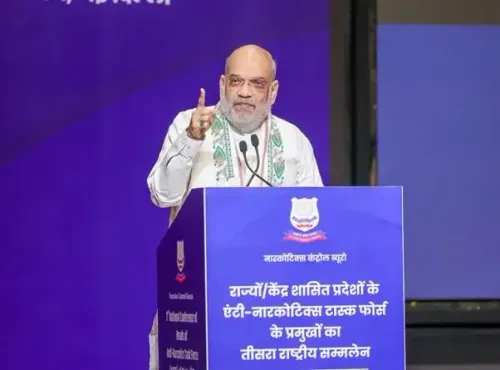
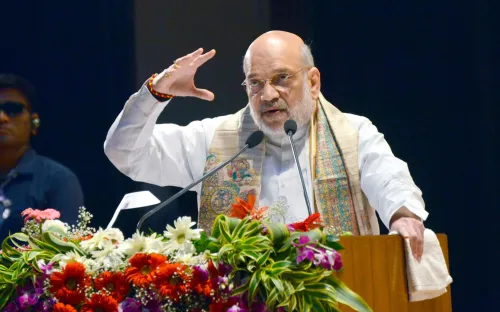
From dismantling a decades-old armed insurgency to choking narcotics networks, Union Home Minister Amit Shah has laid out the twin security missions that define his tenure — and on Thursday, 23 October 2026, he restated both with force in a post responding to BJP national president.
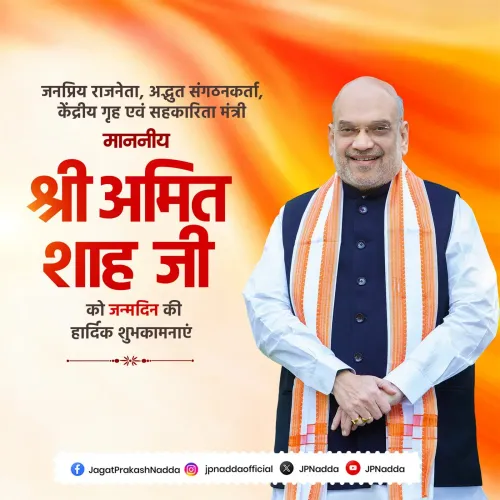
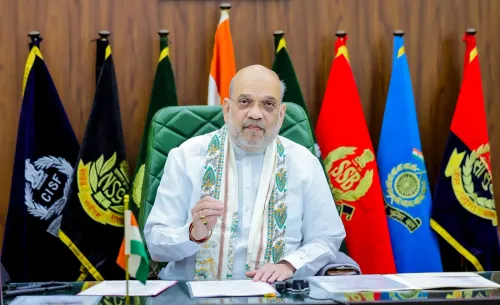
Thanking the party chief, Shah wrote — 'भाजपा का हर कार्यकर्ता भारत की प्रगति और उसका वैभव पुनः प्राप्त कराने के लिए पूरी तरह समर्पित है' — 'Every BJP worker is fully dedicated to India's progress and to reclaiming its glory.' He went further: whether it is ending Naxalism and its 'inhuman ideology', or the fight against drugs, the new India under Prime Minister Narendra Modi's leadership is 'resolved to defeat every force that spreads anarchy.'
The Naxal front: from Red Corridor to receding ground
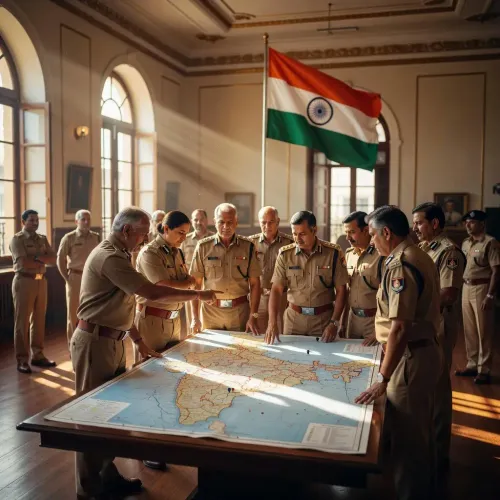
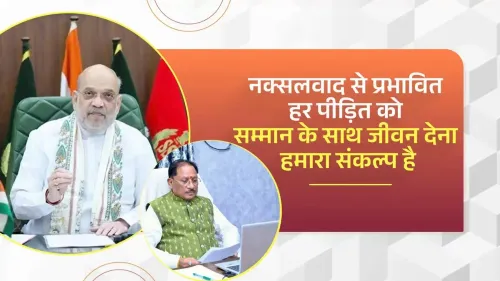
Left Wing Extremism — the insurgency that once held sway across a broad swathe of Chhattisgarh, Jharkhand, and Odisha — has been the Ministry of Home Affairs' most persistent internal-security challenge since 2014. The BJP government has consistently paired hard military pressure through coordinated force deployments with infrastructure pushes into affected districts — roads, schools, mobile connectivity — framing the twin approach as both coercion and rehabilitation.
Shah's language on Thursday was characteristically unambiguous: the ideology itself, not merely its armed wing, is the target. That framing matters — it signals that rehabilitation schemes and ideological counter-messaging are as central to the strategy as operations in the field.
The narcotics battle: NCB expansion and border focus
On drugs, the Home Ministry has overseen an expanded mandate for the Narcotics Control Bureau and pushed state governments — particularly in Punjab and along India's western and northern borders — to sharpen enforcement. Amendments to the NDPS Act have tightened the legal framework for prosecution. Shah's post knits the anti-drug campaign into the same 'New India' security arc as the anti-Naxal drive, presenting both as battles against forces that corrode national progress.
BJP workers as the message's intended audience
The post is addressed first to the party faithful. By invoking every BJP karyakarta (worker) as a soldier in these missions, Shah is performing a classic piece of party-building: connecting grassroots cadre to the government's headline security agenda. It is also a reminder of who defines that agenda — Modi's leadership is named explicitly as the compass point for both campaigns.
Watch for fresh Ministry of Home Affairs data on Naxal incident counts and any new coordinated operations or rehabilitation announcements targeting the affected states — the numbers will be the scorecard against which this resolve is measured.
Point of View
The Home Ministry signals it views cultural and political counter-messaging as inseparable from kinetic operations. Tying this to 'every BJP worker' does double duty: it energises the cadre while creating political ownership of outcomes. The real test will come when the next cycle of MHA data lands — declining incident numbers in the Red Corridor will validate the rhetoric; stagnation will invite scrutiny.
NationPress
23 Oct 2026
Frequently Asked Questions
What did Amit Shah say about Naxalism in his latest post?
Shah said that under PM Modi's leadership, the new India is resolved to defeat every force that spreads anarchy, specifically naming Naxalism and its 'inhuman ideology' as a key target, alongside the fight against drugs.
What is India's current approach to ending Left Wing Extremism?
The Ministry of Home Affairs combines coordinated security force deployments in affected districts with infrastructure development — roads, schools, connectivity — in states like Chhattisgarh, Jharkhand, and Odisha, alongside ideological counter-messaging.
What is India's strategy to fight the drug menace?
The strategy includes an expanded Narcotics Control Bureau mandate, stronger state-level enforcement particularly in Punjab and border areas, and legal tightening through amendments to the NDPS Act.
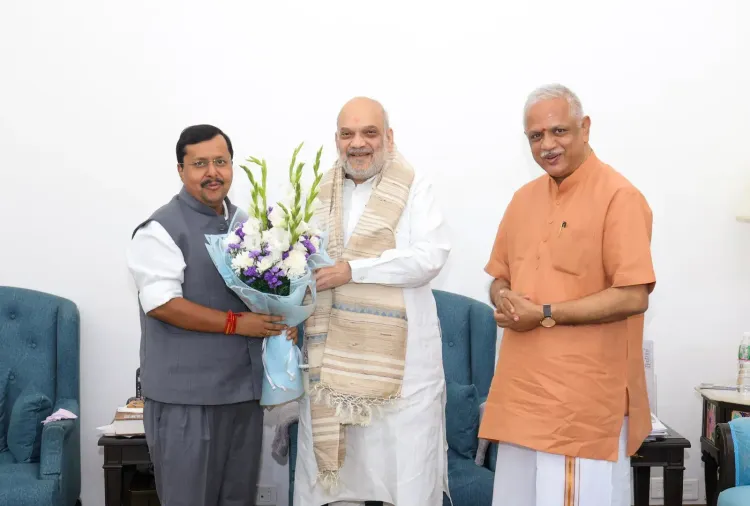
Why did Amit Shah thank the BJP national president?
Shah's post was a response to the BJP national president, though the specific statement being thanked has not been publicly detailed; the post used the occasion to reaffirm the party's security commitments.
Which states are most affected by Naxal violence in India?
Chhattisgarh, Jharkhand, and Odisha form the core of what has been called the 'Red Corridor,' and have been the primary focus of both security operations and rehabilitation programmes under the Ministry of Home Affairs.