Bhupender Yadav Marks 12 Years of Health Reforms Under Modi Govt
Synopsis
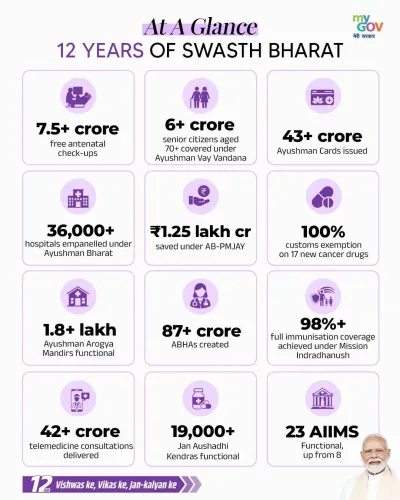
Union Environment Minister Bhupender Yadav joined a coordinated BJP campaign on 14 June 2026 to mark twelve years of healthcare transformation under PM Narendra Modi, highlighting schemes like Ayushman Bharat and Jan Aushadhi Pariyojana as evidence of systemic reform since 2014.
Key Takeaways
Bhupender Yadav posted on X on 14 June 2026 under #12YearsOfSwasthBharat to mark a dozen years of health policy under the Modi government .
The post is part of a coordinated cross-ministry communication campaign marking the BJP government's twelve-year anniversary in office.
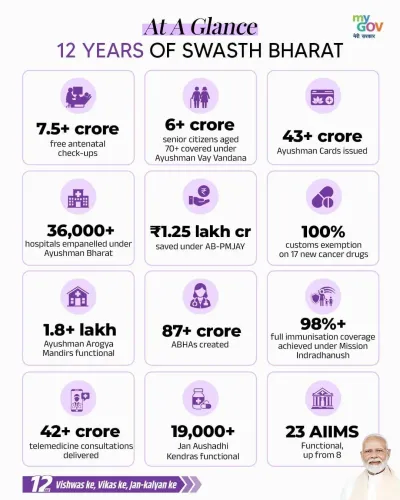
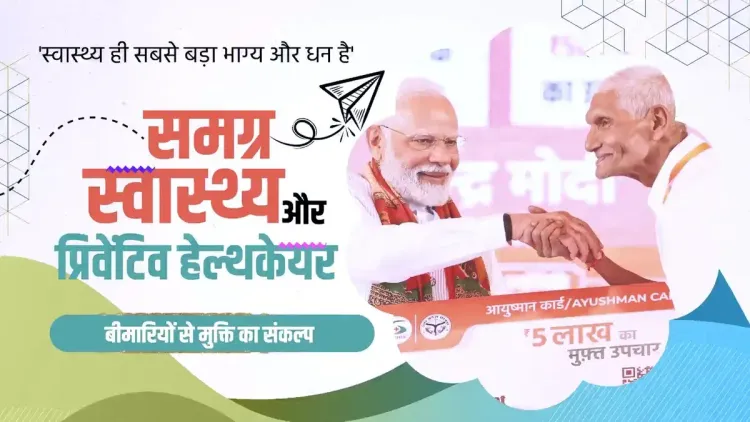
Ayushman Bharat PM-JAY , launched in 2018 , provides up to Rs 5 lakh annual health cover to over 10 crore families .
The Jan Aushadhi Pariyojana has expanded access to quality generic medicines at lower prices through a dedicated retail network.
The National Health Mission and the National Health Policy 2017 form the structural backbone of India's push toward universal health coverage.
Parliamentary scrutiny of health budget allocations and Ayushman Bharat state-level expansion will be the next key milestones to watch.
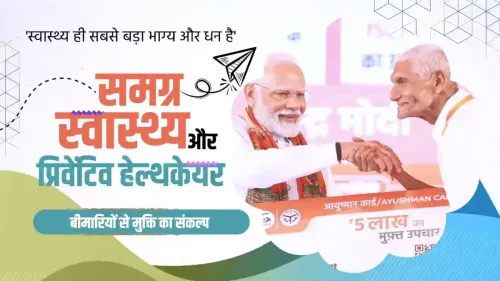
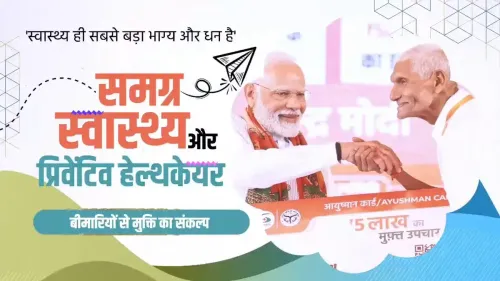
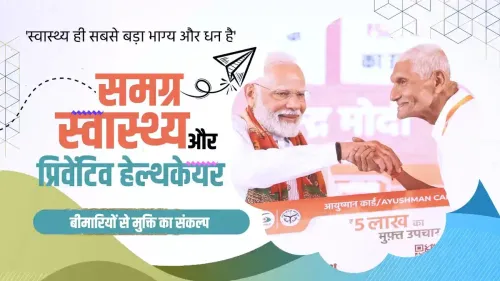
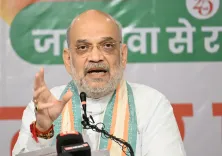
Union Environment Minister Bhupender Yadav on Sunday, 14 June 2026, took to X to mark twelve years of healthcare transformation under the Narendra Modi-led central government, sharing a video under the hashtag #12YearsOfSwasthBharat ('12 Years of a Healthy India') and highlighting the policy strides made since 2014.
Context
Yadav's post, though brief, is part of a coordinated wave of communication from BJP ministers and leaders marking the Modi government's twelve-year anniversary in office. The hashtag #12YearsOfSwasthBharat signals a deliberate focus on the social-sector record, with health delivery positioned as a flagship achievement. Ministers across portfolios have participated in such messaging cycles, lending the campaign a whole-of-government character rather than restricting it to the Health Ministry alone.
Policy Backdrop
India's public health architecture has undergone significant legislative and programmatic change since 2014. The National Health Mission, an umbrella programme that subsumed earlier rural and urban health missions, continued to anchor primary and secondary care delivery. The landmark Ayushman Bharat Pradhan Mantri Jan Arogya Yojana, launched in 2018, extended health insurance cover of up to Rs 5 lakh per year to over 10 crore low-income families for secondary and tertiary hospitalisation.
Parallel to the insurance push, the Jan Aushadhi Pariyojana was scaled up significantly after 2014 to make quality generic medicines available at substantially lower prices through a dedicated network of retail outlets. The National Health Policy 2017 further set out a roadmap for universal health coverage and called for progressively higher public spending on health as a share of GDP.
Stakeholders and Impact
The primary beneficiaries of these programmes have been low-income families, rural patients, and those dependent on public hospitals for secondary and tertiary care. The insurance-linked model under Ayushman Bharat aimed to reduce catastrophic out-of-pocket expenditure, which has historically been among the highest drivers of household poverty in India. Generic drug access through Jan Aushadhi outlets has offered a complementary supply-side intervention.
Posts by ministers outside the Health Ministry — such as Yadav, who holds the Environment, Forest and Climate Change portfolio — underline that the government views healthcare delivery as a cross-cutting political achievement, not solely the domain of the Union Health Ministry.
What's Next
Attention will now turn to parliamentary deliberations on the health component of the next full-year Union Budget, where the government is expected to face scrutiny over whether public expenditure on health as a share of GDP has met the targets outlined in the National Health Policy 2017. Any fresh state-level agreements for expanding Ayushman Bharat coverage — particularly in states that have not yet fully integrated with the scheme — will be closely watched as a measure of whether the twelve-year momentum translates into deeper structural gains.
Point of View
Framing the Modi government's tenure as a transformational arc rather than an incremental one. The emphasis on insurance-linked coverage and generic drug access reflects a conscious ideological preference for demand-side and market-assisted interventions over large increases in direct public health spending. Whether this messaging holds up against independent assessments of health outcomes — particularly out-of-pocket expenditure levels and rural infrastructure gaps — will determine its traction beyond the party's own base.
NationPress
14 Sept 2026
Frequently Asked Questions
What is #12YearsOfSwasthBharat?
#12YearsOfSwasthBharat is a hashtag campaign launched by BJP leaders and ministers in June 2026 to mark twelve years of the Narendra Modi government's healthcare initiatives, highlighting schemes such as Ayushman Bharat and Jan Aushadhi Pariyojana.
What is the Ayushman Bharat scheme?
Ayushman Bharat Pradhan Mantri Jan Arogya Yojana, launched in 2018, provides health insurance cover of up to Rs 5 lakh per year to over 10 crore low-income families in India for secondary and tertiary hospital treatment.
Why is Environment Minister Bhupender Yadav posting about health?
Yadav's post is part of a coordinated BJP government communication campaign where ministers across portfolios highlight social-sector achievements; it is not limited to the Health Ministry alone.
What is the Jan Aushadhi Pariyojana?
Jan Aushadhi Pariyojana is a central government initiative that provides quality generic medicines at significantly lower prices through a network of dedicated Jan Aushadhi outlets across India, expanded substantially after 2014.
What is India's National Health Mission?
The National Health Mission is an umbrella programme that subsumed the earlier National Rural Health Mission and National Urban Health Mission to strengthen primary and secondary healthcare delivery across India.