CM Bhupendra Patel Marks 12 Years of Modi Govt Health Reforms
Synopsis
Gujarat Chief Minister Bhupendra Patel has marked twelve years of healthcare transformation under PM Narendra Modi, highlighting the Ayushman Bharat programme and allied schemes that have expanded affordable medical access for low-income and rural Indians since 2014.
Key Takeaways
Gujarat CM Bhupendra Patel posted on June 14, 2026 , marking 12 years of central government health reforms under PM Narendra Modi .
The post is tagged #12YearsOfSwasthBharat and describes India's healthcare ecosystem as having undergone a 'monumental transformation.' Ayushman Bharat , launched in 2018 , includes PM-JAY — offering up to Rs 5 lakh annual health insurance — and a network of Health and Wellness Centres .
Mission Indradhanush (2014) and the National Health Policy 2017 are among the earlier pillars of the twelve-year health reform arc.
Primary beneficiaries include low-income families and rural households across states including Gujarat , which co-finances and implements centrally sponsored schemes.
Updated PM-JAY utilisation data and Health and Wellness Centre progress figures are expected in the next Union Health Ministry annual report.
Gujarat Chief Minister Bhupendra Patel on Sunday, June 14, 2026, highlighted twelve years of healthcare transformation under the central government led by Prime Minister Narendra Modi, citing a 'monumental transformation' in making quality medical facilities affordable and accessible across India.
Context
The post, tagged #12YearsOfSwasthBharat, marks what the BJP frames as a decade-plus of sustained health sector reform since May 2014, when the Modi government first came to power. CM Patel described India's healthcare ecosystem as having undergone a 'monumental transformation' under PM Modi, making quality medical facilities 'affordable and accessible for all.' The messaging aligns with a broader central government communication push to catalogue health policy milestones.
Policy Backdrop
The central government has rolled out several flagship health initiatives over this period. The Ayushman Bharat programme, launched in 2018, brought together the Pradhan Mantri Jan Arogya Yojana (PM-JAY) — which provides up to Rs 5 lakh annual health insurance coverage to economically vulnerable families — and a network of Health and Wellness Centres designed to deliver comprehensive primary care closer to communities.
Earlier, Mission Indradhanush, initiated in 2014, sought to accelerate routine immunisation across districts with low vaccination rates. The National Health Policy 2017 set targets for raising government health expenditure and integrating traditional medicine systems into the mainstream health architecture. Successive Union Budgets since 2014 have raised allocations for health infrastructure, insurance, and digital health records.
Stakeholders and Impact
Low-income families and rural households are the primary intended beneficiaries of these schemes, particularly PM-JAY, which targets those least able to afford hospitalisation costs. Gujarat, like other states, has been required to co-finance and implement these centrally sponsored schemes, making state governments active partners in delivery. Periodic joint publicity campaigns — of which this post is an example — are a standard feature of such implementation arrangements.
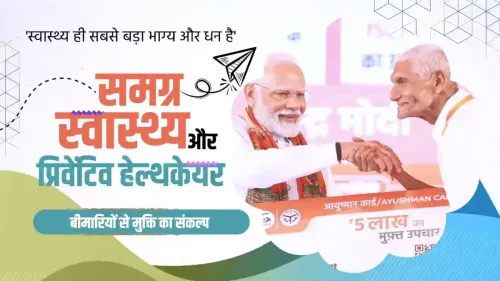
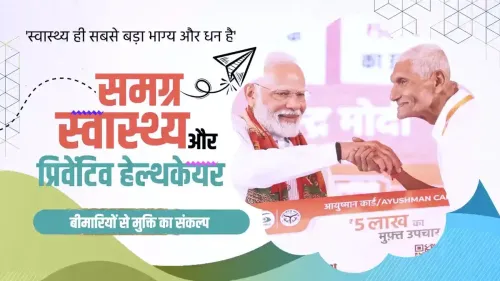
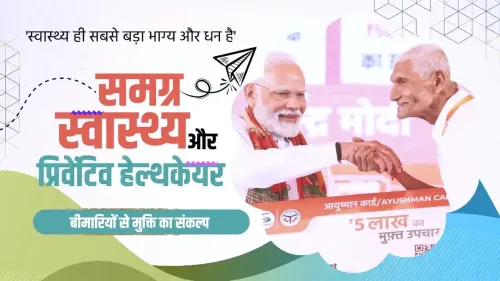
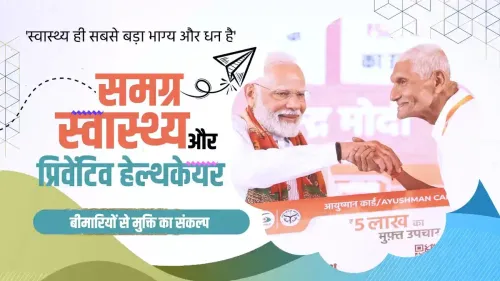
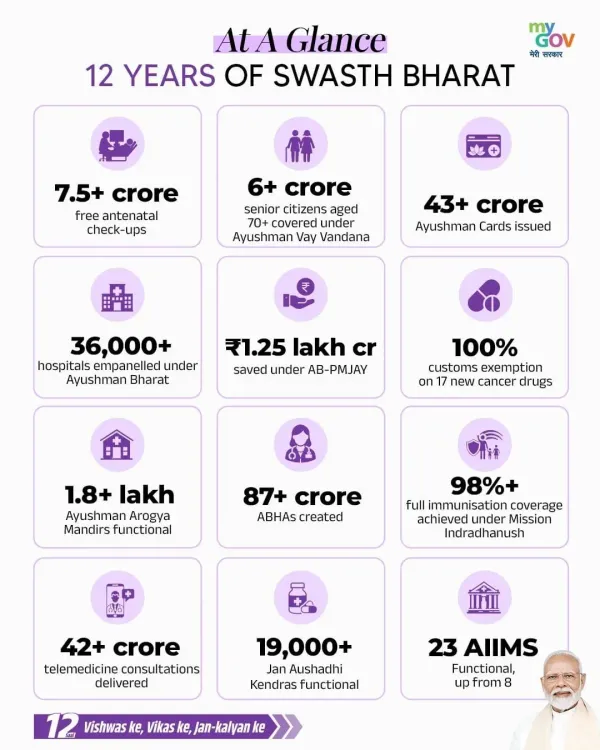
The post comes with an attached image, though the precise statistics or infographic details it contains have not been independently verified. CM Patel's communication underscores the state government's alignment with the central government's health narrative ahead of continued scheme expansion.
What's Next
The Union Health Ministry's annual report is expected to carry updated state-level utilisation data for PM-JAY and progress figures on additional Health and Wellness Centres. These numbers will be closely watched by policy observers to assess how effectively the twelve-year reform arc has translated into on-ground outcomes for the most vulnerable populations. Gujarat's own implementation record will be a key data point in that assessment.
Point of View
A pattern that intensifies around political anniversaries. The '12 years' framing is designed to consolidate the BJP's health governance narrative ahead of electoral cycles, drawing a straight line from Mission Indradhanush in 2014 to Ayushman Bharat's ongoing expansion. Gujarat's active role as a co-financing implementation partner gives Patel a credible platform for such messaging, though the absence of specific outcome data in the post leaves the claim of 'monumental transformation' open to scrutiny. The broader arc points to health policy as an increasingly central pillar of BJP's welfare-state positioning.
NationPress
22 Sept 2026
Frequently Asked Questions
What is 12 Years of Swasth Bharat?
'12 Years of Swasth Bharat' is a BJP government communication campaign marking twelve years of healthcare reforms since the Modi government came to power in May 2014, covering schemes such as Ayushman Bharat, PM-JAY, Mission Indradhanush, and the National Health Policy 2017.
What is Ayushman Bharat and who benefits from it?
Ayushman Bharat is a flagship central government programme launched in 2018. It includes PM-JAY, which provides up to Rs 5 lakh annual health insurance to economically vulnerable families, and Health and Wellness Centres that deliver primary care to rural and low-income communities.
What did Gujarat CM Bhupendra Patel say about healthcare?
Gujarat CM Bhupendra Patel stated that under PM Narendra Modi, India's healthcare ecosystem has undergone a 'monumental transformation,' making quality medical facilities affordable and accessible for all citizens.
What is PM-JAY and how much coverage does it provide?
PM-JAY, or Pradhan Mantri Jan Arogya Yojana, is a component of Ayushman Bharat that provides up to Rs 5 lakh in annual health insurance coverage to economically vulnerable families, rolled out from 2018.
What health schemes did the Modi government launch since 2014?
Key schemes include Mission Indradhanush (2014) for immunisation, the National Health Policy (2017) for universal coverage goals, and Ayushman Bharat (2018) comprising PM-JAY insurance and Health and Wellness Centres for primary care expansion.