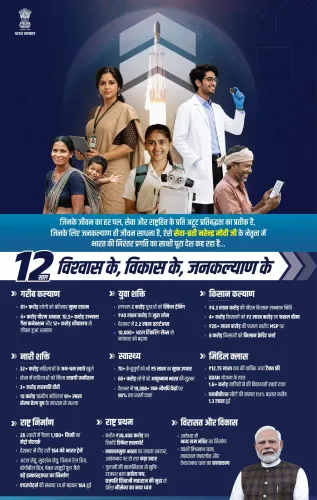
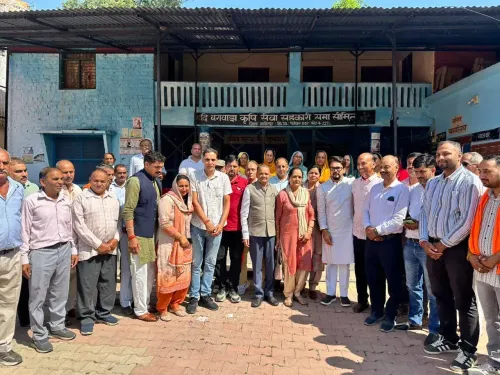
Anurag Thakur Marks 12 Years of Modi Govt Health Reforms
Synopsis
BJP MP Anurag Thakur marked twelve years of Modi government health reforms on June 14, 2026, spotlighting Ayushman Bharat's role in making healthcare accessible and affordable for crores of poor and middle-class Indian families.
Key Takeaways
BJP MP Anurag Thakur posted on June 14, 2026 highlighting 12 years of health sector transformation under PM Narendra Modi .
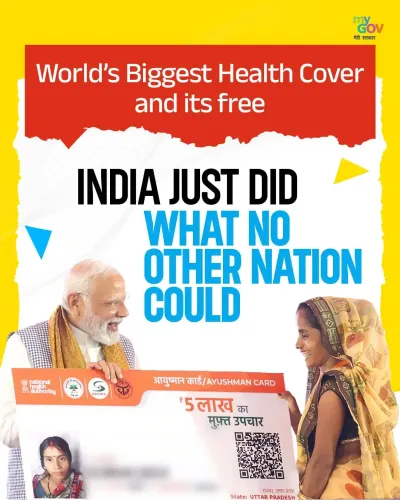
Ayushman Bharat PM-JAY , launched on 23 September 2018 , provides up to Rs 5 lakh annual health insurance coverage per family.
The scheme targets over 10 crore poor and vulnerable families across India.
Health and Wellness Centres form the primary care pillar of the Ayushman Bharat mission alongside PM-JAY.
The post is part of a broader BJP campaign under the hashtag #12YearsOfSwasthBharat marking a decade-plus of governance.
Next key data points to watch: Ayushman Bharat annual beneficiary report and upcoming Union Budget health allocations.
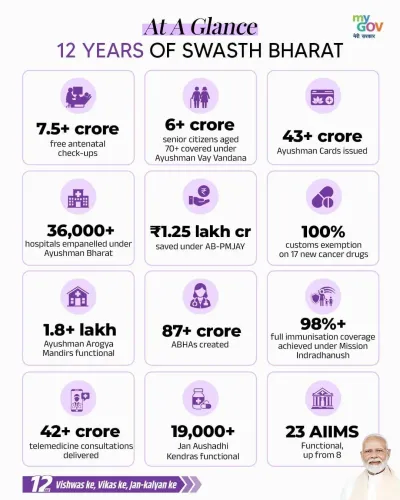
BJP MP Anurag Thakur on Sunday, June 14, 2026, highlighted twelve years of health sector transformation under Prime Minister Narendra Modi, pointing to expanded public health services and the Ayushman Bharat scheme as landmark achievements of the central government.
Context
Posting under the hashtag #12YearsOfSwasthBharat, Thakur wrote: 'Under the leadership of respected Prime Minister Shri Narendra Modi, India has witnessed unprecedented changes in the health sector over the past 12 years. Today, public health services in India have become accessible, affordable, modern, and within reach of every citizen.'
The post is part of a broader BJP communications push marking a dozen years of Modi government governance, with party leaders amplifying achievements across key welfare sectors including health, infrastructure, and social protection.
Policy Backdrop
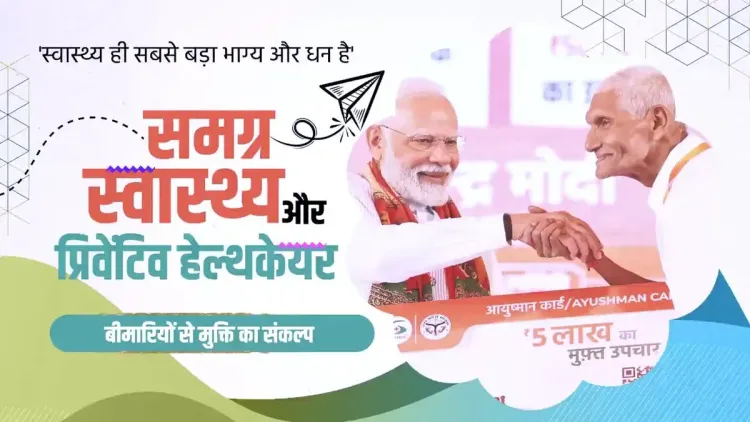
The centrepiece of the government's health agenda, Ayushman Bharat Pradhan Mantri Jan Arogya Yojana (PM-JAY), was launched on 23 September 2018. It provides annual health insurance coverage of up to Rs 5 lakh per family for secondary and tertiary hospitalisation, targeting over 10 crore poor and vulnerable families across India.
The scheme operates as the insurance pillar of the broader Ayushman Bharat mission, which also includes the creation of Health and Wellness Centres to strengthen primary care delivery at the grassroots level. These initiatives were designed to complement the pre-existing National Health Mission and extend coverage to populations historically excluded from formal healthcare.
Thakur specifically noted that the scheme has provided 'relief to crores of poor and middle-class families from the worry of expensive treatment' — a framing that underscores the government's positioning of PM-JAY as a financial protection tool, not merely a healthcare delivery mechanism.
Stakeholders and Impact
The primary beneficiaries of PM-JAY are low-income households who previously faced catastrophic out-of-pocket expenditure on hospitalisation, often pushing families into debt or forcing them to forgo treatment altogether. Middle-class families without employer-provided insurance have also been cited by the government as a target group for expanding coverage.
Health and Wellness Centres have aimed to bring preventive and primary care closer to rural and semi-urban populations, reducing dependence on district and tertiary hospitals for routine conditions. Together, these two pillars represent a structural shift in how the central government approaches public health financing and delivery.
BJP MPs, including Thakur — a former Union Minister of Information and Broadcasting and Youth Affairs and Sports — have consistently used social media platforms to reinforce the government's welfare narrative, particularly as the party draws contrasts with the pre-2014 era of health policy.
What's Next
Attention will now turn to the next official annual report on Ayushman Bharat beneficiary numbers and hospital empanelment figures, which will offer a data-backed measure of the scheme's reach. Any health sector allocations in the forthcoming Union Budget will also be closely watched as an indicator of the government's fiscal commitment to sustaining and expanding these programmes.
As the Modi government enters its twelfth year, messaging around health delivery is expected to remain a central plank of BJP's political communication, with scheme anniversaries and beneficiary milestones serving as recurring touchpoints for outreach to lower-income and rural voters.
Point of View
Named-scheme delivery.
NationPress
23 Sept 2026
Frequently Asked Questions
What is Ayushman Bharat and who does it cover?
Ayushman Bharat PM-JAY is a central government health insurance scheme launched on 23 September 2018 that provides up to Rs 5 lakh annual coverage for hospitalisation to over 10 crore poor and vulnerable families in India.
Why did Anurag Thakur post about health reforms on June 14, 2026?
Thakur's post was part of the BJP's #12YearsOfSwasthBharat campaign marking twelve years of the Modi government's health sector initiatives, using the occasion to highlight Ayushman Bharat and expanded public health services.
What is #12YearsOfSwasthBharat?
#12YearsOfSwasthBharat is a BJP social media hashtag used to mark twelve years of the Modi government's health policy agenda, with party leaders highlighting schemes such as Ayushman Bharat and Health and Wellness Centres.
Who is Anurag Thakur?
Anurag Thakur is a BJP Lok Sabha MP from Hamirpur, Himachal Pradesh, and a former Union Minister who held the portfolios of Information and Broadcasting and Youth Affairs and Sports.
What comes next for Ayushman Bharat in 2026?
Key developments to watch include the next official annual report on Ayushman Bharat beneficiary numbers and hospital empanelment, as well as any health sector allocations in the forthcoming Union Budget.