PM Modi Highlights 12 Years of Affordable Healthcare, Ayushman Bharat
Synopsis
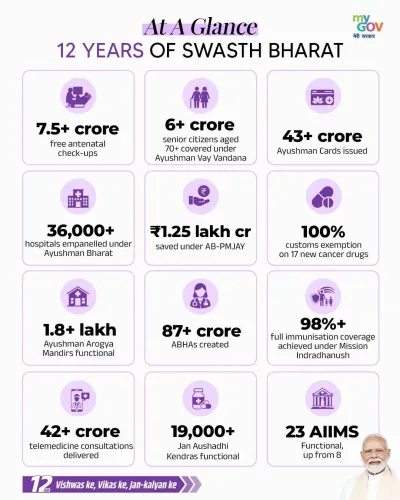
Prime Minister Narendra Modi on June 14, 2026, credited 12 years of policy effort for making healthcare more affordable, highlighting Ayushman Bharat as the world's largest healthcare programme and a symbol of India's commitment to its most vulnerable citizens.
Key Takeaways
PM Modi on June 14, 2026 , reaffirmed India's 12-year commitment to affordable and accessible healthcare.
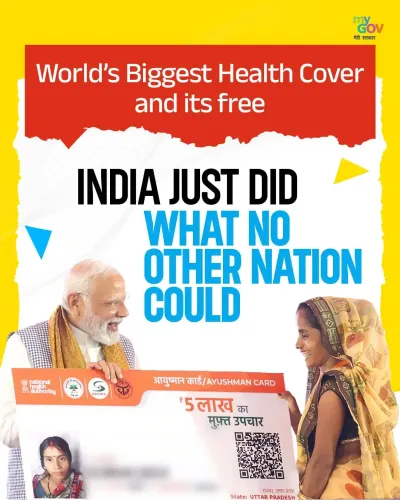
Ayushman Bharat , launched in September 2018 , is described as the world's largest healthcare programme, initially designed to cover 10.74 crore poor and vulnerable families.
The scheme has two pillars: PM-JAY hospitalisation insurance and a network of Health and Wellness Centres for primary care.
The National Health Authority implements the programme in coordination with state governments, producing regional variation in coverage and outcomes.
Ayushman Bharat expanded on and subsumed the earlier Rashtriya Swasthya Bima Yojana , broadening the scale of publicly funded health insurance in India.
Policy watchers will monitor Health Benefit Package revisions and state MoU renewals in the next Union Budget cycle.
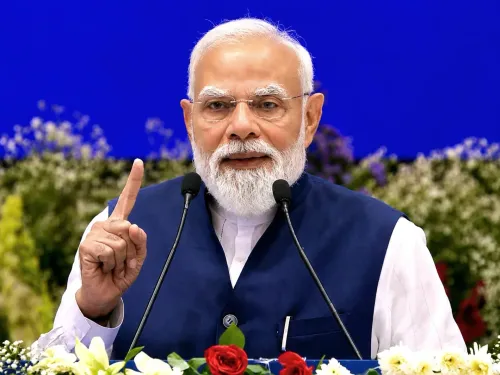
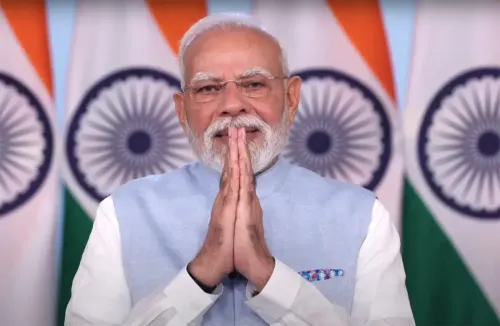
Prime Minister Narendra Modi on Sunday, June 14, 2026, highlighted India's 12-year journey toward making quality healthcare more affordable and accessible, pointing to Ayushman Bharat as the world's largest healthcare programme and a source of national pride.
Context
In his post, Prime Minister Modi stated: 'Over the last 12 years, India has worked to make quality healthcare more affordable and accessible.' He described the sense of pride that comes from being recognised globally for Ayushman Bharat, which he characterised as providing 'top-quality healthcare to the most vulnerable.' The 12-year reference spans from 2014, when his government first came to power, to the present.
The remarks come as the BJP-led government continues to frame universal health coverage as a defining achievement of its tenure. The post underscores a consistent messaging strategy that positions welfare delivery — particularly in healthcare — as a central pillar of the administration's legacy.
Policy Backdrop
Ayushman Bharat was announced in the 2018-19 Union Budget and formally launched in September 2018. At inception, it was designed to cover 10.74 crore poor and vulnerable families, making it the largest publicly funded health insurance programme in the world by intended beneficiary count.
The scheme comprises two pillars: the Pradhan Mantri Jan Arogya Yojana (PM-JAY), which provides hospitalisation insurance cover, and a network of Health and Wellness Centres aimed at strengthening primary care. It was preceded by the National Health Policy 2017, which articulated the goal of universal health coverage, and subsumed the earlier Rashtriya Swasthya Bima Yojana launched in 2008. Implementation is managed by the National Health Authority, an autonomous body under the Ministry of Health and Family Welfare.
The scheme continues a trajectory begun under earlier governments of expanding publicly funded risk pooling for secondary and tertiary hospitalisation, though Ayushman Bharat significantly broadened the scale and benefit package compared to its predecessors.
Stakeholders and Impact
The primary beneficiaries of Ayushman Bharat are low-income and economically vulnerable families who would otherwise face catastrophic out-of-pocket expenditure for hospitalisation. The scheme targets those at the bottom of the socio-economic ladder, providing cashless treatment at empanelled public and private hospitals.
State health departments are co-implementing partners, with each state required to sign a memorandum of understanding with the centre. This concurrent structure means coverage depth and claim settlement efficiency vary across regions, with some states achieving higher enrolment and utilisation than others. The scheme's reach and performance remain subjects of ongoing policy review at both central and state levels.
What's Next
Observers will watch for state-level renewals of memoranda of understanding and any revisions to the Health Benefit Package in the next Union Budget. Expansions to the list of covered procedures or an increase in the annual insurance cover ceiling would signal the government's intent to deepen the programme ahead of the electoral cycle.
As India positions itself as a global model for large-scale public health delivery, the performance and scalability of Ayushman Bharat will be closely scrutinised by international health bodies and domestic policy analysts alike. The Prime Minister's remarks suggest the government intends to keep healthcare access at the forefront of its public communication in the months ahead.
Point of View
Framing 12 years of BJP governance as a coherent arc of healthcare democratisation rather than a series of discrete scheme launches. By anchoring national pride to Ayushman Bharat's global standing, the government is reinforcing a welfare-first identity that has proven electorally durable. The post also implicitly draws a contrast with the pre-2014 period, positioning the current administration as having achieved a qualitative shift in health access for the poor. Whether the scheme's on-ground performance matches its scale ambitions remains the central question for analysts and opposition alike.
NationPress
13 Sept 2026
Frequently Asked Questions
What is Ayushman Bharat and who does it cover?
Ayushman Bharat is India's flagship public health initiative launched in September 2018, comprising the PM-JAY hospitalisation insurance scheme and Health and Wellness Centres. It was initially designed to cover 10.74 crore poor and vulnerable families, providing cashless treatment at empanelled hospitals.
Why did PM Modi talk about 12 years of healthcare progress?
The 12-year reference marks the period since 2014 , when Prime Minister Modi's government first came to power. His post frames this period as a sustained effort to make quality healthcare more affordable and accessible for India's most vulnerable citizens.
Is Ayushman Bharat really the world's largest healthcare programme?
The Indian government describes Ayushman Bharat as the world's largest publicly funded healthcare programme by intended beneficiary count, initially targeting over 10.74 crore families. This claim is based on the scale of its design; actual enrolment and utilisation figures vary by state.
Which government body runs Ayushman Bharat?
The National Health Authority , an autonomous body under the Ministry of Health and Family Welfare , is responsible for implementing Ayushman Bharat at the central level, in partnership with state health departments.
What came before Ayushman Bharat in India's health insurance history?
The Rashtriya Swasthya Bima Yojana , launched in 2008 , was the earlier central government health insurance scheme for low-income workers. Ayushman Bharat subsumed and significantly expanded it following the National Health Policy 2017 , which set universal health coverage as a national goal.