CM Bhupendra Patel Meets Bharuch Welfare Workers, Reviews Ayushman Bharat Impact
Synopsis
Gujarat Chief Minister Bhupendra Patel visited Bharuch on June 16, 2026, meeting welfare worker Rakeshbhai Bhatt who aids poor and orphaned patients, and discussed the on-ground impact of PM Modi's Ayushman Bharat scheme and 12 years of central health governance.
Key Takeaways
Gujarat CM Bhupendra Patel conducted a visit to Bharuch on June 16, 2026 , meeting local welfare workers.
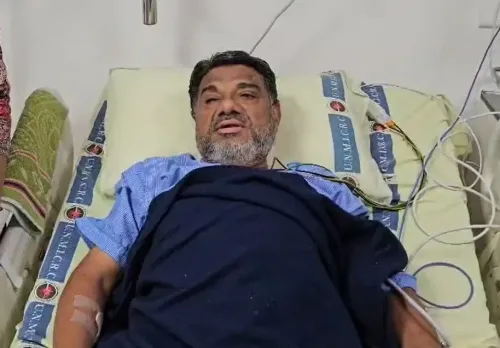
He met social worker Rakeshbhai Bhatt , who works to save the lives of poor and orphaned patients.
CM Patel discussed the effective implementation of Ayushman Bharat and other health schemes at the grassroots level.
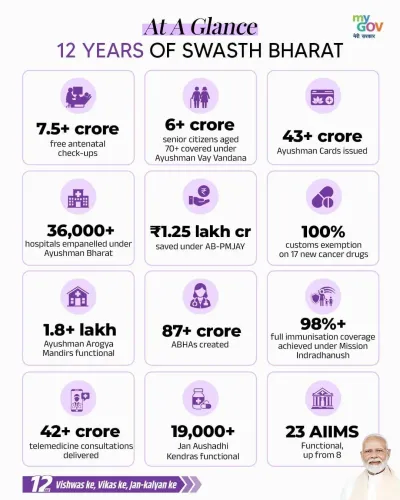
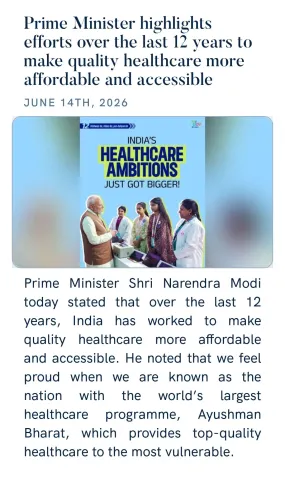
The Chief Minister credited 12 years of governance under PM Narendra Modi (since 2014) for improving healthcare access for ordinary citizens.
Ayushman Bharat PM-JAY , launched in 2018 , provides health insurance coverage to economically weaker sections for hospital care.
The visit highlights Gujarat's alignment of state health administration with centrally sponsored programmes benefiting below-poverty-line populations.
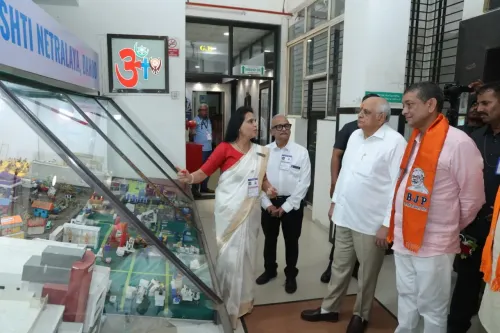
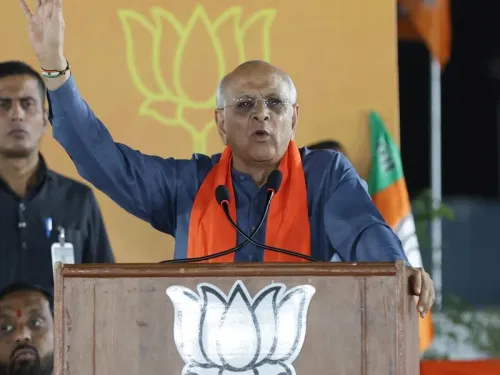
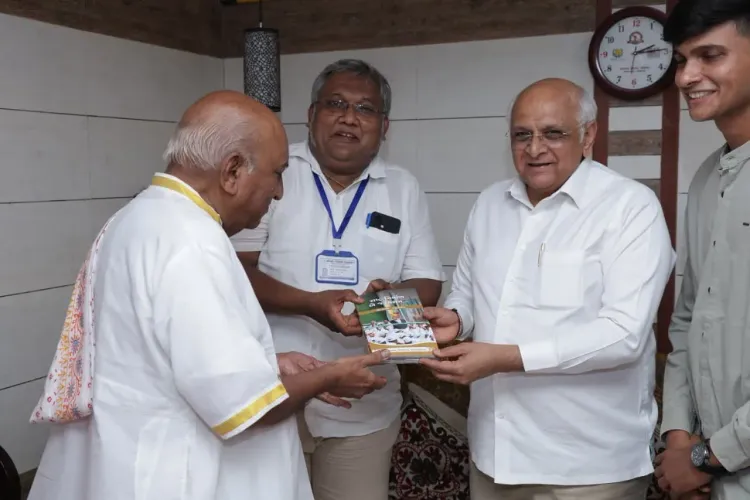
Gujarat Chief Minister Bhupendra Patel on Tuesday, June 16, 2026, met social workers and welfare figures in Bharuch, engaging with grassroots efforts to extend healthcare access to poor and orphaned patients, and reviewed the on-ground implementation of central health schemes including Ayushman Bharat.
Context
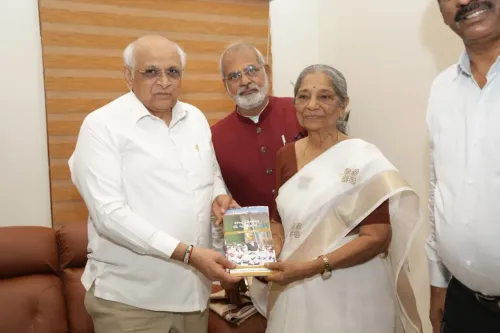
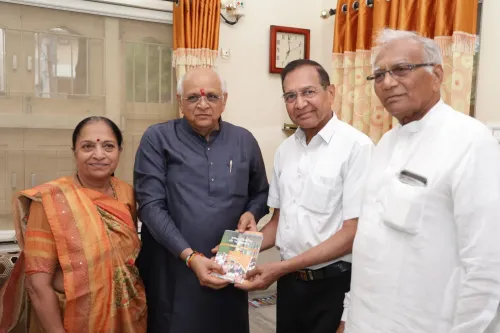
During his visit to Bharuch, CM Patel described the meeting as a 'hrudayasparshi avsaar' — a 'heartfelt occasion' — to connect with individuals engaged in service-oriented work. He specifically met Rakeshbhai Bhatt, a social worker recognised for his efforts in saving the lives of poor and orphaned patients, and gathered details about his welfare activities.
The Chief Minister noted that discussions centred on how local welfare initiatives are converging with national health programmes championed under the central government. The meeting underscored the role of community-level actors in bridging the gap between policy design and patient-level outcomes.
Policy Backdrop
Ayushman Bharat Pradhan Mantri Jan Arogya Yojana (PM-JAY), launched in 2018, is India's flagship health protection scheme aimed at providing insurance coverage to economically weaker sections for secondary and tertiary hospital care. CM Patel specifically referenced 12 years of governance under Prime Minister Narendra Modi — who has led the country since 2014 — crediting this period with effective implementation of Ayushman Bharat and allied health initiatives.
The Chief Minister stated that as a result of these schemes, ordinary citizens are now able to access quality healthcare with greater ease. Gujarat has consistently aligned its state health administration with centrally sponsored programmes to improve hospital access for below-poverty-line populations.
Stakeholders and Impact
The primary beneficiaries highlighted in CM Patel's post are poor and orphaned patients in Bharuch and the wider Gujarat region, who depend on both government schemes and local welfare networks for medical care. Workers like Rakeshbhai Bhatt operate at the intersection of civil society and state-backed health infrastructure, often facilitating access to entitlements that patients may not be able to navigate independently.
Bharuch, an industrial city in south Gujarat, has a mixed population that includes migrant workers and economically vulnerable communities, making ground-level welfare outreach particularly significant in the district.
What's Next
Observers will watch for state budget allocations directed at expanding Ayushman Bharat hospital empanelment across Gujarat, as well as any formal agreements between the Gujarat health department and local non-governmental organisations active in districts like Bharuch. CM Patel's visible engagement with grassroots welfare workers signals continued political emphasis on showcasing the human impact of centrally sponsored health schemes at the district level.
Point of View
Particularly Ayushman Bharat. By personally engaging with community workers like Rakeshbhai Bhatt, the Chief Minister reinforces the message that national schemes are delivering tangible outcomes at the district level — a politically useful frame ahead of any electoral cycle. The explicit invocation of '12 years of PM Modi's governance' signals that the state leadership sees health delivery as a durable campaign asset. Sustained attention to Bharuch, an industrially significant district with a vulnerable migrant population, also suggests targeted outreach to constituencies that benefit most visibly from public health entitlements.
NationPress
16 Sept 2026
Frequently Asked Questions
Why did Gujarat CM Bhupendra Patel visit Bharuch?
CM Bhupendra Patel visited Bharuch to meet social workers and welfare figures engaged in grassroots healthcare service, including social worker Rakeshbhai Bhatt, who works to save the lives of poor and orphaned patients.
Who is Rakeshbhai Bhatt?
Rakeshbhai Bhatt is a social worker based in Bharuch, Gujarat, recognised for his welfare activities aimed at saving the lives of poor and orphaned patients who lack access to healthcare.
What is Ayushman Bharat and how does it help poor patients?
Ayushman Bharat Pradhan Mantri Jan Arogya Yojana, launched in 2018, is India's national health protection scheme that provides insurance coverage to economically weaker sections for secondary and tertiary hospital care, making quality treatment accessible without out-of-pocket costs.
What did CM Patel say about PM Modi's health governance?
CM Patel stated that 12 years of governance under PM Narendra Modi have seen effective implementation of Ayushman Bharat and various other health initiatives, enabling ordinary citizens to access quality healthcare more easily.
What is the significance of Bharuch in Gujarat's health outreach?
Bharuch is an industrial city in south Gujarat with a significant population of migrant workers and economically vulnerable communities, making district-level health welfare outreach especially important for ensuring access to government health entitlements.