CM Bhupendra Patel highlights Dahod man's free treatment under Ayushman
Synopsis
Gujarat CM Bhupendra Patel shared a testimonial from Amarsinhbhai of Dahod, who received completely free medical treatment via his Ayushman Card under PMJAY, framing the scheme as PM Modi's greatest achievement across 25 years of public service.
Key Takeaways
Amarsinhbhai from Dahod, eastern Gujarat , received entirely free medical treatment using his Ayushman Card under PMJAY .
Pradhan Mantri Jan Arogya Yojana was launched in September 2018 and provides up to ₹5 lakh per year in cashless hospitalisation cover.
CM Bhupendra Patel shared the story on 14 October 2026 as part of the #SevaSankapAbhiyaan campaign.
The post frames universal health protection for poor and middle-class families as PM Modi's defining achievement across 25 years of public service (since 2001 ).
Dahod is one of Gujarat's economically vulnerable districts with a large tribal population, making it a significant reference point for PMJAY's grassroots reach.
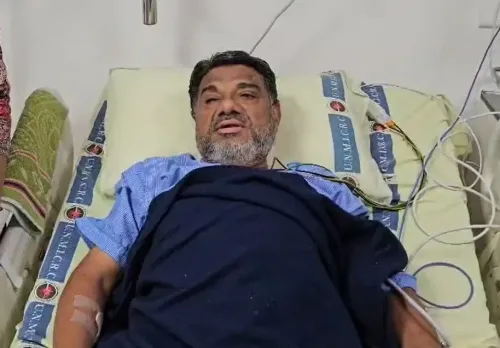
A man from Dahod, Gujarat, was staring down a medical bill he could not pay — until an Ayushman Card changed the equation entirely. Gujarat Chief Minister Bhupendra Patel shared the story of Amarsinhbhai on Wednesday, 14 October 2026, as part of the #SevaSankapAbhiyaan campaign, to put a human face on what the government describes as one of independent India's most consequential health insurance programmes.
In his post, CM Patel quotes Amarsinhbhai directly: 'Ayushman Cardna lidhe mari bimarini sarvar bilkul maft thai ane mara parivarni moti arthik chinta dur thai...' — 'Because of the Ayushman Card, my treatment was completely free and my family's major financial worry disappeared.' The Chief Minister frames this as proof that Prime Minister Narendra Modi's Pradhan Mantri Jan Arogya Yojana (PMJAY) is, in his words, a 'true companion in times of crisis.'
What Amarsinhbhai's case says about PMJAY's reach in Gujarat
Dahod is a district in eastern Gujarat with a significant tribal population — historically one of the state's more economically vulnerable pockets. A beneficiary story emerging from there is not incidental; it underscores the scheme's stated mandate to reach families at the bottom of the income pyramid. Under PMJAY, eligible households receive cashless hospitalisation coverage of up to ₹5 lakh per year for secondary and tertiary care at empanelled hospitals — covering surgeries, ICU stays, and specialist consultations that would otherwise push a family into debt or destitution.
The scheme was launched in September 2018 as the insurance arm of the broader Ayushman Bharat programme. The Ayushman Card — a portable health card — is the on-ground mechanism: a patient presents it at any empanelled hospital and the bill is settled directly between the hospital and the insurer, with zero out-of-pocket payment required from the beneficiary.
Modi's 25-year public service arc — the framing CM Patel reaches for
CM Patel goes further than a routine testimonial, calling free healthcare for poor and middle-class families 'the greatest achievement of the Honourable Prime Minister's 25 years of public service' — a reference to Modi's political career that began with his appointment as Gujarat Chief Minister in 2001. The framing is deliberate: it anchors a central welfare scheme to a personal legacy narrative, timed to the ongoing Seva Sankalp Abhiyaan, a BJP-led outreach drive collecting and amplifying beneficiary accounts from across states.
The post closes with Amarsinhbhai expressing 'heartfelt gratitude' to Modi for ensuring the health security of his family — a testimonial format the BJP has used consistently to communicate scheme impact at the grassroots level.
For millions of families in districts like Dahod, the distance between a catastrophic illness and financial ruin is now, at least on paper, one card swipe wide. Whether Gujarat's empanelment numbers and claim settlement rates match that promise is the question that will define the next chapter of this story.
Point of View
A tribal-majority district in eastern Gujarat, the party signals that PMJAY's reach extends to its most electorally and socially marginalised constituencies. The #SevaSankapAbhiyaan framing transforms individual gratitude into collective brand-building. The '25 years of service' reference is a deliberate milestone marker, positioning health insurance not as government policy but as a personal gift from one leader — a framing that will intensify as the BJP approaches future electoral cycles.
NationPress
14 Oct 2026
Frequently Asked Questions
What is the Ayushman Card and how does it work?
The Ayushman Card is a health card issued under the Pradhan Mantri Jan Arogya Yojana (PMJAY). It allows eligible beneficiaries to receive cashless, paperless hospitalisation at any empanelled hospital, with the bill settled directly between the hospital and the insurer — up to ₹5 lakh per family per year.
Who is eligible for the Ayushman Bharat PMJAY scheme?
PMJAY targets poor and lower-middle-class families identified through the Socio-Economic Caste Census database. Eligible families receive free coverage for secondary and tertiary hospitalisation including surgeries, specialist treatment, and ICU care.
When was the Pradhan Mantri Jan Arogya Yojana launched?
PMJAY was launched in September 2018 as the health insurance component of the Ayushman Bharat programme initiated by the Government of India under PM Narendra Modi.
What is the Seva Sankalp Abhiyaan?
Seva Sankalp Abhiyaan is a BJP-led outreach campaign that collects and amplifies first-person beneficiary testimonials from central government welfare schemes, used to communicate grassroots scheme impact across states including Gujarat.
What is Dahod district known for in Gujarat?
Dahod is a district in eastern Gujarat with a predominantly tribal population. It is one of the state's more economically vulnerable regions, making it a significant reference point when demonstrating the reach of welfare schemes like PMJAY.