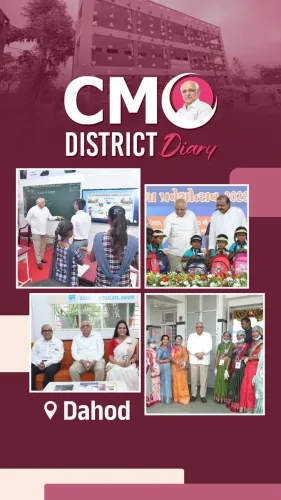
CM Bhupendra Patel Visits Dahod Eye Hospital, Hails Health Schemes
Synopsis
Gujarat Chief Minister Bhupendra Patel visited Drashti Netralaya in Dahod on 24 June 2026, commending its free eye-care services and connecting the institution's work to PM Modi's Ayushman Bharat and Jan Aushadhi schemes as part of India's push for affordable healthcare.
Key Takeaways
CM Bhupendra Patel visited Drashti Netralaya , a charitable eye hospital in Dahod , on 24 June 2026 .
The institution has been providing free eye treatment to patients in the region for several years.
Ayushman Bharat offers health insurance of up to Rs 5 lakh per family per year to low-income households.
The Jan Aushadhi scheme provides generic medicines at low cost through a national network of outlets expanded from 2014 onward.
Dahod is a tribal-majority district in eastern Gujarat where access to specialist healthcare remains limited.
The CM praised the public-charitable collaboration model as complementary to central government health schemes.
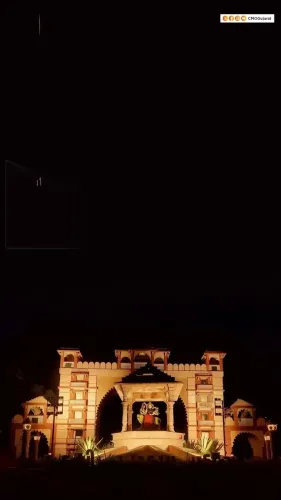
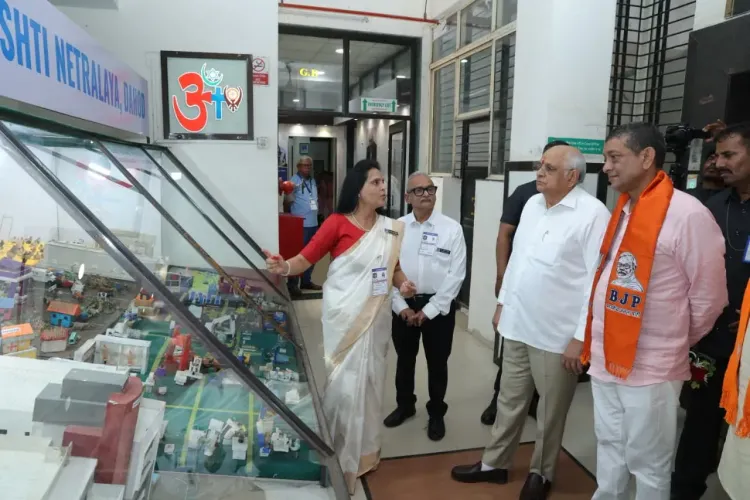
Gujarat Chief Minister Bhupendra Patel on Wednesday, 24 June 2026, visited Drashti Netralaya in Dahod, a charitable eye-care institution serving patients across the region, and commended its model of free and subsidised treatment for those in need.
Context
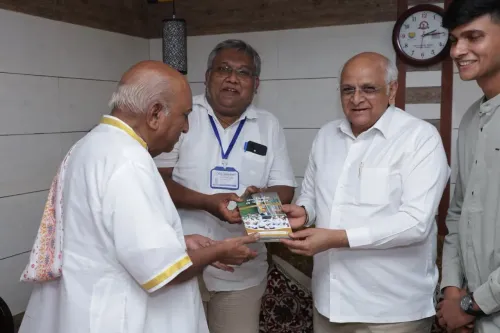
Posting on X, CM Patel wrote in Gujarati that he visited Drashti Netralaya, which provides eye-care services to patients with a spirit of service (sevaabhav). He said he gathered information about the facility's various amenities and the free eye treatment being offered there for years. The Chief Minister praised such charitable institutions for coming forward to provide healthcare free of cost or at low rates to those in need.
Dahod is an eastern Gujarat district with a substantial tribal population, where access to specialised healthcare — including ophthalmology — has historically been limited. Charitable and trust-run hospitals have long supplemented government infrastructure in this belt.
Policy Backdrop
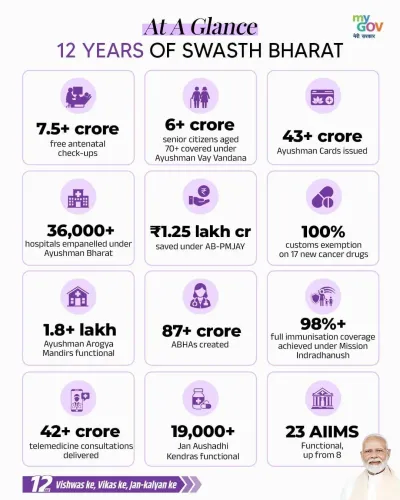
CM Patel explicitly linked the institution's work to national health programmes, noting that under the leadership and guidance of Prime Minister Narendra Modi, schemes such as Ayushman Bharat and Jan Aushadhi have become 'a health blessing for the common person across the entire country.' He called it praiseworthy that service-oriented organisations are also stepping forward alongside these government schemes.
Ayushman Bharat Pradhan Mantri Jan Arogya Yojana, launched in 2018, provides health insurance coverage of up to Rs 5 lakh per family annually to low-income households. The Pradhan Mantri Bharatiya Janaushadhi Pariyojana (Jan Aushadhi), expanded significantly from 2014 onward, makes generic medicines available at steeply discounted prices through a network of dedicated outlets. Gujarat has integrated both programmes with state-level support for NGOs and charitable trusts operating in tribal districts.
Stakeholders and Impact
The primary beneficiaries of institutions like Drashti Netralaya are rural and tribal patients in and around Dahod who may lack the financial means or physical access to private specialist care. Free eye treatment — including cataract surgeries and screenings — remains one of the most impactful interventions in tribal healthcare, where preventable blindness rates are disproportionately high.
The public-private-charitable collaboration model highlighted by CM Patel reflects Gujarat's broader approach: leveraging central scheme frameworks while encouraging civil-society institutions to fill service gaps. Empanelment of such charitable hospitals under Ayushman Bharat allows patients to access cashless treatment at no additional cost to the institution.
What's Next
The visit signals continued state-level attention to healthcare access in Gujarat's tribal eastern districts. Observers will watch for any formal announcements regarding the empanelment of additional charitable hospitals under Ayushman Bharat, the expansion of Jan Aushadhi outlets in Dahod district, or state-sponsored eye-care camps in the region. The Chief Minister's public endorsement of the institution may also encourage similar charitable organisations to scale up their outreach in underserved areas.
Point of View
Reinforcing BJP's messaging on accessible and affordable care ahead of any electoral cycle. By spotlighting a tribal district institution, the visit also addresses a persistent political vulnerability — healthcare access in Gujarat's eastern tribal belt — without requiring new state expenditure. The endorsement of the public-private-charitable model is consistent with Gujarat's governance tradition of leveraging civil society to extend reach where state infrastructure is thin. If followed by concrete empanelment or funding announcements, the visit could mark a meaningful policy step; absent those, it remains a high-visibility outreach signal.
NationPress
23 Sept 2026
Frequently Asked Questions
What is Drashti Netralaya in Dahod?
Drashti Netralaya is a charitable eye-care hospital in Dahod, eastern Gujarat, that has been providing free and subsidised eye treatment to patients, including tribal communities, for several years.
Why did Gujarat CM Bhupendra Patel visit Dahod?
CM Bhupendra Patel visited Drashti Netralaya in Dahod on 24 June 2026 to learn about the facility's services and commend its model of free eye treatment for patients who cannot afford private care.
What is Ayushman Bharat and how does it help patients?
Ayushman Bharat Pradhan Mantri Jan Arogya Yojana, launched in 2018, provides health insurance coverage of up to Rs 5 lakh per family per year to low-income households, enabling cashless treatment at empanelled hospitals.
What is the Jan Aushadhi scheme?
The Pradhan Mantri Bharatiya Janaushadhi Pariyojana makes generic medicines available at significantly reduced prices through a network of dedicated outlets across India, expanded substantially from 2014 onward.
Why is healthcare access important in Dahod district?
Dahod is a tribal-majority district in eastern Gujarat where access to specialist medical care, including eye care, has historically been limited, making charitable institutions and government schemes especially critical for local communities.