PM Modi at Somnath: Temple symbolises India's indestructible spirit
Synopsis
Marking 75 years of Somnath Temple's consecration, PM Modi used the Somnath Amrut Mahotsav to frame the shrine's repeated destruction and revival as a metaphor for India's civilisational resilience — invoking historical invaders by name while pledging continued infrastructure development around the pilgrimage site.
Key Takeaways
PM Modi addressed the Somnath Amrut Mahotsav at Prabhas Patan, Gujarat on 11 May 2025 .
The event marks 75 years of the consecration of Lord Mahadev at the reconstructed Somnath Temple .
Modi invoked attacks by Mahmud of Ghazni and Alauddin Khilji , saying the temple rose each time it was destroyed.
The PM paid tribute to historical patrons including Ahilyabai Holkar and the Gaekwads of Vadodara .
Infrastructure upgrades at Somnath include a Sea Viewing Path , a Tourist Facilitation Centre , and an exhibition gallery .
Modi linked pilgrimage centres to economic progress, citing the Char Dham highway and Kartarpur Corridor .
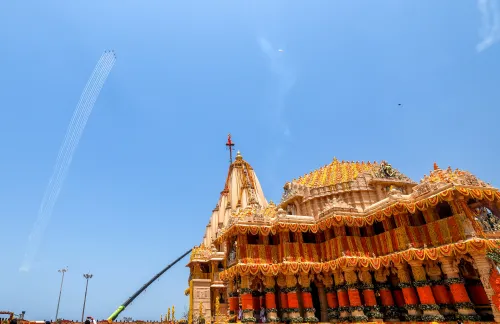
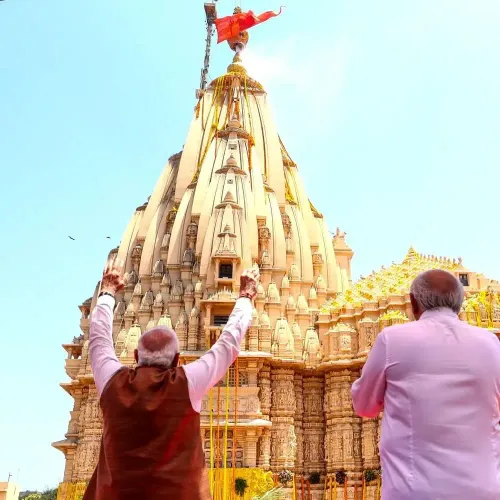
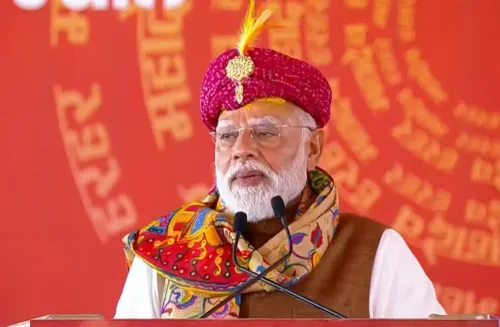
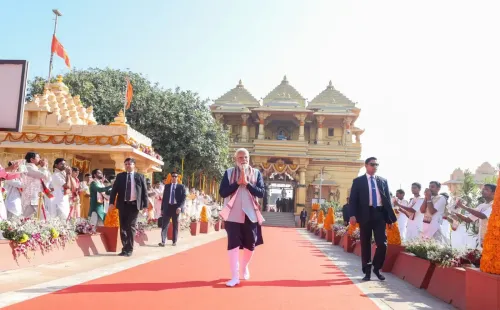
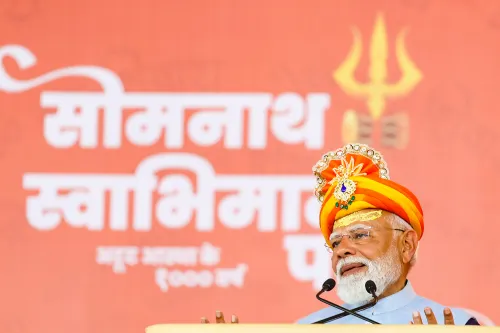
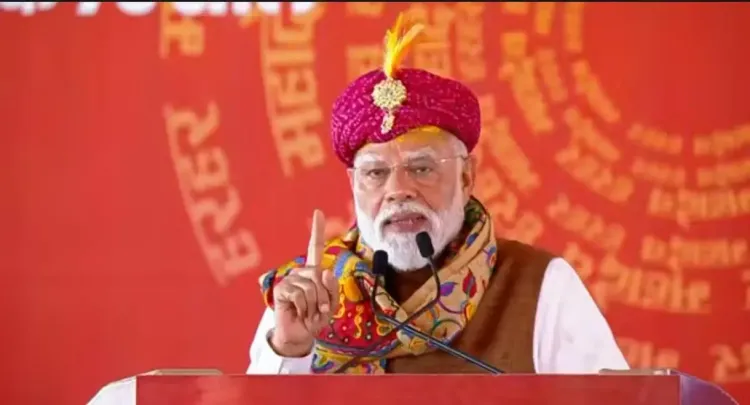
Prime Minister Narendra Modi on Monday, 11 May described the Somnath Temple as a symbol of India's "indestructible spirit" and "civilisational consciousness" while addressing the Somnath Amrut Mahotsav celebrations at Prabhas Patan in Gir Somnath, Gujarat. The event marks 75 years of the consecration of Lord Mahadev at the reconstructed temple.
Key Remarks at the Mahotsav
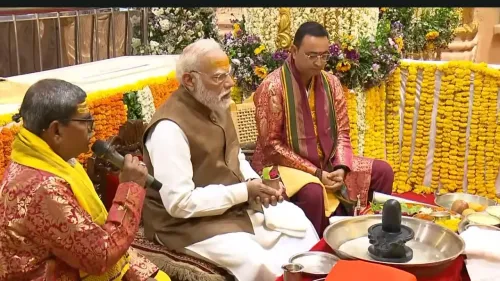
Opening his address with chants of "Jai Somnath" and "Har Har Mahadev", PM Modi said the occasion represented a "thousand-year journey of immortality". "Today, the region of Prabhas Patan has been filled with a special thrill," he said, evoking the atmosphere of Vedic chants, saffron flags, and the roar of the sea.
"This divine presence of Mahadev, this beauty, the showering of flowers from the earth and the sky, the radiance of saffron flags... it feels as though the entire creation is speaking together: Jai Somnath! Jai-Jai Somnath!" the Prime Minister said.
Resilience Against Historical Invasions
PM Modi referenced repeated attacks on the temple by invaders, including Mahmud of Ghazni and Alauddin Khilji, saying the structure had risen every time it was destroyed. "Looters attempted to erase the glory of the Somnath temple. They treated Somnath as merely a physical structure and repeatedly attacked it. Time and again, this temple and structure were destroyed, and each time it rose again, because those who tried to destroy it never understood the ideological strength of our nation," he said.
The Prime Minister added that India's spiritual traditions viewed the "soul as immortal", and that "Shiva is the soul of all" — framing the temple's resilience as a metaphor for the nation's civilisational continuity.
Tribute to Builders and Patrons of Somnath
Modi paid tribute to historical figures associated with the reconstruction and preservation of Somnath across different eras, including Raja Bhoj, Raja Bhimdev I, Raja Kumarapala, Ahilyabai Holkar, the Gaekwads of Vadodara, and Jam Sahib Maharaja Digvijaysinh Jadeja. He also remembered thinkers, scholars, and saints connected with Shaiva traditions in Prabhas Patan, saying their legacy continued to inspire future generations.
Infrastructure and Pilgrimage Development
Calling pilgrimage centres "sources of economic progress", PM Modi highlighted government investments in religious tourism infrastructure, including the Char Dham highway, the Kartarpur Corridor, and the Buddhist circuit. Referring specifically to Somnath, he said devotee facilities had expanded significantly in recent years.
"Today, there is the Sea Viewing Path, which further enhances Somnath's glory. There is a Tourist Facilitation Centre and an exhibition gallery. The old Somnath town is being rejuvenated," he said.
The Broader Message
The Prime Minister said the Somnath Amrut Mahotsav embodied "a resolve to build such an India that remains connected to its roots while also being ready to reach the pinnacle of modernity". He closed with a pointed message: "This temple of Somnath teaches us that truth can be suppressed, but not erased. Faith can be challenged, but it cannot be defeated." The celebrations signal a continued governmental emphasis on cultural and religious heritage as a pillar of national identity.
Point of View
The speech draws a direct civilisational line — one that resonates with the BJP's core cultural nationalism framing. The 75-year consecration anniversary provides a legitimate occasion, but the rhetorical scaffolding goes well beyond commemoration. Notably, the infrastructure pitch — Sea Viewing Path, tourist centres, highway corridors — positions religious heritage as an economic multiplier, a dual framing that has proven electorally potent in Gujarat and beyond. The question mainstream coverage rarely asks: whether the emphasis on historical destruction, however factual, crowds out the equally remarkable story of the diverse Indian patrons — from Ahilyabai Holkar to the Gaekwads — who rebuilt Somnath across centuries.
NationPress
24 Sept 2026
Frequently Asked Questions
What is the Somnath Amrut Mahotsav?
The Somnath Amrut Mahotsav is a celebration marking 75 years of the consecration of Lord Mahadev at the reconstructed Somnath Temple in Prabhas Patan, Gujarat. PM Modi attended and addressed the event on 11 May 2025.
Why is the Somnath Temple historically significant?
The Somnath Temple is one of the twelve Jyotirlinga shrines and has been destroyed and rebuilt multiple times over centuries, including after attacks by Mahmud of Ghazni and Alauddin Khilji. Its repeated reconstruction is widely regarded as a symbol of India's cultural and spiritual resilience.
What infrastructure developments has the government made at Somnath?
Recent upgrades at Somnath include a Sea Viewing Path, a Tourist Facilitation Centre, and an exhibition gallery. The old Somnath town is also being rejuvenated as part of a broader pilgrimage infrastructure push.
Which historical figures did PM Modi honour at the event?
PM Modi paid tribute to Raja Bhoj, Raja Bhimdev I, Raja Kumarapala, Ahilyabai Holkar, the Gaekwads of Vadodara, and Jam Sahib Maharaja Digvijaysinh Jadeja for their roles in rebuilding and preserving Somnath across different historical periods.
How does the government link pilgrimage centres to economic development?
PM Modi described pilgrimage centres as 'sources of economic progress', pointing to projects like the Char Dham highway, the Kartarpur Corridor, and the Buddhist circuit as examples of infrastructure investment around major religious destinations.