PM Modi leads first-ever Kumbhabhishek at Somnath Temple, marks 75 years of reconstruction
Synopsis
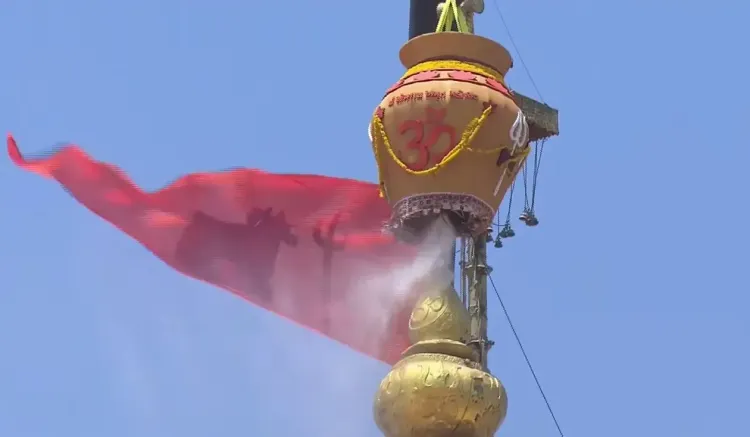
For the first time in its history, the Somnath Temple witnessed a Kumbhabhishek performed atop its shikhar — a 1,860-kg ceremonial vessel hoisted 90 metres by crane, with PM Modi presiding over the ritual. The event marks 75 years since Sardar Patel's reconstruction of the temple, making it as much a moment of national symbolism as religious observance.
Key Takeaways
PM Narendra Modi participated in the first-ever Kumbhabhishek atop the Somnath Temple on 11 May 2025 .
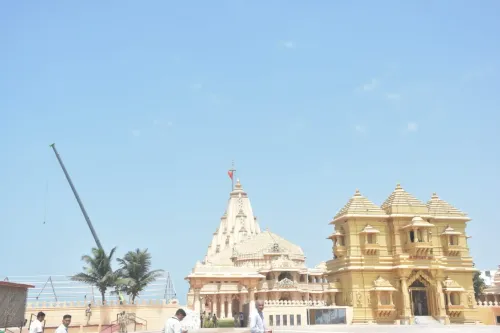
A 1,860-kg ceremonial vessel was lifted to the temple's shikhar using a 90-metre crane — described as a historic first.
Holy water from 11 pilgrimage sites across India was used in the ritual.
The event marks 75 years since the reconstructed temple was inaugurated by President Dr Rajendra Prasad in 1951 .
More than 2,000 security personnel were deployed across Gir Somnath district for the occasion.
Gujarat CM Bhupendra Patel and Deputy CM Harsh Sanghavi were among the dignitaries present.
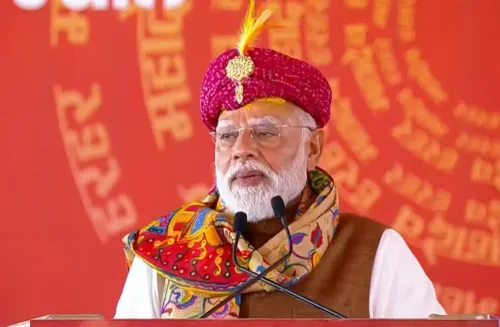
Prime Minister Narendra Modi on Monday, 11 May participated in the historic Kumbhabhishek ceremony at the Somnath Temple in Gir Somnath, Gujarat, marking 75 years since the inauguration of the reconstructed shrine. The ceremony, described as the first of its kind ever conducted atop the temple, formed the centrepiece of the Somnath Amrut Mahotsav celebrations.
A Historic First at the Shikhar
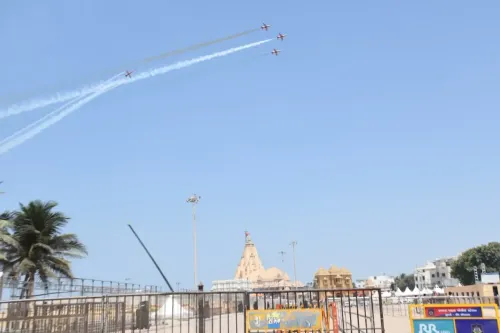
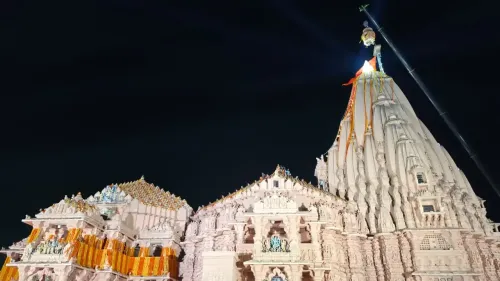
The Kumbhabhishek ritual was performed using holy water collected from 11 pilgrimage sites across the country. According to organisers, a specially designed 1,860-kg ceremonial vessel was hoisted to the temple's shikhar using a 90-metre crane — making it the first such consecration ceremony ever conducted at that height on the structure. Vedic chants and religious hymns filled the air throughout, while helicopters showered flower petals over the shrine.
Key Ceremonies and Rituals
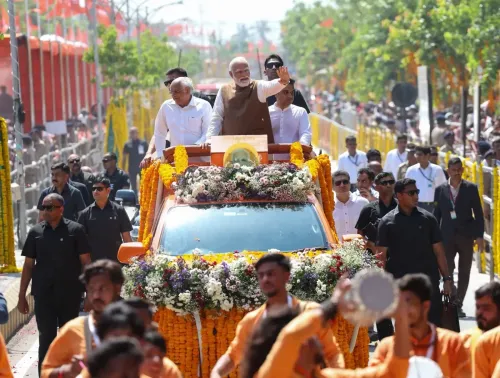
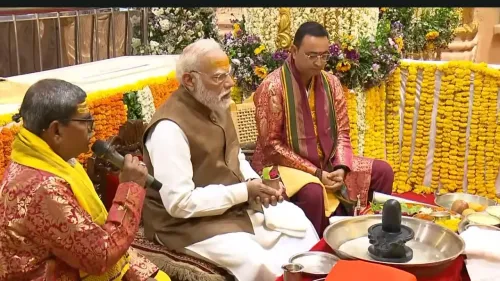
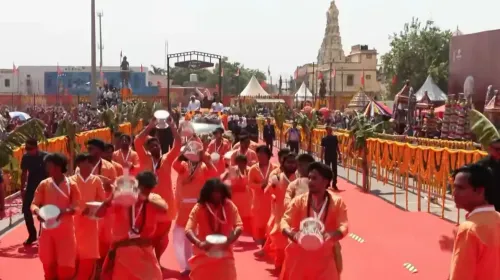
PM Modi participated in a series of rituals at the temple, including Jalabhishek, Maha Puja, and Dhwaj Pooja. Before entering the sanctum, he offered floral tributes to the statue of Sardar Vallabhbhai Patel within the temple premises — a gesture acknowledging Patel's pivotal role in the temple's reconstruction. Artists from different parts of the country performed cultural programmes as the Prime Minister's convoy moved through Somnath, where large crowds gathered along the route.
Who Was Present
The ceremony was conducted in the presence of Gujarat Chief Minister Bhupendra Patel and Deputy Chief Minister Harsh Sanghavi, along with temple trustees, saints, and senior officials. Thousands of devotees attended the celebrations amid heavy security arrangements across the Gir Somnath district. More than 2,000 police personnel, home guards, and other security staff were deployed for the occasion.
The Significance of 75 Years
The Somnath Amrut Mahotsav commemorates 75 years since the restored Somnath Temple was inaugurated by India's first President, Dr Rajendra Prasad, in 1951, following reconstruction efforts spearheaded by Sardar Patel. The temple, regarded as one of Hinduism's 12 Jyotirlingas, had been destroyed and rebuilt multiple times over centuries before its modern reconstruction became a post-Independence symbol of cultural and religious revival. The Somnath Temple is extensively decorated for the occasion, drawing pilgrims from across the country.
What Comes Next
The Somnath Amrut Mahotsav is expected to continue with further cultural and religious programmes in the coming days. The event underscores the temple's enduring significance as a symbol of faith, resilience, and national heritage — and sets a new precedent for the scale of ceremonial observance at one of India's most revered shrines.
Point of View
860-kg vessel, a 90-metre crane, water from 11 pilgrimage sites — signals an intent to make this a benchmark event rather than a routine consecration. What is worth noting is that Somnath's reconstruction in 1951 was itself controversial, with then-PM Nehru reportedly distancing himself from it; Modi's central role in the 75th commemoration implicitly revisits that historical divergence.
NationPress
24 Sept 2026
Frequently Asked Questions
What is the Kumbhabhishek ceremony at Somnath Temple?
The Kumbhabhishek is a Hindu consecration ritual performed to sanctify a temple, typically involving the pouring of holy water over the temple's shikhar. At Somnath, the ceremony on 11 May 2025 was described as the first ever conducted atop the temple's spire, using a specially designed 1,860-kg vessel hoisted by a 90-metre crane.
Why is the Somnath Amrut Mahotsav significant?
The Somnath Amrut Mahotsav marks 75 years since the reconstructed Somnath Temple was inaugurated by President Dr Rajendra Prasad in 1951. The reconstruction was led by Sardar Vallabhbhai Patel and is regarded as a landmark moment in India's post-Independence cultural and religious revival.
What rituals did PM Modi perform at Somnath Temple?
PM Modi participated in Jalabhishek, Maha Puja, and Dhwaj Pooja, and also offered floral tributes to the statue of Sardar Patel within the temple premises. He arrived after a roadshow through Somnath, where large crowds gathered to greet him.
How was the Kumbhabhishek ceremony conducted at the temple's shikhar?
A specially designed ceremonial vessel weighing 1,860 kg was lifted to the top of the temple's shikhar using a 90-metre crane. Holy water collected from 11 pilgrimage sites across India was used in the ritual, accompanied by Vedic chants and flower petals showered from helicopters.
Which temple is Somnath and why is it important?
The Somnath Temple in Gir Somnath, Gujarat, is regarded as one of Hinduism's 12 Jyotirlingas — the holiest shrines dedicated to Lord Shiva. It has been destroyed and rebuilt multiple times over centuries, and its modern reconstruction after Independence is considered a symbol of India's cultural resilience.