PM Modi attends historic Kumbhabhishekam at Somnath Temple spire

Synopsis
For the first time since its post-Independence reconstruction, the Somnath Temple's 90-metre spire received a Kumbhabhishekam — a purification ritual requiring a 350-tonne crane, a 1.86-metric-tonne kalash, and water from 11 pilgrimage sites. PM Modi presided over the ceremony as part of the Somnath Amrut Parv-2026, marking 75 years of the shrine's re-consecration.
Key Takeaways
PM Narendra Modi presided over the first-ever Kumbhabhishekam on the Somnath Temple shikhar on 11 May 2026 .
The ceremony is part of Somnath Amrut Parv-2026 , marking 75 years of the temple's re-consecration after Independence.
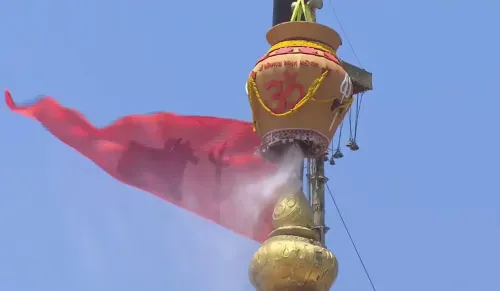
A specially designed kalash holding 1,100 litres of sacred water from 11 pilgrimage sites , weighing 1.86 metric tonnes when filled, was hoisted using a 350-tonne crane .
The abhishek was completed within three minutes via a remote-operated sensor mechanism amid Vedic chanting.
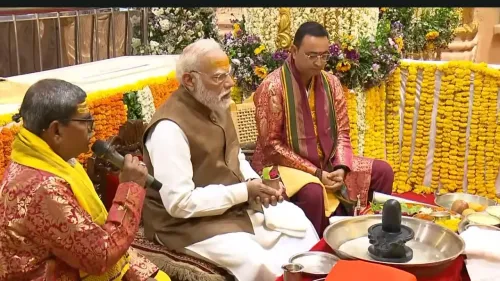
51 Brahmins conducted Atirudra recitations and a three-day Maharudra Yagna involving 1.25 lakh offerings was also organised.
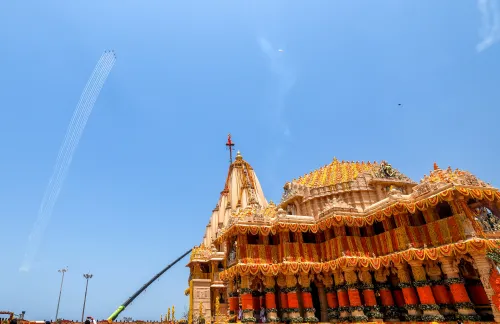
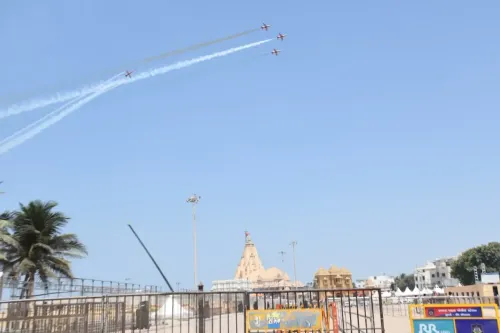
The Indian Air Force's Surya Kiran aerobatic team performed an aerial display using six Hawk Mk-132 aircraft .
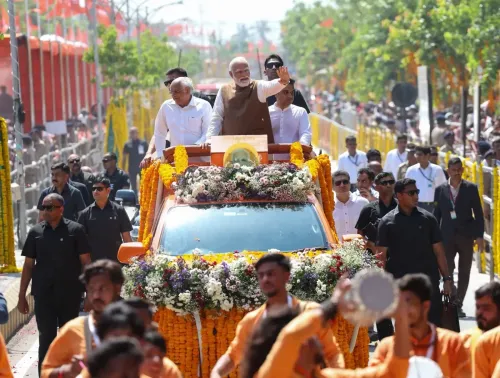
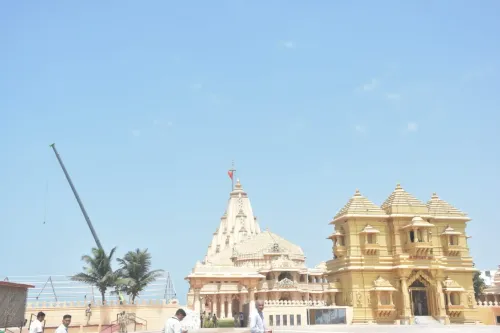
Prime Minister Narendra Modi on Monday, 11 May 2026 presided over a first-of-its-kind Kumbhabhishekam ceremony at the Somnath Temple in Gir Somnath, Gujarat, as part of the 'Somnath Amrut Parv-2026' celebrations marking 75 years of the shrine's re-consecration. Sacred water drawn from 11 pilgrimage sites was offered on the temple's 90-metre-high shikhar (spire), marking the first time this purification ritual has been performed on the reconstructed temple's spire.
A Landmark Ceremony
The Kumbhabhishekam — a ritual more commonly associated with temples in southern India and traditionally conducted once every 10 to 12 years — was performed for the first time on the shikhar of the reconstructed Somnath Temple, according to organisers. The four-day celebrations, held from 8 to 11 May, commemorate the re-establishment of the first Jyotirlinga temple after Independence. The temple is widely regarded as a symbol of the revival of Sanatan heritage, having been reconstructed following a resolution by India's first Deputy Prime Minister, Sardar Vallabhbhai Patel.
The Engineering Behind the Ritual
A specially designed kalash with a capacity of 1,100 litres was prepared for the ceremony. The vessel weighs 760 kg and, when filled with sacred water, tips the scale at approximately 1.86 metric tonnes. Standing eight feet high, the kalash was lifted to the 90-metre shikhara using a 350-tonne all-terrain crane positioned outside the temple premises, with its boom specially extended to reach the required height. Notably, the entire arrangement was designed under a
Point of View
A zero-load engineering principle, and a remote-sensor abhishek mechanism are not trivial achievements. But the event also underscores how state resources and political visibility increasingly converge at sites of religious significance — a dynamic that merits scrutiny even as the cultural milestone itself is widely celebrated.
NationPress
24 Sept 2026
Frequently Asked Questions
What is Kumbhabhishekam and why is the Somnath ceremony historic?
Kumbhabhishekam is a traditional Hindu purification ritual, more commonly practised in South Indian temples, typically conducted once every 10 to 12 years. The Somnath ceremony on 11 May 2026 is historic because it is the first time this ritual has been performed on the shikhar of the reconstructed temple since its post-Independence re-consecration 75 years ago.
What is the significance of Somnath Amrut Parv-2026?
Somnath Amrut Parv-2026 is a four-day celebration held from 8 to 11 May 2026 to mark 75 years since the Somnath Temple — the first Jyotirlinga — was re-consecrated after Independence. The temple's reconstruction was undertaken following a resolution by Deputy Prime Minister Sardar Vallabhbhai Patel.
How was the kalash placed on the 90-metre temple spire?
A specially designed kalash — standing eight feet tall, holding 1,100 litres of sacred water and weighing approximately 1.86 metric tonnes when filled — was hoisted to the 90-metre shikhara using a 350-tonne all-terrain crane. The crane's boom was specially extended for the purpose, and the setup followed a 'zero load principle' to ensure no structural weight was placed on the temple.
What other events were part of the Somnath Amrut Parv celebrations?
The celebrations included Atirudra recitations and Vedic chanting by 51 Brahmins, a three-day Maharudra Yagna with 1.25 lakh offerings, and a special aerial display by the Indian Air Force's Surya Kiran aerobatic team using six Hawk Mk-132 aircraft.
Who supervised the ritual infrastructure for the Kumbhabhishekam?
The Roads and Buildings Department supervised the preparation and installation work for the ritual infrastructure, including the crane arrangement and the kalash design, ensuring the heritage structure remained fully protected during the ceremony.