Six decades of Maoist armed struggle: What lies ahead for India's Naxal movement

Synopsis
A former CPI (Maoist) Central Committee member offers a rare insider account of why India's six-decade armed Maoist struggle is collapsing — from the death of General Secretary Nambala Keshava Rao to mass surrenders and the government's two-year military timeline. The warning: suppressing legitimate dissent next could undo hard-won gains.
Key Takeaways
India's Maoist armed struggle began with the Naxalbari uprising on 25 May 1967 and is now reportedly nearing its end after nearly 60 years .
The Communist Party of India (Maoist) was formed on 21 September 2004 , unifying major revolutionary streams under the PLGA .
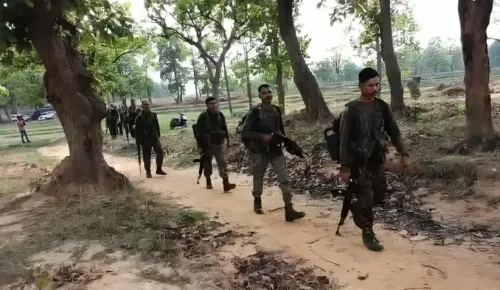
The central government launched an unprecedented military strategy from 2024 with a two-year-three-month timeline, leading to heavy Maoist losses.
Maoist General Secretary Nambala Keshava Rao was killed in an encounter, marking a turning point for the movement.
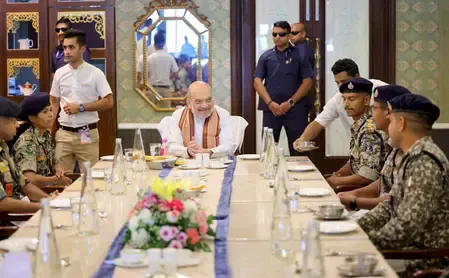
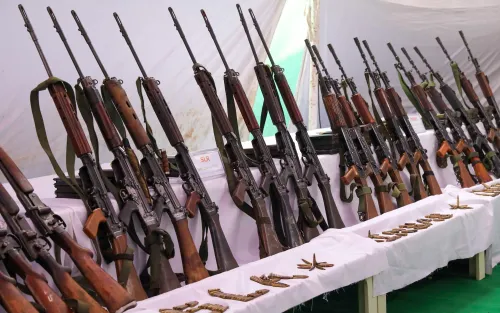
Large-scale surrenders continued through 31 March ; several states were subsequently declared Maoist-free .
The author warns against labelling legitimate dissent as
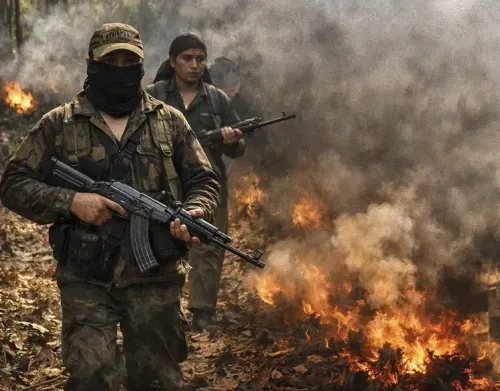
India's six-decade-long Maoist armed struggle — which began with the peasant uprising in Naxalbari on 25 May 1967 — appears to be nearing its end, as large-scale surrenders, heavy operational losses, and the death of top leadership have left the movement severely weakened across its last remaining strongholds. The analysis below is drawn from an account by a former Central Committee member of the Communist Party of India (Maoist).
Origins and Evolution of the Movement
The armed revolutionary movement in India traces its roots to the Naxalbari peasant uprising of 1967, followed by the formation of the Communist Party of India (Marxist-Leninist) on 22 April 1969. Over decades, the movement passed through multiple splits, internal conflicts, and geographical shifts — moving from the plains of Bengal into the dense forest belts of central India.
A major consolidation occurred on 21 September 2004, when two principal streams merged to form the Communist Party of India (Maoist). Their armed wing was reorganised into the People's Liberation Guerrilla Army (PLGA). The central government responded in 2005 by declaring Left-Wing Extremism (LWE) the single biggest internal security threat to the country.
The Government's Dual Strategy
Over the past two decades, the state progressively reclaimed ground through what officials described as a
Point of View
But because the Maoists failed to read their own encirclement. The deeper question the piece raises, but does not fully answer, is what happens to tribal grievances once the armed cover is gone. History suggests that unaddressed dispossession does not disappear with the guerrillas who once channelled it — it finds new forms. The government's instinct to hunt 'urban Maoists' next is precisely the wrong lesson to draw from a hard-won security success.
NationPress
24 Sept 2026
Frequently Asked Questions
When did India's Maoist armed struggle begin?
India's Maoist armed struggle is traced to the peasant uprising in Naxalbari on 25 May 1967, followed by the formation of the Communist Party of India (Marxist-Leninist) on 22 April 1969. The movement formally consolidated into the Communist Party of India (Maoist) on 21 September 2004.
Why is the Maoist movement considered to be nearing its end?
A combination of an unprecedented government military offensive launched in 2024, the killing of Maoist General Secretary Nambala Keshava Rao, mass surrenders through March 2025, and the declaration of several states as Maoist-free has left the movement with very few armed cadres in the field. Senior imprisoned leaders have urged remaining cadres to surrender, with limited response.
Who was Nambala Keshava Rao and why does his death matter?
Nambala Keshava Rao was the General Secretary of the Communist Party of India (Maoist), the top leadership position in the organisation. His death in an encounter, along with his security personnel, is described as a turning point that severely damaged the movement's morale and command structure.
What is the government's concern about 'urban Maoists'?
Following the collapse of forest-based armed resistance, the government has turned its focus to identifying so-called urban Maoist networks. Critics, including the author of this analysis, warn that if legitimate voices raising public concerns are labelled urban Maoists and suppressed, it could create new cycles of unrest.
What happens to tribal communities now that the armed movement is ending?
The author, a former CPI (Maoist) Central Committee member, stresses that governments must ensure the conditions of dispossession and neglect that tribal populations faced in the 1980s — which originally fuelled the movement — do not recur. Failure to address these root causes, the author warns, could lead to people's movements re-emerging in new forms.