What Does the End of the 'Red Dream' Signify?
Synopsis
The narrative of Left-Wing Extremism in India is undergoing a profound transformation as surrenders rise among Maoist cadres. This pivotal shift marks a potential end to the Maoist insurgency, revealing the disintegration of its ideological foundation. Discover how this change may reshape the future of governance and development in affected regions.
Key Takeaways
The rise in surrenders among Maoist cadres marks a pivotal shift in the insurgency.
Disillusionment with the ideology and internal trust issues are driving factors.
The surrender of senior leaders signifies a collapse of the movement's morale.
Increased government outreach contrasts sharply with Maoist promises.
The future of governance and development is crucial in filling the ideological void.
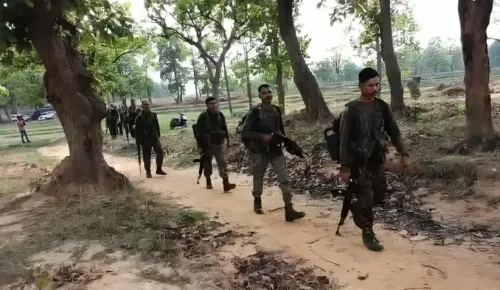
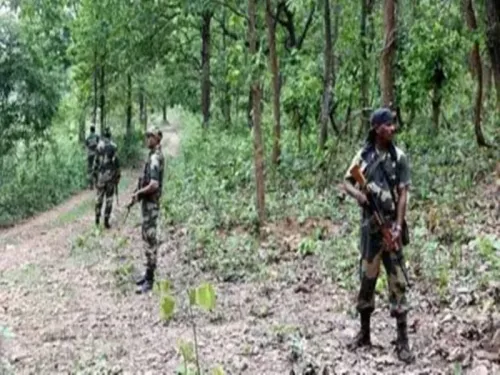
New Delhi, Feb 15 (NationPress) For many years, Left-Wing Extremism found sanctuary in the thick forests of India, alienating tribal communities and fueled by ideological zeal, presenting itself as an insurgency that appeared impossible to defeat. The so-called “Red Corridor” extended throughout central India, with the Maoist narrative portraying itself as a revolutionary force advocating for the marginalized. However, by 2025, that narrative has suffered a significant setback.
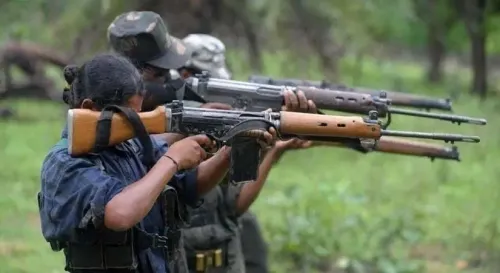
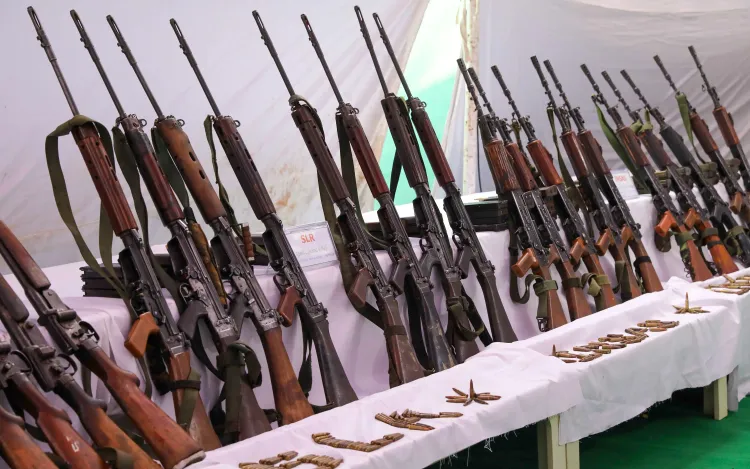
While security forces have achieved several notable successes, the more critical development is the rising tide of surrenders. Throughout Chhattisgarh, Maharashtra, Odisha, and Jharkhand, Maoist fighters—some of whom are senior leaders—have emerged from the forests. They have disarmed, disclosed routes, identified leaders, and embraced rehabilitation. This gradual flow transforming into a torrent signifies a fundamental change in the conflict.
Insurgencies typically do not conclude solely through armed confrontations. They falter when the ideology underpinning them begins to wane. For decades, Maoism in India claimed to represent a movement for justice for the underprivileged. Yet, the reality within the organization told a contrasting tale.
Senior figures often operated from relative safety while younger tribal recruits were sent to the front lines. Villages suffered as violence escalated, yet the movement failed to achieve any significant political results or territorial gains.
By 2025, even the most hardened fighters began to realize that the anticipated revolution was not forthcoming. Their primary concern shifted from ideology to survival. What was once framed as a historic struggle began to resemble an endless cycle of violence devoid of purpose. As government outreach increased and development gradually permeated remote areas, the disparity between Maoist promises and lived realities became increasingly evident.
One of the initial signs of this transformation occurred on January 29, 2025, when Kalmu Mangdu, Deputy Commander of Section 1 Company of the People’s Liberation Guerrilla Army (PLGA), surrendered in Sukma alongside team commander Sameer alias Sukka and cadre Madavi Budhri. They were not mere peripheral recruits but active combatants. Their choice reflected a breakdown of internal trust, fear of being rendered expendable, and a growing belief that survival chances had diminished.
On March 3, 2025, the surrender of Dinesh Modium, a member of the Divisional Committee in Bijapur, further highlighted the cracks. His departure undermined the so-called “martyrdom narrative” that had long bolstered morale among fighters. It indicated that even mid-level leaders no longer had faith in the movement's future, with ideological commitment yielding to practical realities.
Perhaps the most emblematic blow occurred on October 14, 2025, when Mallojula Venugopal Rao—known by various aliases including Bhupathi, Sonu, and Abhay—surrendered in Gadchiroli alongside around 60 cadres. A high-ranking Politburo member, spokesperson, and ideologue of the CPI (Maoist), he was not just a commander but a pivotal political voice within the organization. His wife, Tarakka, also a Maoist leader, had surrendered earlier. His exit marked the conclusion of an era and delivered a significant psychological blow to the remaining leadership.
Two months later, on December 10, 2025, Kiran Hidma Kowasi, alias Bhima, a Divisional Committee Member who had joined the movement in the 1990s, surrendered in Gadchiroli. He represented the old guard—veterans who had witnessed the insurgency at its height. His decision signified that even the most loyal leaders no longer believed in any revival. When veterans begin to leave, the message spreads faster than any propaganda.
Just days later, on December 12, another armed cadre known as Medium Bhima surrendered in Sukma. While not a top commander, his surrender was noteworthy as he was an active, weapon-bearing combatant. It demonstrated that the decline was not limited to ideological leaders but also affected hardened foot soldiers who had once constituted the backbone of the insurgency.
On December 13, two Area Committee Members—Roshan alias Mara Vedja and Subhash alias Pojja Rava—surrendered in Gondia, Maharashtra. This effectively closed the Maharashtra–Chhattisgarh corridor, which had previously served as a lifeline for the Maoist movement and logistics. What was once a strategic route had become a snare, with heightened surveillance, improved coordination among security forces, and dwindling support bases.
The consistent stream of surrenders across Bastar, Sukma, Gadchiroli, and parts of Jharkhand is not coincidental. It symbolizes the systematic weakening of the CPI (Maoist) as a military entity, as an organization, and most crucially, as an ideology. The once-feared Red Corridor has splintered into isolated pockets, severed from supplies, communication, recruitment, and safe movement.
When armed movements reach a juncture where surrender seems safer than survival, their collapse becomes unavoidable. The events of 2025 imply that India’s prolonged struggle against Maoist insurgency may finally be approaching its conclusion—not just through armed violence but through the silent erosion of a once-potent revolutionary myth.
The genuine challenge now lies in ensuring that the void left behind is filled not by another ideology of violence but by governance, development, and enduring trust among communities.
(The writer is a bestselling author recognized for her research and writings on India’s defense forces)
Point of View
It's essential to recognize that the evolving dynamics of the Maoist insurgency reflect broader socio-political realities. The surrenders signal a potential transition towards peace, emphasizing the importance of governance and development to fill the void left behind. Our nation's commitment to addressing the needs of marginalized communities remains paramount in this journey.
NationPress
19 Sept 2026
Frequently Asked Questions
What led to the rise in surrenders among Maoists?
The growing disillusionment with the Maoist ideology and the contrast between promises and realities, coupled with increased government outreach and development initiatives, have contributed to the rise in surrenders.
What does the surrender of senior leaders indicate?
The surrender of senior leaders suggests a breakdown of trust within the Maoist ranks and a recognition that the movement's ideological foundation is crumbling.
How does this impact the future of the Maoist movement?
The continuous stream of surrenders points to a significant weakening of the Maoist movement as a viable force, indicating a possible end to its influence in the region.