Is India’s Anti-Maoist Strategy Transitioning to a New Phase?

Synopsis
India's ongoing battle against Left-Wing Extremism is shifting gears, moving from containment to a decisive rollback. The recent elimination of Maoist leader Madvi Hidma signifies a turning point in this strategic transformation. This article explores the implications of this shift and its impact on the future of Maoist insurgency in India.
Key Takeaways
India’s anti-Maoist strategy is transitioning from containment to consolidation.
Significant operational successes have led to a reduction in Naxalism.
Development and rehabilitation efforts are crucial for long-term peace.
The death of key leaders like Madvi Hidma weakens Maoist command.
Protection of tribal rights is essential for sustainable governance.
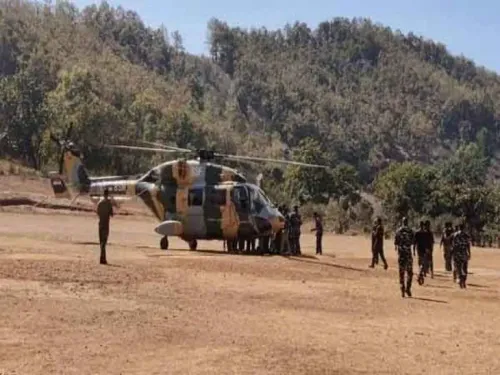
Colombo, Dec 14 (NationPress) India’s extensive endeavor against Left-Wing Extremism (LWE) has now entered a pivotal stage, shifting from mere containment to what officials term as an irreversible rollback, according to recent media reports.
The reported death of senior Maoist leader Madvi Hidma marks a significant milestone in this transition, representing both a tactical victory and a broader policy change from managing insurgencies to fostering integration, as highlighted by the Daily Mirror.
Over the last ten years, the presence of Naxalism has significantly diminished, the report indicates.
Official evaluations reveal that the number of districts impacted by LWE has decreased from approximately 126 in 2014 to nearly a dozen core districts by 2024-25.
This reduction is credited to a cohesive national strategy that has bolstered intelligence efforts, enhanced inter-agency collaboration, and reinstated the authority of the state in remote forested zones previously controlled by Maoist factions, with remarkable security improvements.
Government statistics referenced in the report reveal that hundreds of Maoist operatives were neutralized in 2023 and 2024, with over a thousand apprehended and a similar number surrendering during the same timeframe.
Violent incidents linked to Maoists have reportedly halved over the past decade, indicating a movement that is both territorially constrained and organizationally weakened.
In this context, the reported elimination of Madvi Hidma in an encounter in Andhra Pradesh in November 2025 is particularly noteworthy.
Characterized by police officials as a leading Maoist Commander and a member of the Central Committee of the Communist Party of India (Maoist), Hidma was implicated in some of the most lethal assaults against security forces in the Dandakaranya region.
The report quotes senior officials labeling his death a “watershed” event, inflicting a significant blow to Maoist command structures and their morale.
Nonetheless, it emphasizes that the relative success against Naxalism relies not solely on security operations but also on development and rehabilitation efforts.
The enhancement of roads, mobile connectivity, banking services, and welfare programs in tribal areas has begun to fill the governance void that previously fueled insurgency.
Equally crucial has been the surrender-cum-rehabilitation initiative, which offers financial assistance, housing, and livelihood support to former militants.
While analysts mentioned in the report suggest that Naxalism is on its “last legs,” they caution that sustainable peace will hinge on continued development, safeguarding Adivasi (tribal) rights, and preventing fresh alienation, even as the Narendra Modi-led Union government strives for a Maoist-free India by 2026.
Point of View
It is crucial to recognize that India's proactive approach against Naxalism not only emphasizes security but also highlights the importance of development and rehabilitation. The integration of tribal rights and sustainable governance will be key to ensuring a lasting resolution to the insurgency. Our commitment remains with the nation, focusing on a comprehensive strategy that fosters peace and prosperity.
NationPress
29 Sept 2026
Frequently Asked Questions
What triggered the shift in India's anti-Maoist strategy?
The shift was triggered by significant operational successes, including the elimination of key Maoist leaders like Madvi Hidma, and a broader policy focus on integration rather than mere containment.
How has the presence of Naxalism changed over the years?
The presence of Naxalism has drastically reduced, with the number of affected districts declining from around 126 in 2014 to nearly a dozen core districts by 2024-25.
What role does development play in combating Left-Wing Extremism?
Development initiatives, including infrastructure improvements and welfare schemes, are critical in addressing governance gaps that previously fueled insurgency.
What is the significance of the death of Madvi Hidma?
Madvi Hidma's death is seen as a watershed moment that could severely affect Maoist command structures and morale, marking a turning point in the fight against Naxalism.
What is the future of Maoism in India?
While analysts suggest that Naxalism is on its last legs, lasting peace will depend on continued development, protection of tribal rights, and preventing fresh alienation.