Are Bastar’s mass surrenders a sign of Naxalism's decline?

Synopsis
In October, a significant shift occurred in Bastar, Chhattisgarh, as over 400 Maoists surrendered, indicating a decline in Naxalism. Union Home Minister Amit Shah highlighted this change, revealing a path toward peace. With over 2,100 surrenders since 2024, the trend signals a new chapter in India's battle against Left Wing Extremism.
Key Takeaways
Over 400 Maoists surrendered in recent weeks, indicating a significant shift.
Bastar regions are seeing a decline in Naxal influence .
Government rehabilitation programs are offering viable alternatives to violence.
Local support for armed groups is diminishing as development improves .
These developments could lead to a lasting peace in affected districts.
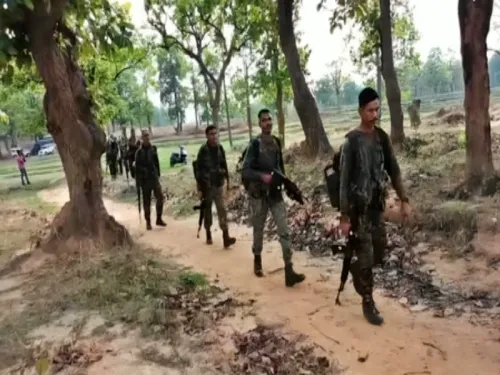
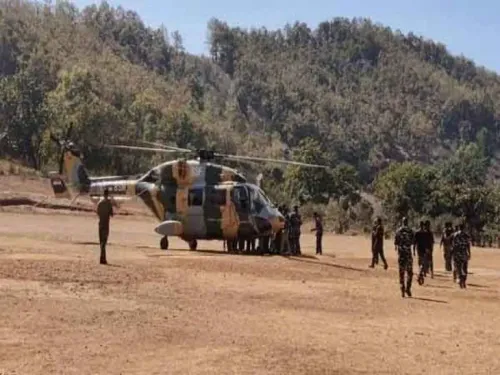
Dubai, Dec 13 (NationPress) In early October, visuals from the lush forests of Bastar in Chhattisgarh illustrated a moment of notable yet quiet transformation in India’s ongoing fight against Left Wing Extremism.
As reported by Khaleej Times, upwards of 180 Maoists, many of whom had longstanding cash bounties, surrendered their weapons and enrolled in state-sponsored rehabilitation initiatives.
Shortly thereafter, in Jagdalpur, an additional 200 militants, including roughly 110 women, also surrendered, bringing 153 weapons with them.
These events indicate a significant trend: the waning allure of armed rebellion amidst ongoing security measures and increasingly viable non-violent options.
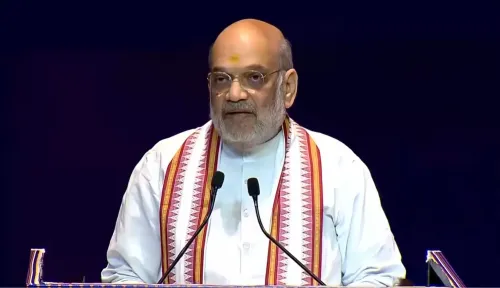
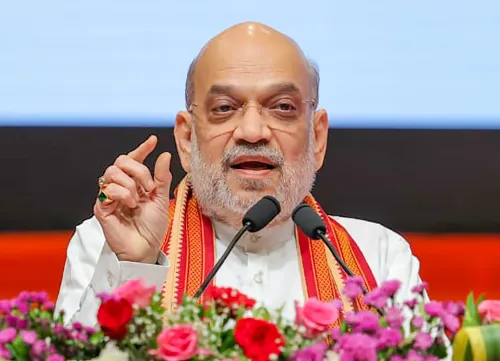
Union Home Minister Amit Shah emphasized this shift in a post on X, revealing that Abujhmarh and North Bastar—formerly recognized as Maoist bastions—are now declared free from Naxal influence.
He also noted that since 2024, more than 2,100 Maoists have surrendered, while 1,785 have been captured, reiterating the government's objective to eradicate Naxalism by March 31, 2026.
These figures gain clarity when contextualized within the movement's history.
The Naxalite movement commenced in the late 1960s, stemming from agrarian grievances, land dispossession, and the perceived lack of justice in remote tribal areas.
It gradually morphed into a protracted insurgency that flourished due to weak state presence and local disenchantment.
At its zenith, Left Wing Extremism took a heavy toll on both lives and development.
However, the decline has been gradual but consistent.
The Khaleej Times report highlighted that incidents of LWE violence, which peaked at 1,936 in 2010, have plummeted to 374 in 2024—an 81% decrease.
Fatalities have seen an even steeper decline, from 1,005 deaths in 2010 to 150 last year, it stated.
A multitude of factors contribute to this turnaround. Ongoing, intelligence-driven operations by central forces and state police have undermined Maoist leadership and logistics.
Concurrently, governmental policy has advanced beyond mere military action.
According to Khaleej Times, surrender-and-rehabilitation programs offering financial support, skill development, and reintegration have presented a viable civilian future for those willing to abandon violence.
Equally important has been the diminishing local support. As infrastructure, healthcare access, and governance reached previously overlooked areas, communities increasingly repudiated the instability brought by armed factions.
While these recent surrenders do not signify the conclusion of the insurgency, they reveal a pivotal transition.
For the first time in decades, the prospect of enduring peace in the affected regions seems attainable.
Point of View
It is crucial to recognize the transformative developments in Bastar. The mass surrenders signal not only a potential end to Naxalist influence but also highlight the government's efforts in addressing local grievances through rehabilitation and reintegration. This approach emphasizes a path toward sustainable peace, aligning with our ongoing commitment to national stability.
NationPress
6 Oct 2026
Frequently Asked Questions
What led to the mass surrenders in Bastar?
The mass surrenders were prompted by sustained security pressure and the availability of rehabilitation programs offering viable non-violent alternatives.
What has been the impact of the surrenders on Naxalism?
The surrenders indicate a significant decline in Naxal influence, with a marked reduction in violence and fatalities over recent years.
How does the government support former Maoists after surrendering?
The government provides financial assistance, skill training, and reintegration programs to former Maoists through surrender-and-rehabilitation initiatives.
What historical context is relevant to the Naxalite movement?
The Naxalite movement began in the late 1960s, driven by agrarian distress and local disenchantment, evolving into a significant insurgency.
What are the future prospects for peace in Bastar?
With the recent surrenders and ongoing government initiatives, there is a hopeful outlook for lasting peace in the region.