CM Samrat Choudhary shares Shivraj Singh Chouhan's BJP 'andolan' defence
Synopsis
Bihar CM Samrat Choudhary amplified Agriculture Minister Shivraj Singh Chouhan's combative defence of the BJP, framing the party as an enduring ideological movement and invoking the 1975 Emergency to rebuff critics predicting its political decline.
Key Takeaways
Bihar Chief Minister Samrat Choudhary shared a political statement by Union Agriculture Minister Shivraj Singh Chouhan on October 19, 2026 .
Chouhan dismissed critics predicting the BJP's 'expiry date', mocking those who 'failed their own launch quality-checks 99 times.' He described the BJP as a mahayagya (grand mission) for national reconstruction, and a movement for farmers, women, and youth.
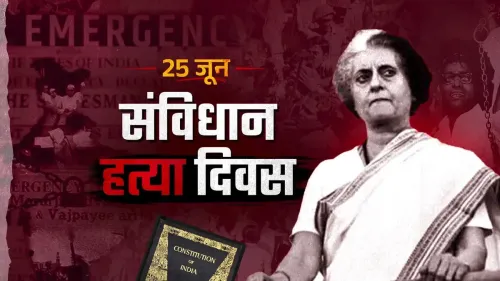
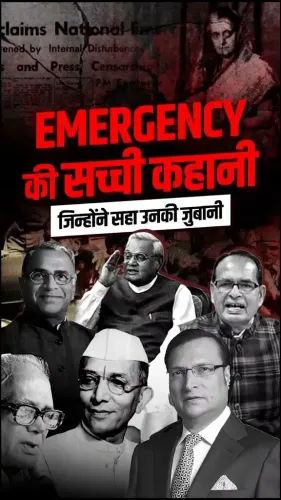
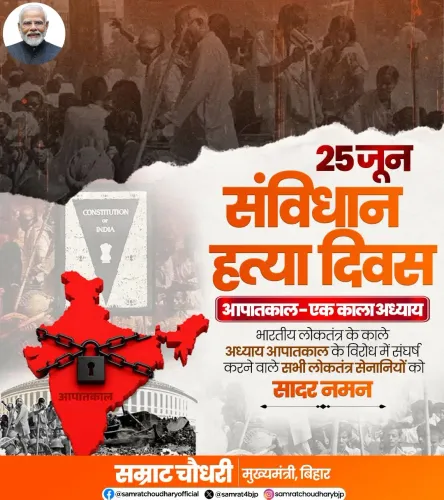
Chouhan invoked the Emergency of 1975–77 , when opposition leaders were jailed, arguing the public has repeatedly punished such overreach at the ballot box.
The statement reflects a recurring BJP rhetorical strategy of framing the party as an ideological 'andolan' immune to normal political cycles.
Bihar Chief Minister Samrat Choudhary on Monday, October 19, 2026 shared a sharp political statement from Union Agriculture Minister Shivraj Singh Chouhan, hitting back at critics who have been predicting the BJP's political decline — and turning the tables with a pointed invocation of the 1975 Emergency.
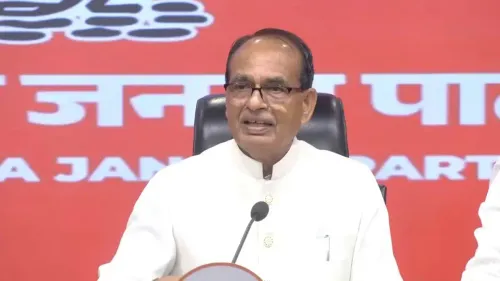
Chouhan's words, quoted verbatim in the post, carry a characteristic sting: 'Mujhe toh hansi aati hai' — 'It makes me laugh,' he begins — mocking those who 'failed their own launch quality-checks 99 times' yet presume to set an expiry date on the BJP. It is combative, confident, and entirely deliberate.
The 'andolan' argument — and why BJP leaders keep making it
Chouhan's core assertion is one the BJP has refined over decades: that the party is not merely an electoral machine but a mahayagya — a grand sacrificial mission — for national reconstruction. In his framing, the BJP is simultaneously a movement for the poor, a pledge for farmers, and an engine of empowerment for women and youth.
This is not rhetorical ornament. BJP leaders consistently deploy this 'andolan' language to insulate the party from the normal cycle of political fatigue — arguing that an ideological movement cannot simply 'expire' the way a government can lose an election.
The Emergency card — still sharp after fifty years
The most pointed section of Chouhan's statement reaches back to the Emergency of 1975–77, when the then-Congress government suspended civil liberties, imprisoned opposition leaders — including many from the BJP's ideological family — and, as Chouhan puts it, turned the country into a jailkhana, a prison. 'People thought that way and left,' he says of those who believed they could break the BJP. 'Even the Emergency was imposed. But in the end, the public knocked them down at the ballot box, again and again.'
The Emergency reference is a durable weapon in BJP political rhetoric — a historical marker of what the party frames as Congress authoritarianism, and a reminder that the BJP survived and grew through its most punishing period. In an era of competitive opposition attacks on the BJP's dominance, reaching back to 1975 is a signal: we have been here before, and we are still here.
Shivraj, Samrat, and the amplification chain
Shivraj Singh Chouhan, who governed Madhya Pradesh for nearly two decades before moving to the Union Cabinet as Agriculture Minister, remains one of the BJP's most recognisable mass communicators. His combination of folksy delivery and ideological sharpness makes his statements particularly shareable within the party ecosystem.
Samrat Choudhary, who leads Bihar as Chief Minister, choosing to amplify this specific clip signals an alignment of the state BJP leadership with the party's current defensive-but-confident national posture. Bihar, a state the BJP governs in alliance, is a critical electoral proving ground — and a Chief Minister who shares a statement like this is making a political choice, not just pressing retweet.
The BJP, Chouhan closes, 'will keep growing and keep serving the country.' It is the kind of line a party says when it feels pressure — and when it is determined not to show it.
Point of View
The BJP connects current opposition attacks to a historical episode widely remembered as an authoritarian overreach — a framing designed to make critics, not the party, look like the threat to democracy. Bihar CM Samrat Choudhary's decision to amplify the clip also underscores how state-level BJP leaders are increasingly used as a nationwide distribution network for centrally-generated political messaging. The 'andolan' framing, however well-worn, continues to serve its core purpose: converting a question about the party's future into a testament to its past resilience.
NationPress
19 Oct 2026
Frequently Asked Questions
What did Shivraj Singh Chouhan say about BJP's expiry date?
Shivraj Singh Chouhan said it makes him laugh that those who 'failed their own launch quality-checks 99 times' are predicting the BJP's expiry date. He called the BJP not merely a party but an ideological movement for national reconstruction and the welfare of farmers, women, and youth.
Why did Samrat Choudhary share Shivraj Singh Chouhan's statement?
Bihar Chief Minister Samrat Choudhary shared the statement on October 19, 2026 as part of the BJP's broader pushback against opposition criticism about the party's political relevance and longevity.
What is the Emergency that Shivraj Singh Chouhan mentioned?
Chouhan referred to the Emergency of June 1975 to March 1977, declared by the Congress government under Prime Minister Indira Gandhi, during which civil liberties were suspended and thousands of opposition leaders, including BJP and RSS figures, were imprisoned.
What does BJP 'andolan' mean in Shivraj Chouhan's speech?
Chouhan used 'andolan' (movement) to describe the BJP as more than an electoral party — framing it as an ongoing mission for national reconstruction, poverty alleviation, and the empowerment of farmers, women, and youth.
Who is Shivraj Singh Chouhan currently?
Shivraj Singh Chouhan is the Union Minister of Agriculture and Farmers Welfare in the current BJP-led central government. He previously served as Chief Minister of Madhya Pradesh for nearly two decades, making him one of the party's longest-serving state leaders.