CM Sukhu Lauds HP's Top-State Finish in Tobacco Free Youth Drive
Synopsis
Himachal Pradesh Chief Minister Sukhvinder Singh Sukhu praised the state's Health and Family Welfare Department after HP was recognised as one of India's top-performing states in the 60-day Tobacco Free Youth Campaign 3.0, aimed at keeping young people away from tobacco use.
Key Takeaways
Himachal Pradesh ranked among India's best-performing states in the Tobacco Free Youth Campaign 3.0 , a 60-day anti-tobacco drive for youth.
CM Sukhvinder Singh Sukhu publicly congratulated the Health and Family Welfare Department on 19 October 2026 .
The campaign is the third edition of a state-level initiative run under the National Tobacco Control Programme (NTCP) framework launched in 2007–08 .
India's tobacco control policy backbone is COTPA (2003) , which regulates the sale, advertising, and use of tobacco products nationally.
Consolidated national rankings and any follow-up district-level enforcement funding are still awaited from the Union Health Ministry.
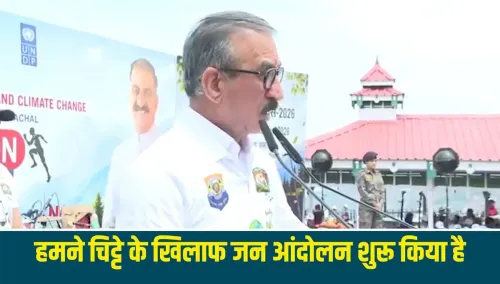
Himachal Pradesh has earned a place among India's best-performing states in the 60-day 'Tobacco Free Youth Campaign 3.0' — a nationwide anti-tobacco drive targeting young people — and Chief Minister Sukhvinder Singh Sukhu marked the achievement with a congratulatory post on X on Monday, 19 October 2026.
Writing in Hindi, Sukhu said the state's recognition was a matter of pride for every resident of Himachal Pradesh: 'इस उपलब्धि के लिए स्वास्थ्य एवं परिवार कल्याण विभाग को हार्दिक बधाई' ('Heartfelt congratulations to the Health and Family Welfare Department for this achievement'). He noted the campaign's explicit purpose — keeping youth away from tobacco use — and praised the department for executing the drive effectively across the state.
The Campaign Behind the Recognition
The Tobacco Free Youth Campaign 3.0 is the third edition of a time-bound, state-level drive run under India's broader tobacco control architecture. The central framework dates to 2003, when Parliament enacted the Cigarettes and Other Tobacco Products Act (COTPA), and to 2007–08, when the Union Ministry of Health launched the National Tobacco Control Programme (NTCP) to fund and coordinate state-level cells and awareness campaigns. Every successive state-level drive feeds data back to the NTCP for national comparison — which is what makes a top-state ranking meaningful rather than merely ceremonial.
Himachal Pradesh's Health and Family Welfare Department was the operational engine behind the 60-day push. Hill states like Himachal Pradesh have historically maintained consistent participation in such campaigns, and some surveys indicate comparatively lower baseline tobacco prevalence in the region — making strong institutional follow-through all the more important to preserve that edge.
Why Youth-Focused Drives Matter in 2026
Tobacco use among adolescents and young adults remains a live public-health concern across India: early initiation is strongly associated with long-term addiction and chronic disease burden. Campaigns like this one use school outreach, community mobilisation, and peer-educator models to reach young people before habits solidify. A state earning national-level recognition signals that its mechanisms — district health officers, ASHA workers, school coordinators — are functioning above the baseline.
What comes next will matter as much as the ranking itself: consolidated national performance data from the Union Health Ministry and any follow-up budget lines for district-level enforcement in Himachal Pradesh's next state budget will show whether the campaign's momentum translates into durable infrastructure.
Point of View
NTCP-aligned campaigns at a moment when state-level health delivery is under increasing scrutiny. For CM Sukhu, channelling the praise directly to the Health Department is a studied signal of administrative accountability — useful optics for a Congress government looking to build a governance narrative ahead of any future electoral cycle. More broadly, top-state rankings in centrally monitored programmes create competitive pressure on other states to strengthen their own public-health machinery, which is precisely the incentive the NTCP framework was designed to generate. The real test, however, lies in whether the campaign leaves behind lasting enforcement infrastructure or fades once the 60-day window closes.
NationPress
19 Oct 2026
Frequently Asked Questions
What is the Tobacco Free Youth Campaign 3.0?
It is the third edition of a 60-day state-level anti-tobacco drive aimed at preventing tobacco use among young people, run under India's National Tobacco Control Programme framework.
Why did CM Sukhu post about the campaign?
Himachal Pradesh was recognised as one of India's top-performing states in the campaign, and CM Sukhvinder Singh Sukhu used the occasion to publicly congratulate the state's Health and Family Welfare Department.
What is COTPA and why does it matter?
COTPA — the Cigarettes and Other Tobacco Products Act — was enacted by Parliament in 2003 and forms the legal backbone of India's tobacco regulation, covering sale, advertisement, and use of tobacco products.
Which department ran the campaign in Himachal Pradesh?
The Health and Family Welfare Department of Himachal Pradesh was responsible for implementing the Tobacco Free Youth Campaign 3.0 across the state.
What happens after the 60-day campaign ends?
The Union Health Ministry is expected to release consolidated national performance data, and follow-up budget allocations for district-level enforcement will indicate whether the campaign's gains are built into lasting infrastructure.